


Active RFID Tags and RFID Access Control for Smarter Identification Systems
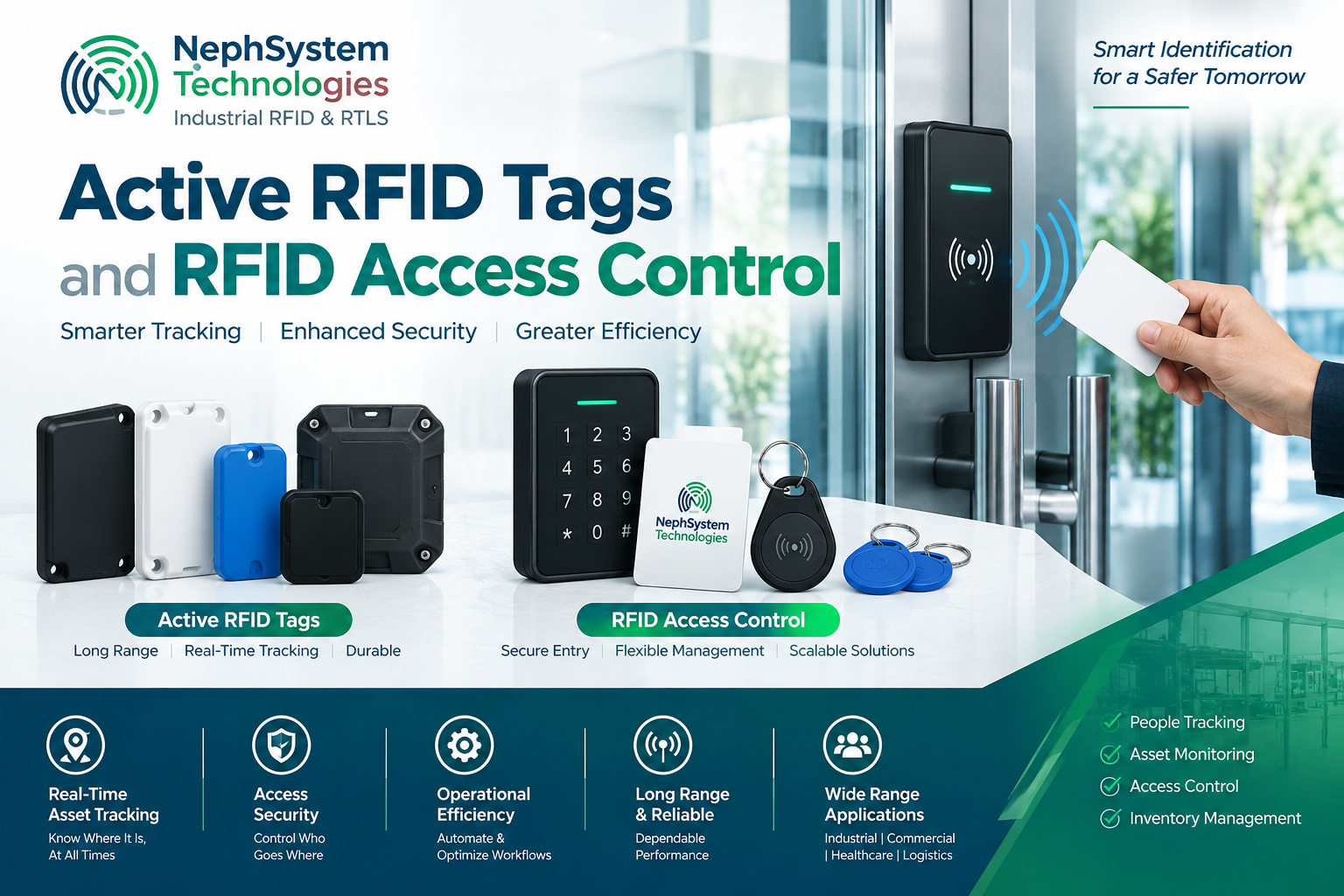
Organizations increasingly use RFID technology to automate identification and improve visibility across facilities. Active RFID Tags and RFID Access Control are two technologies that can support different operational needs, from asset tracking to controlled entry and exit.
Understanding Active RFID Tags
Active RFID Tags contain an internal power source that allows them to transmit signals to compatible RFID readers. This distinguishes them from passive tags, which generally rely on energy supplied by the reader's radio signal.
Because active tags can transmit their signals, they can be suitable for applications where longer reading distances or more frequent communication are required. Potential applications include vehicle tracking, equipment monitoring, industrial asset management, logistics, and personnel tracking.
The design of an active RFID tag depends on the intended application. Some tags may be optimized for attachment to vehicles or equipment, while others can be designed for use with personnel or containers.
How RFID Access Control Works
RFID Access Control uses RFID credentials to manage entry into a controlled area. An RFID card, key fob, tag, or other credential can be presented to a reader. The system then checks the credential against configured access permissions before determining whether access should be allowed.
RFID access control can be deployed in offices, factories, warehouses, educational facilities, residential properties, parking facilities, and other controlled environments.
The RFID reader is only one part of the overall system. A complete installation may include access controllers, credentials, software, locks, door hardware, communication networks, and monitoring interfaces.
Combining Identification and Access Management
In some environments, RFID technology can support both identification and access management. For example, an industrial facility may use RFID credentials for authorized personnel while separately using active tags to monitor selected assets or vehicles.
Such systems can provide organizations with structured data about authorized access and tagged assets. Integration with software can further help administrators manage records and generate reports.
Important Factors When Selecting RFID Tags
Organizations should consider the required reading distance, operating environment, attachment method, battery requirements, data requirements, and expected service life when choosing active RFID tags.
Temperature, moisture, metal surfaces, physical impact, and other environmental conditions can influence tag selection. Therefore, testing tags in the actual operating environment can be useful before large-scale deployment.
Frequently Asked Questions
What are Active RFID Tags?
They are RFID tags that typically use an internal battery or power source to transmit signals to compatible readers.
What is RFID Access Control?
It is an electronic access management system that uses RFID credentials to identify users or authorized devices.
Where can RFID access systems be installed?
They can be used in offices, warehouses, factories, campuses, residential buildings, parking areas, and other controlled locations.
Conclusion
Active RFID Tags can support longer-distance identification and tracking applications, while RFID Access Control can help organizations manage controlled entry and exit. When properly designed, RFID systems can connect identification data with broader operational workflows.
CTA: If you are planning an RFID deployment, define your access requirements, tag environment, reading distance, and integration needs first, then work with an RFID specialist to design the appropriate system.

 Arabic
 French
 Spanish
 Portuguese
 Deutsch
 Turkish
 Dutch
Dutch
 Italiano
 Russian
 Romaian
 Portuguese (Brazil)
 Greek
Greek
 Bengali