


Exploring Pump Materials, Operation and Design for Water Management
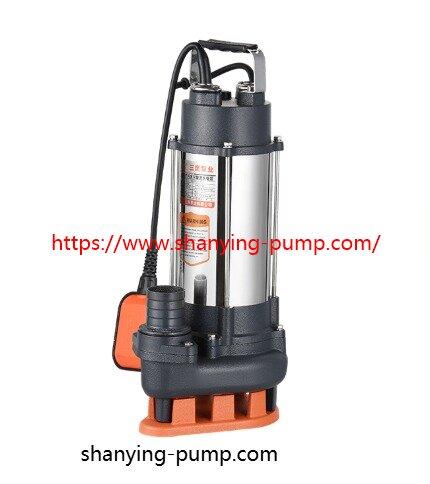
In drainage, wastewater handling, water storage, and other liquid-transfer applications, a Submersible Pump with Float Switch can combine submerged pumping with convenient level-responsive control. The value of this arrangement, however, depends on more than the presence of a float switch. The materials used throughout the pump, the relationship between the float and surrounding components, the hydraulic structure, and the overall installation design all influence how naturally the equipment fits into daily operation.
Material selection should begin with the liquid rather than the appearance of the pump. Water quality can vary considerably between household drainage, agricultural environments, construction sites, and wastewater applications. Components that come into contact with the liquid need to be compatible with the working conditions. Stainless steel can be useful where corrosion resistance and surface cleanliness are important, while other material combinations may suit different drainage environments. Buyers should consider the pump housing, impeller, shaft, seals, fasteners, and float components as a connected material system.
The float itself also deserves attention because it operates directly within the surrounding liquid environment. Its outer material should be appropriate for repeated contact with water or wastewater, while its connection should remain stable during normal movement. A suitable float arrangement should not easily become obstructed by pipes, walls, cables, sediment, or other objects around the installation area. This makes the surrounding space an important part of material and structural selection.
Purchasing decisions should therefore start with the actual application. A drainage pit may contain relatively clean accumulated water, while a wastewater environment may include suspended materials, fibers, or sediment. Agricultural installations can involve water from different sources and changing environmental conditions. Before selecting a pump, buyers should understand the liquid characteristics, installation position, expected operating pattern, and maintenance environment. Taizhou Shanying Pump Co., Ltd. offers different submersible and sewage pump categories for water-handling applications, allowing product selection to be connected with specific working conditions.
Another purchasing consideration is the relationship between the float and the pump's hydraulic structure. The float controls the operating response, while the pump itself remains responsible for moving the liquid. If the liquid contains suspended matter, the internal flow path and impeller arrangement become important because these components determine how the medium passes through the equipment. A buyer should therefore avoid evaluating the float system independently from the pump's fluid-handling characteristics.
Technology can further improve the coordination between control and pumping. A float mechanism can provide a straightforward signal for changing liquid conditions, while other protective functions can support the motor and electrical system. Shanying's product information describes float-switch control on applicable sewage pump products for automatic water-level start and stop, together with protection functions such as leakage detection and overheating protection. These functions address different aspects of operation and can work together as part of a more complete pumping arrangement.
The user experience is influenced strongly by installation. A float switch needs sufficient space to move naturally, while the pump needs stable positioning and an appropriate discharge connection. Cable routing should also be considered because loose or poorly arranged cables can interfere with installation and inspection. When these elements are organized logically, operators can understand the system more easily and spend less time adjusting components after installation.
Maintenance provides another important perspective. Submersible pumps used for drainage or wastewater may encounter sediment, debris, or other materials during normal operation. Regular inspection of the pump body, discharge path, cable, seals, and float connection can help operators identify conditions that may affect operation. The float should be able to move without unnecessary resistance, and the surrounding area should remain sufficiently clear for inspection and cleaning.
Handling is also part of user experience. Submersible equipment may need to be removed for cleaning, inspection, or replacement, so practical lifting and connection arrangements can make routine work easier. A clear separation between the pump body, cable, discharge connection, and float mechanism can help operators understand where each component belongs. This is especially useful when equipment is installed in locations where access is limited.
From a design perspective, a pump should communicate its function through its physical structure. A well-organized housing can make the main components easier to identify, while smooth external surfaces can support cleaning. Protected cable entry points and appropriately positioned lifting features can also contribute to practical handling. The float should have enough freedom of movement without creating an unnecessarily complicated installation arrangement.
Appearance is therefore closely connected with function. Clean industrial lines, orderly component placement, and a coherent housing structure can make equipment easier to inspect and maintain. For water-handling equipment, good appearance is not simply about visual appeal; it can reflect how thoughtfully the product has been organized for real working environments.
Taizhou Shanying Pump Co., Ltd. integrates research and development, production, sales, and service, with product categories covering submersible pumps, sewage pumps, deep-well pumps, and other water-pumping equipment. Its official information also emphasizes different application scenarios and customized solutions, which can be useful when buyers need to connect pump construction with specific installation and liquid-handling requirements.
For projects involving drainage, wastewater, water storage, agriculture, construction, or similar applications, buyers can evaluate the pump and float arrangement together by considering material compatibility, liquid characteristics, hydraulic structure, control coordination, installation space, maintenance access, and external design. More information about Taizhou Shanying Pump Co., Ltd. and its water-pumping solutions is available at https://www.shanying-pump.com/

 English
 Arabic
 French
 Spanish
 Portuguese
 Deutsch
 Dutch
Dutch
 Italiano
 Russian
 Romaian
 Portuguese (Brazil)
 Greek
Greek
 Bengali