


Precision Mold Engineering for Modern Vehicle Components
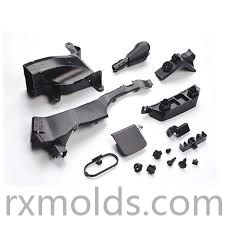
Automotive components continue to incorporate more functions into increasingly complex structures. This trend places greater demands on tooling accuracy, material control, and production stability. A carefully engineered Auto Parts Mould provides the foundation for manufacturing plastic vehicle components with controlled dimensions, appropriate surface quality, and reliable assembly characteristics throughout repeated production cycles.
The mold development process starts with a thorough understanding of the component. Automotive parts can contain ribs, bosses, clips, mounting structures, sealing areas, curved surfaces, and cosmetic sections within one product. Each feature can influence the parting line, gate arrangement, cavity structure, cooling layout, and ejection method. Reviewing these relationships at the beginning can help reduce manufacturing difficulties later.
Material selection should be evaluated together with the geometry of the component. Automotive polymers vary in flow behavior, shrinkage, thermal stability, impact resistance, and surface characteristics. A material selected for dimensional stability may require a different molding strategy from one chosen for flexibility or impact performance. Understanding these differences allows mold engineers to develop suitable cavity and processing designs.
Mold flow analysis can provide useful information before machining starts. Digital simulation allows engineers to study how material may fill the cavity and identify potential areas of filling imbalance, weld-line formation, air entrapment, or pressure concentration. Based on these results, the gate system, runners, venting, and other tooling elements can be reviewed and adjusted before physical manufacturing.
Cooling design has a direct influence on dimensional stability. During molding, the polymer needs to release heat in a controlled manner before the component can be ejected. Uneven cooling may contribute to warpage or differences in shrinkage between sections of the part. Cooling channels should therefore be positioned according to component geometry, wall thickness, and material behavior rather than using a standard arrangement for every project.
Venting is another important part of cavity design. As molten polymer moves through the cavity, displaced air needs an effective escape path. Insufficient venting can result in burn marks, incomplete filling, or localized surface defects. Engineers should determine vent locations according to expected material flow while protecting important visible and functional areas.
Precision machining converts the approved digital design into physical tooling. CNC machining is suitable for many complex cavity and core structures, while EDM can produce narrow features, intricate details, and areas that are difficult to manufacture through conventional cutting. Grinding and polishing can then be applied where specific dimensional or surface conditions are required.
Surface finishing is especially important for visible automotive parts. Different mold areas may require polished surfaces, controlled textures, or carefully defined transitions. These requirements should be incorporated into the tooling plan from the beginning because cavity finishing can affect both appearance and demolding. Consistent preparation helps maintain a uniform result across production batches.
Ejection mechanisms must be designed according to the component structure. Deep sections, thin walls, curved surfaces, and cosmetic areas can make part release more demanding. Ejector pins, sleeves, lifters, and other mechanisms should be positioned to distribute release forces appropriately. Suitable draft angles can also reduce friction between the molded component and cavity surfaces.
Mold assembly and trial production provide opportunities to verify the complete system. Engineers can inspect sample parts for dimensions, filling behavior, surface condition, ejection, and assembly compatibility. If an issue is detected, the cause should be considered across mold geometry, material behavior, processing conditions, and machining accuracy instead of immediately assuming that one factor is responsible.
Quality inspection should continue throughout mold manufacturing. Checking cavity dimensions, alignment, moving components, cooling passages, and surface conditions at suitable stages helps identify deviations earlier. Measurement records can also support future maintenance and provide useful references when troubleshooting production changes.
Digital manufacturing technologies improve coordination between design and production. CAD supports detailed mold development, CAE assists with simulation and analysis, while CAM connects approved geometry with machining operations. Integrating these systems with practical tooling experience helps maintain consistency between product requirements and the final physical mold.
Long-term mold stability also depends on maintenance. Repeated molding cycles can gradually influence moving mechanisms, cavity surfaces, cooling systems, and alignment features. Regular inspection and appropriate maintenance can help identify wear before it affects molded components and can support more predictable production planning.
For manufacturers developing complex automotive plastic components, Taizhou Renxin Mould Co., Ltd. integrates engineering design, simulation, precision machining, finishing, and tooling validation, with further information available at https://www.rxmolds.com for companies seeking a professionally engineered Auto Parts Mould for vehicle component production.

 English
 Arabic
 French
 Spanish
 Portuguese
 Deutsch
 Dutch
Dutch
 Italiano
 Russian
 Romaian
 Portuguese (Brazil)
 Greek
Greek
 Bengali