


Science Projects For Kids: Turning Everyday Questions Into Experiments
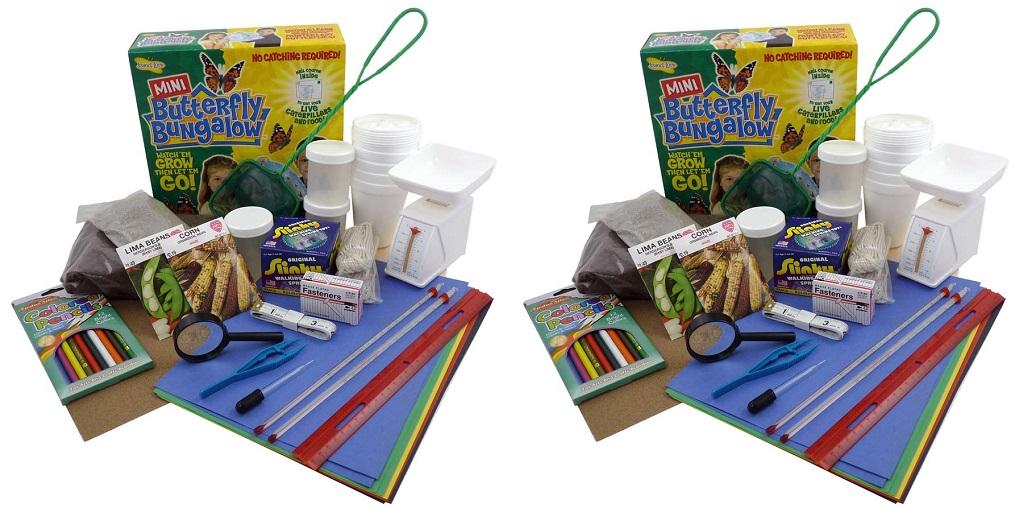
Science can begin with a simple question about something happening nearby. Science projects for kids can turn that curiosity into an investigation in which children make predictions, test ideas, and record what they discover. Everyday activities provide plenty of opportunities to explore concepts from physics, chemistry, biology, and engineering.
A question such as “Why does ice melt faster in some places?” can lead to a simple experiment. Children can place ice cubes in different locations and observe how quickly they change. This approach gives young learners a clear way to connect questions with evidence.
Start With a Question
A strong experiment begins with a testable question. Questions about everyday objects and natural events work particularly well because children can observe them directly.
For example, a child might wonder which type of paper towel absorbs the most water. Testing several brands creates a simple comparison. The child can use the same amount of water for each sample and measure how much each towel absorbs.
Specific questions make experiments easier to organize. They also give children a clear purpose for collecting observations.
Make a Prediction
Before testing an idea, children can predict what will happen. This prediction becomes a hypothesis that can be compared with the actual results.
Predictions can be based on previous experiences. A child may expect sugar to dissolve faster in hot water because warm drinks usually dissolve ingredients quickly. Testing that idea provides evidence that can support or challenge the prediction.
Writing down predictions also creates a record of the investigation. Children can review their original ideas after completing the experiment and compare them with what happened.
Change One Variable at a Time
Good experiments rely on controlled comparisons. Changing one factor at a time makes it easier to identify what caused a difference in the results.
Consider an experiment testing paper airplane designs. A child could create airplanes with different wing shapes while using the same paper type and launching method. Measuring flight distances can reveal how design changes affect performance.
This process introduces an important scientific habit. Children learn to isolate variables and make fair comparisons as they investigate their questions.
Record What Happens
Observations become more useful when children record them. Simple tables can organize measurements, while drawings can document physical changes.
A plant growth experiment could include measurements taken at regular intervals. Children might record stem height, leaf development, and changes in color. After several observations, patterns may become easier to recognize.
Charts can also make results easier to interpret. Even a basic bar graph can show differences between test groups and encourage children to examine the evidence.
Learn From Unexpected Results
Experiments do not always produce the expected outcome. A prediction may be incorrect, or two test groups may show surprisingly similar results.
These situations create opportunities for additional investigation. Children can ask why the outcome differed from their prediction and consider factors that may have affected the experiment.
For instance, a seed may grow differently from another seed despite receiving the same amount of water. Children can examine light exposure, soil conditions, temperature, or seed quality as possible factors.
This process encourages persistence and flexible thinking. Each unexpected result can lead to another question worth investigating.
Connect Experiments to Everyday Science
Simple investigations can introduce ideas that appear in many areas of science. Testing melting ice can lead to discussions about temperature and heat transfer. Building a paper bridge can introduce structural engineering. Observing mold growth can support conversations about microorganisms and environmental conditions.
Cooking also provides opportunities for scientific exploration. Children can observe how heat changes ingredients, how mixtures behave, and how different ingredient amounts affect the finished result.
These connections help children recognize scientific principles in familiar situations. A kitchen, backyard, or classroom can become a setting for meaningful investigation.
More Science Ideas for Young Explorers
Home Science Tools provides science project ideas, experiment guides, and educational resources for families and educators seeking practical ways to encourage scientific exploration. These resources can help children investigate questions, test predictions, and develop stronger connections between everyday observations and scientific concepts.
For more information about Science Kits and Microscopes For Kids Please visit: Home Science Tools.

 English
 Arabic
 French
 Spanish
 Portuguese
 Deutsch
 Turkish
 Dutch
Dutch
 Italiano
 Russian
 Romaian
 Portuguese (Brazil)
 Bengali