


Sensory Processing Differences in Children: What Parents Notice First
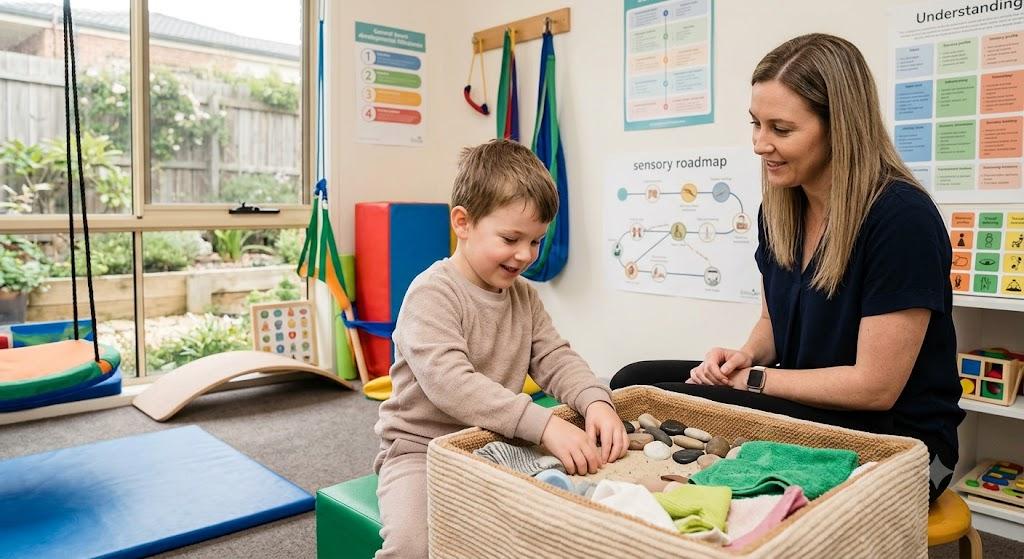
Children respond to sights, sounds, movement, touch, textures, and other everyday experiences in different ways. Some children may appear particularly sensitive to certain sensations, while others may seek additional movement or sensory input. These differences can sometimes affect participation in play, routines, learning, and other everyday activities.
Understanding a child's individual responses can help parents recognise when further guidance may be useful. A professional assessment can consider the child's overall developmental profile rather than focusing on one behaviour in isolation.
What Is Sensory Processing?
Sensory processing refers to the way a person receives and responds to information from their surroundings and their own body. Children encounter sensory information throughout the day, including sounds, textures, movement, visual information, and changes in their environment.
A child may respond strongly to particular sensations or appear to need more sensory input to remain engaged in an activity. These responses can vary depending on the situation, the child's developmental stage, and the demands of the environment.
Sensory differences can also occur alongside other developmental observations. For this reason, it is useful to consider the child's communication, behaviour, motor skills, attention, play, and everyday participation as part of a broader assessment.
What Parents May Notice First
Parents may first notice sensory differences during ordinary routines. A child might show a strong preference for certain textures, respond strongly to particular sounds, or find some types of movement less comfortable.
Other children may frequently seek movement through activities such as jumping, spinning, climbing, or moving around while completing tasks. Some may need additional support to remain engaged during activities that require sitting, concentration, or following a sequence of instructions.
These observations do not necessarily point to one specific developmental condition. However, if sensory responses regularly affect daily activities, discussing them with an appropriate professional may help clarify the child's needs.
Sensory Responses and Daily Routines
Sensory differences can sometimes influence everyday routines. Activities involving clothing, eating, personal care, play, or transitions between activities may require additional support.
For example, a child may find certain textures less comfortable or need more time to adjust when a familiar routine changes. Another child may need additional movement opportunities to remain engaged during an activity.
Where observations involve behaviour or development, support can begin with an assessment of the child's individual needs and the factors affecting participation in everyday activities.
The focus is on understanding what may be affecting a child's participation rather than on a particular behaviour on its own.
How Professionals Assess Sensory Differences
A professional assessment may involve discussing the child's developmental history, routines, communication, play, learning, movement, and responses to different situations.
Observation can also provide useful information. A professional may look at how a child approaches activities, responds to sensory experiences, interacts with others, and manages changes in routine.
Assessment for neurodevelopmental disorders may also be appropriate when sensory differences occur alongside broader developmental observations. The type of assessment depends on the child's individual presentation.
Occupational Therapy and Sensory Support
Occupational therapy can address areas such as sensory regulation, motor coordination, attention, play, daily living skills, and participation. Activities are selected according to the child's developmental profile and specific needs.
Sensory-based activities may be incorporated into therapy when appropriate. These can involve movement, textures, coordination tasks, or structured play. The activities are intended to provide opportunities for children to practise relevant skills within meaningful situations.
Occupational therapy can also address practical activities such as dressing, eating, personal care, school participation, and play, depending on the child's developmental stage and individual requirements.
When Child Guidance May Help
Parents may seek professional guidance when sensory responses are persistent, unclear, or affecting everyday participation. A child guidance clinic can provide an opportunity to discuss developmental and behavioural observations in a structured setting.
A child psychiatrist may be involved when psychiatric assessment is appropriate as part of understanding a child's overall developmental or emotional needs.
A multidisciplinary approach can also involve clinical psychology, psychotherapy, speech therapy, occupational therapy, psychiatry, psychiatric social work, and assessment for neurodevelopmental disorders, depending on the individual needs of the child.
Supporting a Child's Everyday Participation
Parents can keep track of situations in which sensory differences are most noticeable. Observing patterns around particular activities, environments, routines, or transitions can provide useful information when discussing them with a professional.
Sensory processing differences can look different from one child to another. Understanding the child's individual developmental profile is therefore important when considering appropriate support.
Professional assessment can help identify areas that may benefit from further attention and guide families towards relevant developmental and therapeutic services.

 English
 French
 Spanish
 Portuguese
 Deutsch
 Turkish
 Dutch
Dutch
 Italiano
 Russian
 Romaian
 Portuguese (Brazil)
 Greek
Greek
 Bengali