


How Can Laser Welding Stainless Improve Modern Metal Fabrication
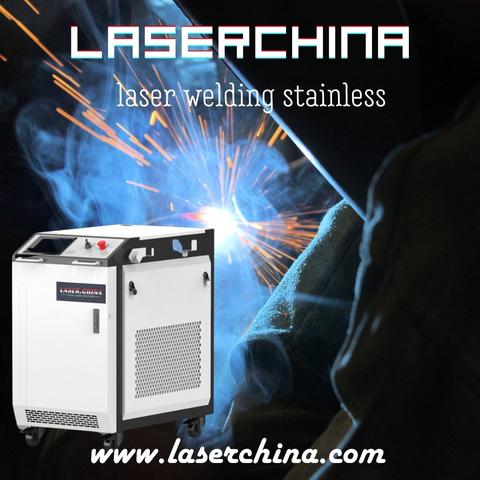
Stainless steel is widely used in manufacturing, construction, automotive production, food processing, medical equipment, and many other industries. Because of its corrosion resistance, clean appearance, and durability, stainless steel requires careful welding methods to maintain its quality during fabrication. This is where laser welding stainless technology has become an important solution for modern metalworking operations.
Laser welding uses a concentrated beam of light to create a controlled heat source at the welding area. The focused energy allows manufacturers to join stainless steel components with precision while maintaining control over the welding process. From small workshops to large industrial production lines, laser welding equipment is being used for different stainless steel applications where accuracy and consistency are important.
Understanding Laser Welding Stainless
Laser welding stainless refers to the process of joining stainless steel parts by using laser energy instead of relying entirely on conventional welding techniques. The laser beam concentrates heat into a relatively small area, allowing the material to melt and form a welded joint.
Stainless steel comes in different grades and thicknesses, and each application can require different welding parameters. Factors such as laser power, welding speed, focal position, shielding gas, material thickness, and joint design can influence the final result.
Why Stainless Steel Requires Controlled Welding
Stainless steel is selected for many products because it can withstand moisture, chemicals, temperature changes, and demanding working environments. However, welding can influence the appearance and condition of the material if the process is not properly controlled.
Excessive heat may create unwanted discoloration, distortion, or changes around the welding area. For applications where appearance is important, such as stainless steel furniture, kitchen equipment, decorative components, and architectural products, controlling the welding process is particularly important.
Laser technology provides a concentrated heat source that can be carefully directed toward the joint. This allows manufacturers to develop welding procedures suited to specific stainless steel grades and component designs.
How the Laser Welding Process Works
The laser welding process begins with preparing and positioning the stainless steel components. The surfaces should be clean and properly aligned before welding. Depending on the application, the parts may be held together using clamps, fixtures, or automated positioning systems.
The laser beam is then directed toward the joint. As the concentrated energy reaches the stainless steel, the material absorbs the laser energy and forms a molten area. As the laser moves along the joint, the molten material cools and solidifies, creating a permanent connection.
For automated production, laser welding systems can be integrated with robotic arms, CNC equipment, or specialized production machinery. This makes it possible to repeat welding operations across large numbers of components.
Selecting the Right Laser Welding Machine
Choosing equipment for laser welding stainless depends on several factors. Material thickness is one of the first considerations because different thicknesses require different amounts of laser energy.
The type of stainless steel also matters. Common stainless steel grades can behave differently during welding, so manufacturers should establish suitable process parameters through testing and production trials.
Laser power is another important consideration. A machine intended for thin sheets may require a different configuration from equipment designed for heavier stainless steel components.
Manufacturers should also consider the welding method, working area, cooling system, wire-feeding requirements, automation compatibility, and available control settings. A machine that matches the production requirements can provide a more practical workflow for the operator.
Handheld Laser Welding for Stainless Steel
Handheld laser welders are increasingly used in workshops where flexibility is required. Instead of placing every component into a fixed automated system, an operator can guide the welding head manually along the joint.
This approach can be useful for stainless steel cabinets, frames, pipes, kitchen equipment, metal furniture, machinery components, and customized fabrication work.
A handheld system normally includes the laser source, welding head, control system, cooling equipment, and supporting components. Some systems can also work with welding wire when additional material is required for the joint.
Operator training remains important. Even though modern equipment can simplify parameter adjustment, correct handling, safety procedures, material preparation, and process control are necessary for reliable results.
Applications of Laser Welding Stainless
Laser welding stainless is used across a wide range of industries. In the food and beverage sector, stainless steel equipment and processing systems require clean and carefully fabricated joints.
In architectural and interior manufacturing, stainless steel is commonly used for railings, decorative structures, counters, panels, and custom furniture. Welding quality can have a direct impact on the final appearance of these products.
Automotive manufacturers use stainless steel and other metals in various components, while industrial equipment manufacturers may use stainless steel for tanks, enclosures, frames, pipes, and machinery parts.
The medical equipment sector also relies on stainless steel for selected instruments, structures, and equipment. In these applications, manufacturers generally require carefully controlled fabrication processes and appropriate material handling.
Preparing Stainless Steel Before Welding
Before welding, stainless steel surfaces should be properly cleaned using an appropriate method. Components should also be accurately aligned so that the joint remains consistent throughout the welding operation.
The thickness of the material and the type of joint should be considered before selecting welding parameters. Butt joints, lap joints, corner joints, and other configurations can require different approaches.
Proper preparation can make the welding process more predictable and help reduce problems caused by contamination or poor alignment.
Laser Welding Stainless in Industrial Production
Industrial production requires repeatability. When hundreds or thousands of similar stainless steel components need to be manufactured, consistent welding procedures become essential.
Laser welding systems can be incorporated into production lines to perform repeated operations under controlled conditions. Automation can include component positioning, laser movement, wire feeding, monitoring, and other process functions.
For manufacturers producing standardized stainless steel products, integrating laser welding into the production workflow can help establish a consistent manufacturing procedure.
CNC-controlled and robotic systems can also be programmed for specific welding paths. This is particularly useful when the same product design is produced repeatedly.
Maintaining Welding Equipment
Regular maintenance is important for keeping laser welding equipment operating correctly. Operators should follow the manufacturer's maintenance schedule and inspect relevant components regularly.
The welding head, protective lenses, cooling system, cables, gas connections, and other components should be checked according to the equipment requirements. Contaminated or damaged optical components can affect laser performance and should be handled according to manufacturer instructions.
A clean working environment is also important. Dust, metal particles, and other contaminants should be controlled around sensitive laser equipment.
Proper maintenance can support stable operation and reduce unexpected interruptions during production.
Safety Considerations
Laser welding equipment requires appropriate safety procedures because industrial lasers can present serious hazards to eyes and skin. Operators should receive proper training before using the equipment.
Laser safety enclosures, protective eyewear where required, warning signs, interlocks, ventilation, and suitable personal protective equipment should be used according to the machine design and applicable workplace regulations.
Welding stainless steel can also produce fumes and particulates. Appropriate extraction and ventilation should therefore be considered, particularly in enclosed workshop environments.
Manufacturers should always follow the equipment supplier's operating instructions and applicable occupational safety requirements.
Choosing a Supplier for Stainless Steel Laser Welding Equipment
When purchasing equipment for laser welding stainless, buyers should look beyond the laser power specification alone. The supplier's technical support, training, machine configuration, warranty terms, replacement parts, and service availability can also influence the long-term operation of the equipment.
It is useful to provide the supplier with information about the stainless steel grades, thicknesses, joint types, production volume, and intended applications. This allows the equipment configuration to be matched more closely to actual production requirements.
Final Thoughts
Laser welding stainless has become an important technology for manufacturers working with stainless steel components that require controlled and precise joining. Its concentrated heat source, adjustable process parameters, and compatibility with handheld, automated, and robotic systems make it suitable for many modern fabrication environments.

 English
 Arabic
 French
 Spanish
 Portuguese
 Deutsch
 Turkish
 Dutch
Dutch
 Italiano
 Romaian
 Portuguese (Brazil)
 Greek
Greek
 Bengali