


Saudi Arabia Logistics Automation Market Analysis, Growth, Trends and Forecast, 2026-2034
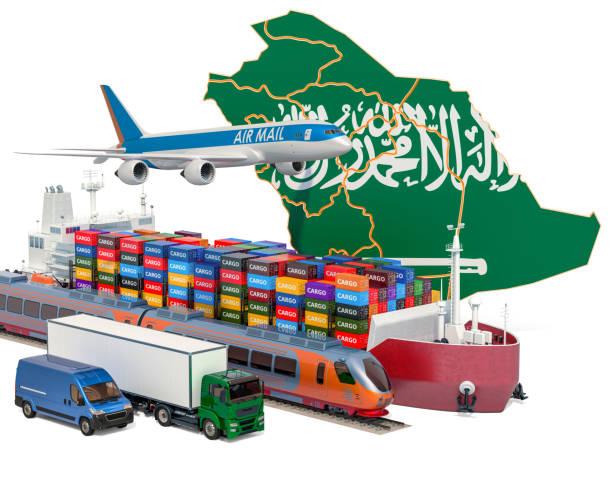
IMARC Group, a leading global market research and management consulting firm, has published its latest market intelligence report on the Saudi Arabia logistics automation market size reached USD 635.9 Million in 2025 and is projected to reach USD 1,112.2 Million by 2034, growing at a CAGR of 6.41% during 2026-2034. reflecting steady expansion driven by the Kingdom's Vision 2030 economic diversification agenda, rapid e-commerce growth, rising labor costs, and increasing enterprise investment in warehouse robotics, automated sorting, and intelligent supply chain software across retail, manufacturing, and food and beverage sectors.
The market is gaining strong momentum as Saudi enterprises shift from labor-intensive logistics operations toward technology-enabled supply chains capable of handling rising order volumes with greater speed and accuracy. Sorting, weighing, barcoding, picking, and packing tasks that once relied heavily on manual labor are increasingly being handled by automated guided vehicles (AGVs), autonomous mobile robots (AMRs), and robotic picking systems, particularly across fulfillment centers serving the Kingdom's fast-growing online retail base. Simultaneously, government-backed infrastructure programs covering ports, rail corridors, and logistics zones are creating the physical backbone that automation providers rely on to scale their deployments, while multinational technology firms are establishing local offices and delivery teams to directly support Saudi customers rather than serving the market remotely from regional hubs.
How AI is Reshaping the Future of the Saudi Arabia Logistics Automation Market?
- AI-Powered Sorting and Error Reduction Across Fulfillment Centers: Machine learning platforms integrated into Saudi warehouse operations are helping logistics teams cut processing errors substantially through smarter sorting, packing, and shipment handling, allowing e-commerce and third-party logistics operators to keep goods moving faster through high-volume distribution centers in Riyadh, Jeddah, and Dammam without proportional increases in headcount.
- Autonomous Mobile Robots and AI-Driven Storage Optimization: AI-enabled AMRs and automated storage and retrieval systems (AS/RS) are being deployed across multi-story warehouses to maximize floor space utilization, with some automated storage layouts in Riyadh reaching heights of around 40 meters and using shuttle systems that lift picking productivity several times over compared with manual layouts, a critical advantage in a market where industrial land and warehouse space carry a premium.
- Predictive Analytics for Demand Planning and Fleet Routing: AI-driven demand forecasting and route optimization tools are enabling logistics providers to anticipate seasonal spikes tied to Ramadan, Hajj and Umrah travel periods, and major retail events, allowing better fleet allocation, reduced empty-running trips, and improved on-time delivery performance across the Kingdom's expanding road, rail, and port network.
Grab a sample PDF of this report: https://www.imarcgroup.com/saudi-arabia-logistics-automation-market/requestsample
Saudi Arabia Logistics Automation Market Trends and Drivers
The Saudi Arabia logistics automation market is being shaped by the convergence of Vision 2030 industrial diversification goals, an increasingly digital-first consumer base, and structural labor market changes that are pushing enterprises toward automated alternatives. Vision 2030 explicitly prioritizes building the Kingdom into a global logistics hub connecting Asia, Europe, and Africa, and this ambition is translating into concrete infrastructure commitments including expansion of King Abdulaziz International Airport, modernization of container-handling capacity at major ports to exceed 55 million TEUs, and new land bridge rail links designed to cut cross-country transit times from roughly ten days by sea to around thirteen hours by rail. Each of these projects increases the volume and velocity of goods moving through Saudi logistics networks, creating direct pressure on warehouse operators and freight handlers to automate in order to keep pace.
E-commerce expansion is a foundational demand driver, with online retail volumes in the Kingdom continuing to climb as digital payment adoption, smartphone penetration, and consumer trust in online shopping rise across all major cities. Saudi retail sales reached SAR 37.4 Billion in a single recent quarter, and as order volumes climb, fulfillment centers require automated picking, packing, and sortation systems capable of processing high numbers of individual parcels rather than bulk pallet shipments, a fundamentally different operational model from traditional wholesale-oriented warehousing. Labor cost and availability pressures are reinforcing this shift, as Saudization requirements and rising wages for skilled logistics labor make automated systems increasingly cost-competitive against manual alternatives, particularly for repetitive, high-volume tasks such as sorting and truck loading.
Government-affiliated entities and multinational automation providers are jointly accelerating technology transfer into the Kingdom. International players including Swisslog and Acme Intralog have expanded their Saudi presence through dedicated regional offices and project teams, delivering automated truck-loading systems, robotic palletization lines, and WMS-controlled storage facilities for multinational manufacturing and e-commerce clients. Sustainability considerations are also entering the automation conversation, as global shippers increasingly favor greener logistics practices, prompting Saudi operators to pair automation investments with energy-efficient warehouse design and optimized routing that reduces unnecessary vehicle trips.
Saudi Arabia Logistics Automation Industry Segmentation
The report has segmented the market into the following categories:
Breakup By Component:
- Hardware
- Software
- Services
Hardware, comprising automated guided vehicles, autonomous mobile robots, robotic arms, conveyor and sortation systems, and automated storage and retrieval systems, accounts for a substantial share of the market as enterprises prioritize physical automation infrastructure to address immediate labor and throughput constraints, while software and services are gaining traction as operators seek to integrate warehouse management systems with broader enterprise resource planning platforms.
Breakup By Function:
- Warehouse Management
- Transportation Management
- Others
Warehouse management functions, including inventory tracking, order picking, and storage optimization, hold a leading position as fulfillment centers scale to meet rising e-commerce and retail distribution demand, with automated warehouse management systems enabling real-time visibility into stock levels across multiple facility locations.
Breakup By Enterprise Size:
- Large Enterprises
- Small and Medium Enterprises
Large enterprises currently lead adoption given their greater capital capacity to invest in automated systems, though small and medium enterprises are increasingly accessing automation technologies as government-affiliated companies help pioneer solutions locally, gradually lowering the cost and complexity barriers for smaller logistics operators.
Breakup By Industry Vertical:
- E-commerce and Retail
- Food and Beverage
- Healthcare and Pharmaceuticals
- Manufacturing
- Others
E-commerce and retail represent the fastest-adopting vertical, driven by the need for rapid order fulfillment and accurate inventory management, while the food and beverage sector is increasingly deploying temperature-controlled automated storage given rising pharmaceutical and perishables import volumes tied to the Kingdom's growing tourism and hospitality sectors.
Breakup By Region:
- Northern and Central Region
- Western Region
- Eastern Region
- Southern Region
The Northern and Central Region commands the dominant regional share, driven by Riyadh's status as the Kingdom's primary logistics hub, home to major distribution centers, the Special Integrated Logistics Zone (SILZ), and dense concentrations of retail and industrial warehousing that collectively anchor national automation demand.
Competitive Landscape
The report provides a comprehensive analysis of the competitive landscape in the Saudi Arabia logistics automation market with detailed profiles of major companies, including:
- ABB
- Swisslog
- Konecranes
- SSI Schaefer
- Dematic
- Vanderlande
- Honeywell Intelligrated
- Daifuku
- Jungheinrich
- KION Group
- Zebra Technologies
Recent News and Developments in Saudi Arabia Logistics Automation Market
- April 2026: Saudi Arabia Railways launched five new multimodal logistics corridors linking Gulf ports to central and northern regions, reducing thousands of truck trips while improving road safety and supporting emissions reduction goals.
- March 2026: The Saudi Transport Minister unveiled new GCC logistics initiatives, including extended truck operational lifespans and new storage zones at King Abdulaziz Port in Dammam to strengthen regional supply chain integration.
- February 2026: MEDLOG inaugurated a new integrated logistics park at King Abdulaziz Port in Dammam, advancing Vision 2030 goals through modern automated warehousing and multimodal connectivity.
- January 2026: The Saudi Warehousing Expo expanded to 20,000 square meters with 400 exhibitors, where SAL Logistics showcased AI-powered robotics and IoT systems delivering notable efficiency gains in warehouse operations.
- December 2025: Mawani signed agreements worth SAR 229 million for new logistics centers at Dammam and Yanbu ports, including a 40,000 square meter food storage hub designed to boost cold-chain capacity.
Note: If you require specific details, data, or insights that are not currently included in the scope of this report, we are happy to accommodate your request. As part of our customization service, we will gather and provide the additional information you need, tailored to your specific requirements. Please let us know your exact needs, and we will ensure the report is updated accordingly to meet your expectations.
About Us
IMARC Group is a global management consulting firm that helps the world's most ambitious changemakers to create a lasting impact. The company provides a comprehensive suite of market entry and expansion services. IMARC offerings include thorough market assessment, feasibility studies, company incorporation assistance, factory setup support, regulatory approvals and licensing navigation, branding, marketing and sales strategies, competitive landscape and benchmarking analyses, pricing and cost research, and procurement research.
Media and Sales Contact
IMARC Group
Email: sales@imarcgroup.com
United States: +1-201-971-6302
India: +91-120-433-0800
United Kingdom: +44-753-714-6104

 English
 Arabic
 French
 Portuguese
 Deutsch
 Turkish
 Dutch
Dutch
 Italiano
 Russian
 Romaian
 Portuguese (Brazil)
 Greek
Greek
 Bengali