


Why Do Some Customers Need More Than One Ad Before They Buy?
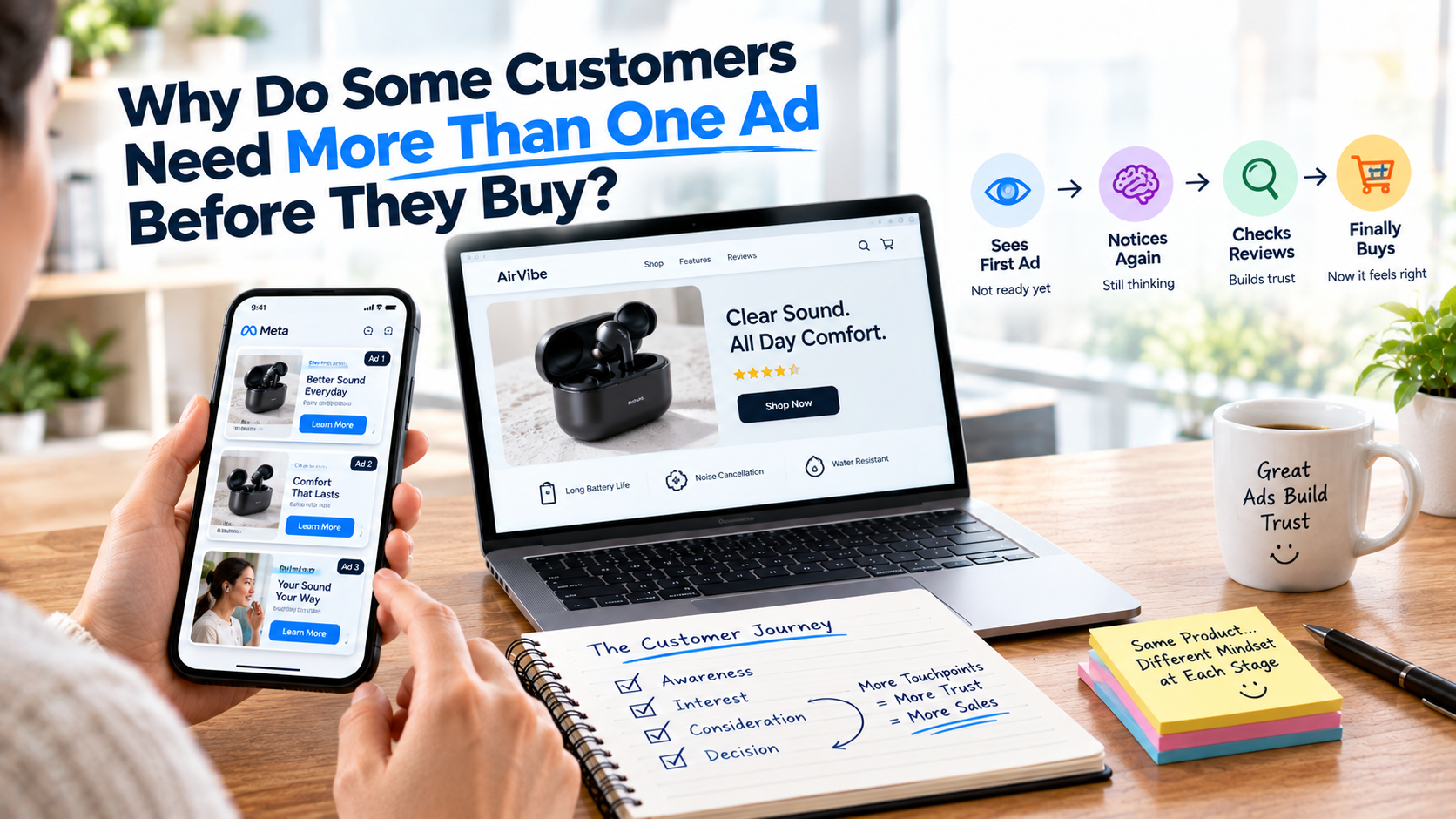
A person sees an ad for a service they may need. They click, look around the website, and leave. A week later, they read a customer review. After another few days, they return and book a call.
If the business judges only the first visit, it may think the original ad failed. In reality, that ad introduced the service and gave the customer a place to start.
Some buying decisions happen quickly. Others require research, comparison, and reassurance. Full-funnel marketing helps businesses plan useful messages for each part of that journey instead of expecting one ad to do every job.
What Is Full-Funnel Marketing?
Full-funnel marketing considers the steps a person takes from first discovering a business to becoming a customer. It also looks at what happens after the purchase.
The journey is often described in three broad stages: awareness, consideration, and decision. These labels are helpful for planning, but customers do not always move through them in a neat order. Someone may compare two providers, forget about both, and return weeks later with a new question.
The practical goal is to make helpful information available when people need it. An introductory ad can explain the problem. A case study can show how the business approaches it. A service page can make the next step clear.
Give New Audiences a Reason to Pay Attention
Someone unfamiliar with your business may not be ready to book a call or place an order. They first need to recognise that you understand their situation.
An awareness ad can introduce a problem, show a product in use, or answer a common question. It should be clear enough for a new viewer to understand without knowing the brand.
For example, a business selling appointment software could show how missed bookings create extra work for a small team. The first message does not need to explain every feature or pricing plan. It needs to make the problem recognisable and show that a possible solution exists.
Strong creative strategy starts with what customers care about, then develops messages for the questions they are likely to ask next.
Help Interested People Compare Their Options
Once someone is interested, their questions often become more specific. They may want to know how a product works, who it is for, what it costs, or how it compares with another option.
This is a good time for demonstrations, practical guides, customer reviews, and detailed product or service pages. These materials help people decide whether the offer fits their needs.
Avoid repeating the same introductory message everywhere. A person who has already visited a service page may need an answer about the process rather than another general statement about the problem.
Listen to sales calls and support conversations. Questions that come up repeatedly can guide the next article, video, or ad.
Make the Decision Stage Simple
A customer who is ready to act should not have to search for basic details. Pricing information, booking steps, delivery terms, or contact options should be easy to find where relevant.
A clear call to action tells them what happens next. “Book a Consultation” sets a better expectation than a vague button labelled “Submit.” If the first step is a short discussion rather than a sales commitment, explain that on the page.
Proof also matters at this stage. Relevant testimonials and campaign case studies can help visitors understand what a business has done before. The most useful proof is specific enough to answer a concern the customer already has.
Removing confusion can make the decision easier without adding pressure.
Connect the Message Across Every Step
A common problem appears when an ad, landing page, and follow-up email sound as though they belong to different offers.
Imagine an ad promising help with poor lead quality. The visitor clicks and finds a page focused entirely on increasing lead volume. The topic is related, but the person’s original concern has not been answered.
Review the journey from the customer’s point of view. Does each step continue the same conversation? Can someone find the details they expected after clicking?
This does not mean repeating identical wording on every page. It means keeping the promise consistent while adding the information a customer needs to move forward.
A review of advertising, offers, and funnels can reveal where that conversation becomes unclear.
Use Follow-Up Without Becoming Repetitive
Some people leave because they are busy, comparing options, or waiting for the right time. Follow-up can be helpful when it gives them new information.
A relevant ad might answer a frequent objection. An email could explain the setup process or share a useful guide. Showing the same sales message again and again adds little.
Timing and context matter. Someone who downloaded an introductory guide may need a different message from someone who has already requested a quote. A recent customer should not keep seeing an ad asking them to make their first purchase.
Use the information available responsibly and focus on making the next message useful.
Measure Progress Through the Whole Journey
The final sale is important, but it may not tell you which earlier interactions helped a person decide. Track useful actions such as engaged visits, guide downloads, product views, qualified enquiries, and purchases.
Look for patterns rather than giving one ad all the credit. Do customers who read a particular guide ask better questions? Do visitors who watch a demonstration understand the offer more clearly on sales calls?
These observations can help a team improve its messages and decide where to spend its time. Keep comparing marketing data with real customer conversations.
Frequently Asked Questions
Does every business need a complex marketing funnel?
No. Start with the questions customers ask before buying and make sure your ads and pages answer them clearly.
Is full-funnel marketing only for expensive products?
No. Even for everyday products, customers may discover a brand, compare options, purchase, and later return. The journey is simply shorter for some decisions.
Should every ad ask for a sale?
No. The right next step depends on what the viewer already knows. An introductory ad may invite someone to learn more, while an offer aimed at interested visitors can be more direct.
Final Thoughts
Customers do not always decide after one impression. They may need to recognise a problem, understand their options, and feel confident about the next step.
Full-funnel marketing gives each message a purpose along that journey. When ads, pages, proof, and follow-up work together, customers can find the information they need when they are ready for it.

 Arabic
 French
 Spanish
 Portuguese
 Deutsch
 Turkish
 Dutch
Dutch
 Italiano
 Russian
 Romaian
 Portuguese (Brazil)
 Greek
Greek
 Bengali