Real estate has traditionally been associated with large investments, lengthy transactions, paperwork, and limited liquidity. Buying or selling property interests can take weeks or months because several parties may need to verify ownership, complete documentation, arrange payments, and meet regulatory requirements. In 2027, tokenization could offer another approach by representing eligible property interests as digital tokens that can be recorded and transferred through blockchain-based infrastructure.
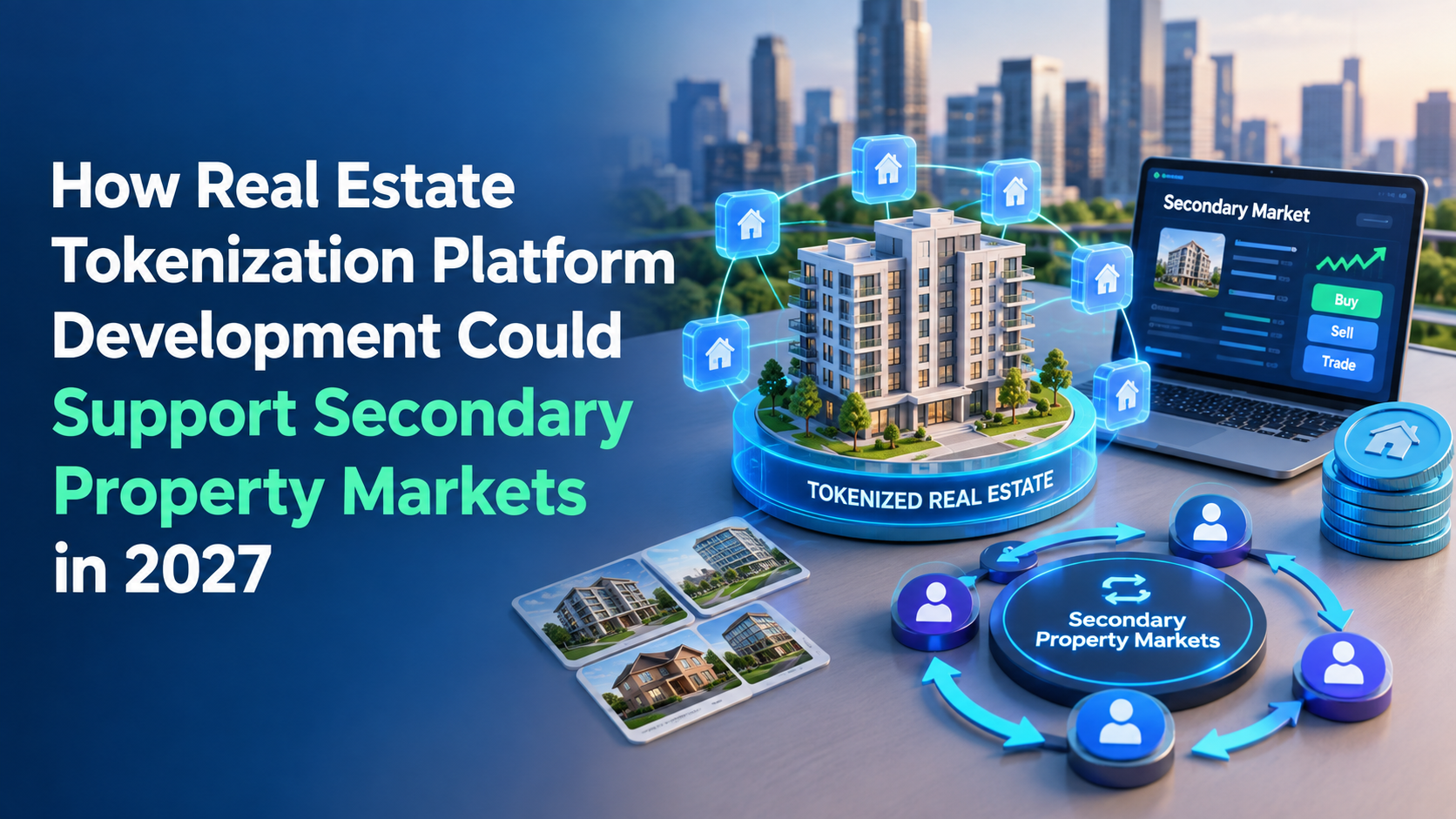
The discussion around Real estate tokenization is gradually moving beyond fractional ownership. A major area of interest is the possibility of creating secondary markets where investors can trade eligible property-linked tokens after an initial offering. Instead of waiting for a property to be sold as a whole, token holders could potentially access a marketplace where qualifying buyers and sellers interact under predefined rules.
This does not mean every tokenized property will automatically become liquid. Secondary trading depends on regulation, investor eligibility, marketplace participation, property structure, valuation, custody, and demand. Still, Real estate tokenization development could provide the technical foundation required for secondary property markets to operate in a more organized manner.
What Are Secondary Property Markets?
A secondary property market refers to transactions involving an existing investment rather than a new property issuance. In conventional real estate, this can involve selling a property, transferring an ownership interest in a real estate entity, or assigning certain property-related rights.
Tokenization introduces another possibility. A property could be connected to a legal entity, such as an SPV, and eligible interests in that structure could be represented through digital tokens. Once issued and distributed under applicable rules, those tokens could potentially be traded between approved participants.
For example, suppose an office property is represented through 100,000 digital units. An investor initially purchases 5,000 units. If the marketplace supports secondary transactions, that investor may later seek to sell some or all of those units to another eligible participant.
The property itself does not necessarily move during the transaction. Instead, the legally defined interest represented by the token changes hands.
Why Could Secondary Trading Matter in 2027?
Liquidity has long been a challenge in real estate investing. Physical properties cannot normally be divided and sold as easily as stocks or other financial instruments. A property owner may need to find a buyer willing to acquire a large asset, complete due diligence, negotiate terms, and finalize legal documents.
Tokenization could reduce some of the operational friction surrounding smaller ownership interests. A digital marketplace could provide an environment where existing investors can list eligible interests and prospective buyers can review available opportunities.
For investors, this could create additional options after the initial purchase. For property sponsors, a functioning secondary market could make tokenized offerings more attractive to participants who are concerned about holding periods.
However, secondary market activity still depends on actual demand. Technology alone cannot create buyers and sellers.
How Real Estate Tokenization Platform Development Could Support Secondary Markets
A Real estate tokenization platform development project can include several components that are relevant to secondary trading. The platform may connect property onboarding, investor verification, token issuance, custody, trading, settlement, reporting, and compliance functions.
The first stage generally involves recording property and legal information. The platform may connect property documents, ownership structures, valuation information, and entity details with the relevant token offering.
After issuance, investors can receive tokens through approved wallets or custody arrangements. If secondary trading is permitted, the marketplace can apply rules governing who can purchase, sell, transfer, or hold those tokens.
A Real estate tokenization platform development company may therefore focus on more than creating a token contract. The marketplace needs supporting systems for investor accounts, transaction records, compliance checks, settlement processes, and reporting.
Digital Marketplaces for Property-Linked Tokens
A secondary marketplace could function as a dedicated trading environment for tokenized real estate interests. Depending on the regulatory structure, the platform might use an order book, request-for-quote model, peer-to-peer transactions, or another approved trading mechanism.
An investor could view available property-linked tokens, review relevant information, check eligibility, and submit an order. The system could then match participants according to marketplace rules.
The trading interface may also display information such as token quantity, asking price, transaction history, distribution information, and holding restrictions.
The design of the marketplace needs to reflect the legal nature of the underlying asset. A token representing an interest in a property-owning entity is different from a token representing a direct property title. The platform therefore needs to connect the digital transaction with the actual legal rights associated with the asset.
Investor Identity and Transfer Restrictions
A secondary market requires more than a buy and sell button. Property-linked tokens may be subject to securities regulations, investor restrictions, geographic limitations, holding periods, or other requirements.
Identity verification can be integrated into the platform before an investor receives trading access. The system can check whether a participant satisfies the relevant eligibility requirements.
Transfer restrictions can also be written into smart contracts or enforced through the marketplace infrastructure. For instance, a token might only be transferable between approved wallets.
This approach can reduce the possibility of an unauthorized transfer, although the precise compliance mechanism depends on the jurisdiction, asset structure, and applicable regulations.
Smart Contracts and Secondary Transactions
Smart contracts can play an important role in Real estate token development by defining how tokens are issued and transferred.
For a secondary transaction, a smart contract could verify whether the buyer and seller are eligible, whether the token is transferable, and whether the transaction meets predefined conditions. Once the required checks are completed, the token and payment can be settled according to the transaction design.
Smart contracts can also support property-related events after a transaction. These may include rental distributions, fee payments, redemption events, or changes in token status.
The important point is that smart contracts do not replace legal agreements or regulatory requirements. They provide software rules for carrying out actions that have already been legally and operationally defined.
Property Valuation and Pricing
Pricing can become one of the difficult areas for secondary property markets. A token may represent an interest in an office building, apartment complex, hotel, warehouse, or other property, but its trading price can change independently of the property's latest valuation.
A secondary marketplace could display valuation reports, recent transactions, rental performance, occupancy information, income data, and other relevant metrics.
Some platforms may also connect approved data providers or valuation services to provide updated information. This can give investors more context when considering a transaction.
Still, the market price of a token is ultimately influenced by buyers and sellers. A recent property valuation does not necessarily mean that tokens will trade at exactly the same implied price.
Rental Income and Secondary Ownership
One potential benefit of tokenized property structures is the connection between ownership interests and property cash flows.
Consider a rental property generating monthly income. If eligible investors hold tokenized interests through a legally defined structure, the platform may calculate each investor's share according to the applicable ownership arrangement.
When a token changes hands in the secondary market, future distributions may be associated with the new holder from a specified settlement date.
This requires accurate ownership records and reliable accounting. The platform must know which wallet or account holds the relevant tokens at the time used for distribution calculations.
Settlement and Payment Infrastructure
Secondary markets need dependable settlement systems. After an order is matched, the platform needs to transfer the asset and settle payment according to its rules.
Depending on the jurisdiction and platform model, payments could involve fiat currency, regulated digital money, stablecoins, or another approved payment method.
The system can record the transaction, update ownership information, calculate applicable fees, and provide confirmations to the involved participants.
For a Real estate tokenization company, settlement design can therefore be an important part of platform planning. The token itself represents only one part of the transaction process.
Compliance Records and Reporting
Secondary trading can produce a large number of transactions. Each transaction may require records covering the participants, asset, quantity, price, timestamp, transfer status, and other information.
A Real estate asset tokenization company may incorporate administrative dashboards for operators, compliance teams, property managers, and investors.
These dashboards can provide transaction histories, investor records, distribution information, token balances, and reporting data.
Regulatory reporting requirements vary considerably across jurisdictions. A platform intended for use in multiple markets may therefore need different workflows based on the location and legal structure of each offering.
Liquidity Pools and Market Participation
Some tokenized asset models may consider liquidity mechanisms that differ from conventional order-book markets. For example, an approved marketplace could use liquidity pools or automated market mechanisms where legally and commercially appropriate.
However, these approaches require careful consideration because real estate assets have characteristics that differ from highly liquid digital assets. Property valuation can change gradually, while transaction costs, legal restrictions, and limited market participation can affect trading activity.
For this reason, secondary market design should begin with the legal and economic characteristics of the property rather than simply copying cryptocurrency exchange models.
Role of Real Estate Token Development in 2027
Real estate token development may increasingly involve the entire lifecycle of property-linked digital assets. Issuing tokens could be only the first stage.
A platform may need to support onboarding, investor verification, token distribution, ownership records, income payments, corporate actions, secondary transfers, reporting, and eventual redemption or exit.
This broader approach could make tokenization platforms more useful for property sponsors and investors who need infrastructure throughout an investment's lifecycle.
The focus may therefore shift from simply asking how to tokenize a property toward asking how the resulting digital interests will operate after issuance.
What Real Estate Businesses Could Consider Before Launching a Secondary Market?
A company considering Real estate tokenization development should first identify the legal rights being represented by its tokens. The relationship between the property, issuing entity, token holder, and marketplace needs to be documented.
The company also needs to determine who can participate in secondary transactions. Investor eligibility, geographic restrictions, holding periods, transfer limits, and applicable financial regulations can affect the marketplace design.
Property data also matters. Investors may need access to financial statements, valuation information, rental data, property documents, and transaction history before deciding whether to purchase an existing token position.
Technology comes after these decisions. The platform architecture should reflect the legal and operational model rather than treating blockchain as the starting point.
Role of Real Estate Tokenization Companies
A Real estate tokenization development company can assist businesses with the technical infrastructure required for tokenized property offerings. Depending on the project, this may include token contracts, investor dashboards, compliance modules, wallet integration, marketplaces, payment systems, and administrative tools.
Businesses comparing Top real estate tokenization companies or Best real estate tokenization companies should examine factors such as previous blockchain projects, real estate knowledge, smart contract practices, security processes, marketplace functionality, and post-launch support.
The right platform structure can vary depending on the property type, target investors, jurisdiction, token model, and trading approach. There is no single architecture that fits every real estate tokenization project.
Possible Secondary Market Models in 2027
Different property projects may use different secondary market structures. A permissioned marketplace could restrict participation to verified investors. A regulated trading venue could provide more formal transaction infrastructure where permitted.
Another model could involve a bulletin-board style marketplace where investors indicate buying or selling interest before completing transactions through an approved process.
Property funds and portfolios may also use tokenized interests that provide exposure to multiple assets rather than a single building.
These models demonstrate that secondary property markets do not necessarily need to follow one format. Their structure will depend on the legal rights represented by the tokens and the requirements of the relevant market.
Challenges That Could Remain
Tokenization does not remove the traditional challenges associated with property investment. Valuation disputes, property performance, legal ownership, taxes, maintenance costs, market demand, and regulatory requirements can still affect an investment.
Liquidity is another important consideration. A tokenized asset may be easier to transfer technologically, but that does not guarantee that a buyer will be available when an investor wants to sell.
There is also the issue of interoperability. Different tokenization platforms may use different standards, custody models, identity systems, and compliance structures. Connecting these systems could become an important consideration as secondary markets develop.
Cybersecurity is another concern. Smart contract vulnerabilities, compromised accounts, fraudulent activity, and operational errors can create financial risks. Regular security reviews and appropriate controls are therefore important parts of platform development.
What Could Secondary Property Markets Look Like in 2027?
By 2027, tokenized property markets could include a mixture of primary issuance platforms, regulated secondary marketplaces, private trading venues, and specialized investment platforms.
Some assets may remain restricted to qualified or approved participants, while others could have broader access where regulations permit. Institutional investors may also participate in tokenized funds, debt instruments, commercial properties, and portfolios.
The practical value of these markets will depend on participation, regulation, asset quality, market infrastructure, and investor demand. Real estate tokenization platform development can provide the technical foundation, but successful secondary markets require legal, financial, and operational systems working together.
Conclusion
Secondary property markets could become an important area for Real estate tokenization development in 2027 as property sponsors and investors look beyond initial token issuance toward ongoing ownership and transfer. A well-designed platform could connect investor verification, digital ownership records, marketplace functions, smart contracts, property information, income distributions, and settlement processes within one environment. However, tokenization does not automatically create liquidity, and secondary trading remains dependent on regulations, legal structures, investor participation, pricing information, and market demand. Businesses entering this space will need to consider both the property rights represented by tokens and the infrastructure required after issuance. Blockchain App Factory provides Real estate tokenization development services.
FAQs
1. What is a secondary property market?
A secondary property market allows existing investors to sell or transfer eligible property-related interests to other investors instead of purchasing directly from the original issuer.
2. How can tokenization support secondary real estate trading?
Tokenization can represent eligible property interests as digital tokens that may be transferred between approved participants through a suitable marketplace and compliance system.
3. Does tokenization guarantee real estate liquidity?
No. Tokenization can make certain ownership interests easier to transfer, but liquidity still depends on buyers, sellers, regulations, market participation, asset quality, and pricing.
4. What role do smart contracts play in tokenized property markets?
Smart contracts can manage predefined rules for token issuance, transfers, ownership records, distributions, and other transactions, subject to the legal and regulatory structure of the project.
5. What features can a real estate tokenization platform include?
A platform may include property onboarding, investor verification, token issuance, wallet or custody integration, trading functions, payment processing, ownership records, distribution management, reporting, and administrative dashboards.
6. Can tokenized property interests be traded globally?
Not necessarily. Geographic restrictions, investor eligibility rules, securities regulations, and other legal requirements may limit who can hold or trade particular tokens.
7. Why could property valuation matter in a secondary marketplace?
Valuation information can give investors context when assessing token prices. However, market prices can differ from formal property valuations because buyers and sellers determine trading prices.
8. What does real estate token development involve?
Real estate token development can involve creating the token structure, smart contracts, investor systems, ownership records, compliance mechanisms, wallets, marketplace functionality, and supporting infrastructure for the property investment model.



 Arabic
 French
 Spanish
 Portuguese
 Deutsch
 Turkish
 Dutch
Dutch
 Italiano
 Russian
 Romaian
 Portuguese (Brazil)
 Greek
Greek
 Bengali