


Decommissioning a Data Center Requires More Than Removing Servers and Racks
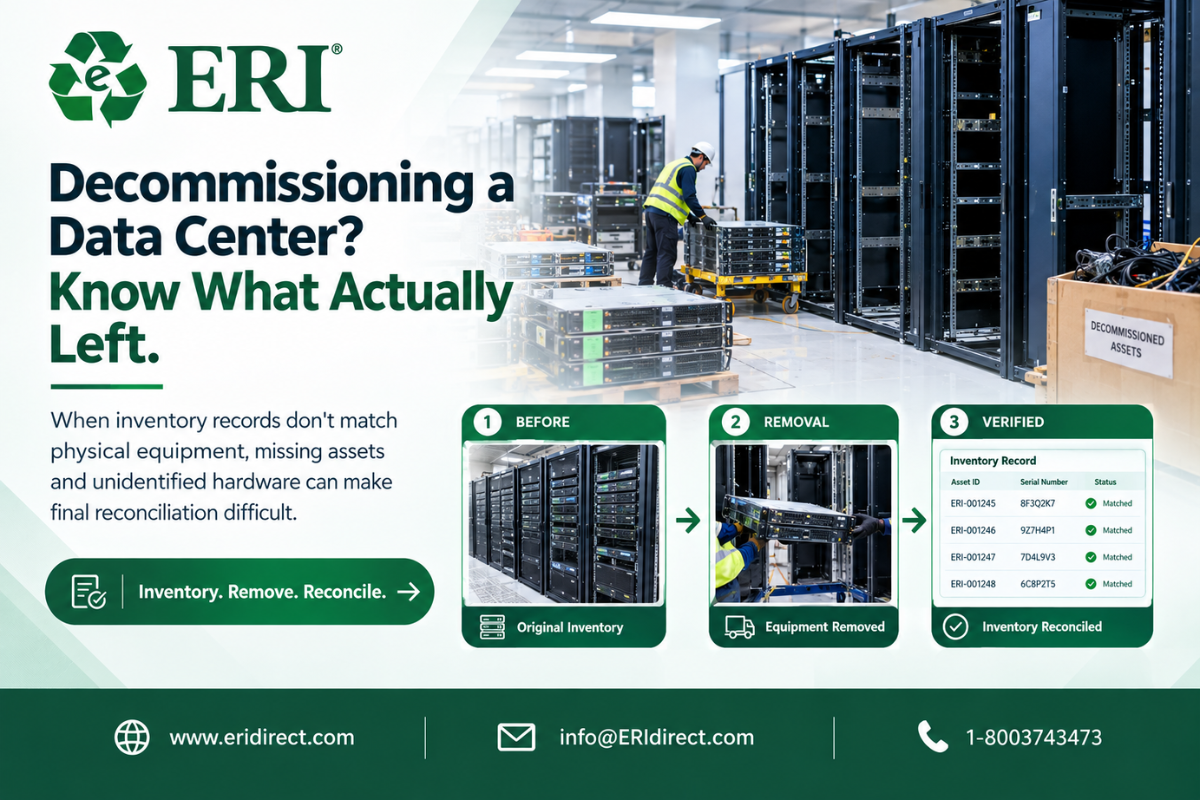
Data center facilities seem rather simple: servers, storage devices, network components, racks, power supply, batteries, and cables are all to be removed. In actuality, decommissioning a data center involves managing the connection between all these physical components and the documentation about them.
One of the problems at the very beginning is taking inventory. Since data centers exist for many years, asset inventories may change because of hardware changes, relocation of equipment, updates, and maintenance of the existing one. During decommissioning, companies may notice the absence of equipment, wrong serial numbers, unknown equipment, or removed hardware that does not have any documentation.
All these should be solved prior to removal of equipment on a larger scale. Physical inventory can determine what is there and where differences are between the inventory in the facility and the company's inventories.
The problem of maintaining asset identity also arises during the decommissioning process. Equipment must not only be counted while being removed but also the company must maintain sufficient documentation to connect physical component with its inventory record and final destination.
This is particularly relevant for storage hardware. The server or storage hardware still holds valuable information even after it has been disconnected from the network. In case an asset is disposed of without logging into the system, it would become hard to determine whether the equipment was subjected to the proper process of destroying the information stored.
The use of a controlled workflow in such a scenario ensures that there is a way of keeping track of each asset through assignment of the appropriate disposition. Assets may be set to be reused, resold, recycled or destroyed based on certain conditions. What is more important here is that the tracking continues regardless of the outcome.
Toward the end of the project, reconciliation serves as the last point of verification. An organization should be able to compare the initial inventory of assets against those that leave the premises and then follow them up to their dispositions.
This is the reason why decommissioning a data center cannot only be considered a process of physically taking away equipment from a facility. This process also entails information management, asset tracking, security considerations, and documentation.
After all, when the equipment disappears from the facility, it is quite difficult to tell whether the problem has happened at the stage of inventory, demolition, transportation, or processing. Proper documentation during the entire process helps understand what exactly happened.

 English
 Arabic
 French
 Spanish
 Portuguese
 Deutsch
 Dutch
Dutch
 Italiano
 Russian
 Romaian
 Portuguese (Brazil)
 Greek
Greek
 Bengali