


Recycled PP Plastic: Transform Waste Into Reusable Material
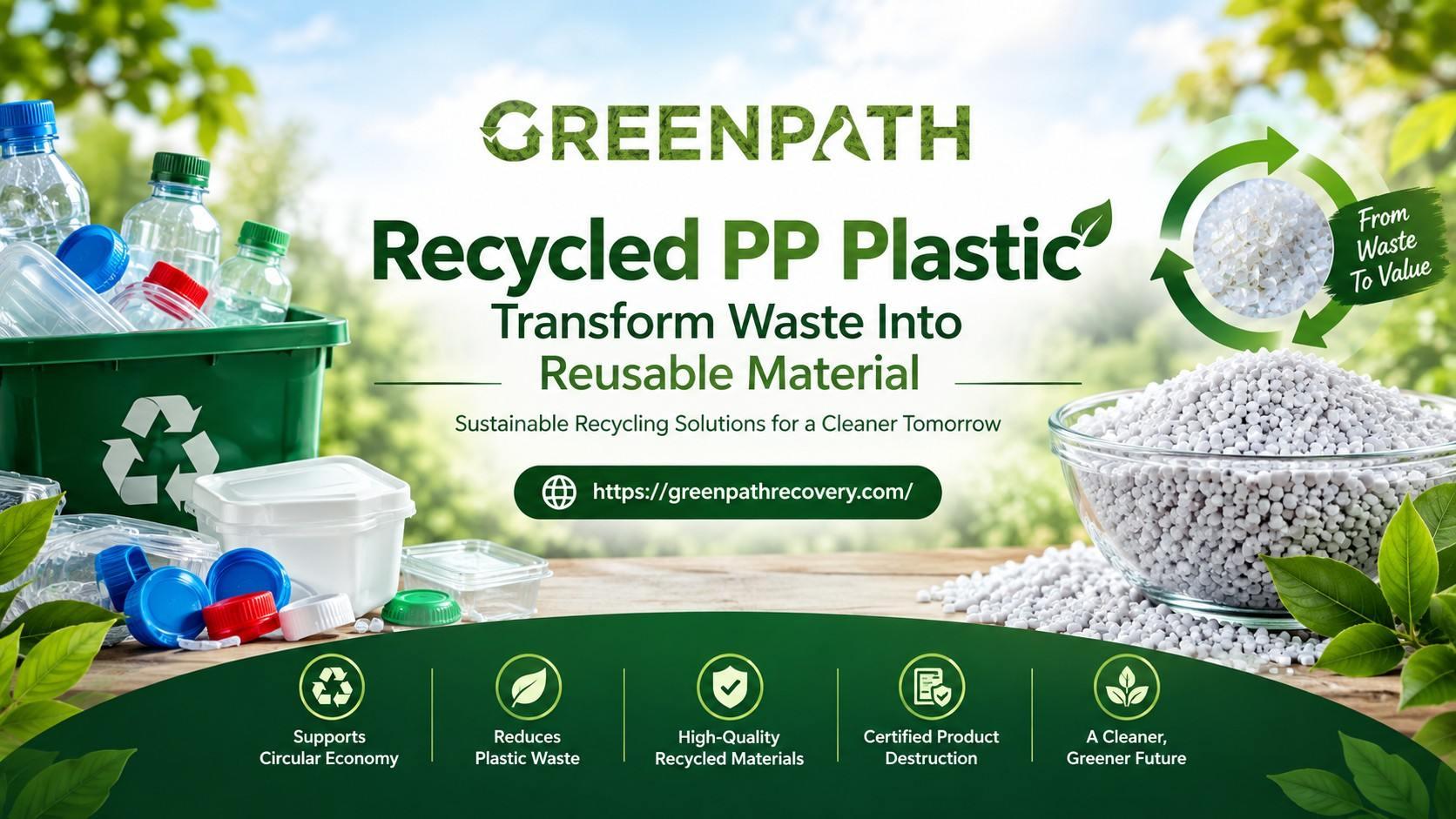
Plastic is an important material across modern industries, but managing plastic waste responsibly has become an increasingly important business priority. Manufacturers, retailers, distributors, and other organizations generate large quantities of plastic through packaging, products, production processes, and inventory management.
Instead of treating this material as waste with no further value, businesses can recover suitable plastics and return them to the manufacturing cycle. Recycled PP Plastic is one example of how discarded polypropylene can be processed into a useful secondary raw material.
For businesses developing a more responsible recycling strategy, understanding polypropylene, how it is recycled, and how it fits into commercial recycling programs can help create more efficient and sustainable waste-management practices.
What Is Polypropylene?
Polypropylene, commonly called PP, is a lightweight and durable thermoplastic used in many everyday and commercial products. It is valued for its resistance to moisture, chemicals, and fatigue, making it suitable for a wide range of applications.
PP can be found in items such as:
-
Food and consumer-product containers
-
Bottle caps and closures
-
Automotive components
-
Packaging materials
-
Industrial containers
-
Household products
-
Reusable storage products
Because polypropylene is widely used, significant quantities can enter commercial and post-consumer waste streams. Proper collection and processing can help recover this material for another useful purpose.
What Is Recycled PP Plastic?
Recycled PP Plastic is polypropylene that has been recovered from used products or manufacturing waste and processed so it can potentially be used again. Depending on the source, it may come from post-consumer materials, commercial recycling streams, or post-industrial production waste.
The recycling process generally starts with collecting and sorting PP from other materials. The plastic is then cleaned, shredded, ground, and processed into a form that can be used by manufacturers.
The resulting material may be available as flakes, regrind, or pellets, depending on the recycling process and its intended application.
The quality of Recycled PP Plastic depends on several factors, including the original material, contamination levels, color, sorting accuracy, and processing methods. Effective material recovery therefore requires a well-organized recycling system.
How Is PP Plastic Recycled?
Commercial polypropylene recycling typically involves several stages.
1. Collection
Businesses collect suitable polypropylene materials from their facilities, warehouses, retail operations, or other locations.
2. Sorting
PP is separated from other polymers and unwanted materials. Accurate sorting is important because mixing different plastic types can affect the quality of the recovered material.
3. Cleaning
Collected plastics are cleaned to remove dirt, labels, residues, and other contaminants that could interfere with processing.
4. Shredding and Grinding
The cleaned plastic is mechanically reduced into smaller pieces. This creates a more manageable material for subsequent processing.
5. Processing
The material may undergo additional separation, filtration, melting, and extrusion before being converted into recycled resin or pellets.
6. Reuse
Manufacturers can use suitable recycled polypropylene in applications where its properties and quality meet the requirements of the finished product.
This process gives Recycled PP Plastic a potential second life while reducing the amount of recoverable material sent for disposal.
Why Should Businesses Use Recycled PP?
One of the primary benefits of recycling polypropylene is resource recovery. Instead of relying exclusively on virgin plastic, businesses and manufacturers can consider recycled material for suitable applications.
Using Recycled PP Plastic can support several sustainability objectives, including reducing plastic waste, improving material recovery, and supporting a circular economy.
A circular economy focuses on keeping materials in use for as long as possible. Recycling helps move plastic away from a traditional linear model—produce, use, and discard—and toward a system where materials can be recovered and reused.
However, recycled content should always be selected according to the technical requirements of the intended application. Not every recycled material is appropriate for every product.
The Role of Certified Product Destruction
Recycling is not limited to materials that have already reached the end of their normal consumer use. Businesses may also have obsolete inventory, damaged products, rejected goods, recalled items, or branded materials that need controlled disposal.
Certified Product Destruction provides businesses with a documented process for securely destroying products or materials that should no longer enter the marketplace.
When appropriate materials can be recovered during the destruction process, recycling and destruction services can work together. For example, polypropylene components may be separated and directed into a suitable recycling stream rather than unnecessarily discarded.
A reliable Certified Product Destruction program can also help businesses maintain records confirming that designated products were destroyed according to agreed procedures. This can be particularly valuable for companies handling sensitive, obsolete, or branded inventory.
Recycled PP and Other Recycled Plastic Streams
Commercial recycling programs often handle more than one type of polymer. Separating materials correctly allows each stream to be processed according to its characteristics.
For example, PCR rHDPE is post-consumer recycled high-density polyethylene that can be used in appropriate manufacturing applications. While PP and HDPE are different polymers, both demonstrate how recovered plastic can become a valuable secondary material.
PCR rHDPE may be recovered from suitable post-consumer containers and processed into recycled resin, while polypropylene materials follow their own sorting and processing pathway.
Keeping PP separate from PCR rHDPE is important because different polymers have different melting points, processing characteristics, and performance properties.
For businesses managing multiple plastic waste streams, proper identification and segregation can significantly improve the efficiency of material recovery.
Benefits of a Commercial PP Recycling Program
A professional recycling program can make polypropylene recovery easier to manage at scale.
Some potential benefits include:
Reduced waste: Recoverable polypropylene can be diverted from disposal when suitable recycling infrastructure is available.
Material recovery: Businesses can turn certain waste streams into materials that may have further commercial value.
Better waste management: Clearly defined collection and sorting procedures can make recycling more consistent.
Support for sustainability goals: Recycling can contribute to broader corporate resource-efficiency and environmental initiatives.
Improved inventory management: When combined with Certified Product Destruction, businesses can establish controlled processes for obsolete or unusable products while identifying recyclable components.
Businesses that handle several polymers can also establish separate streams for PP, HDPE, and PCR rHDPE to help prevent cross-contamination.
How to Improve PP Recycling at Your Business
Successful recycling starts with understanding the materials your business generates. Conduct a waste assessment to identify where polypropylene is being used and discarded.
Next, establish dedicated collection points and educate employees about acceptable materials. Keeping polypropylene separate from incompatible plastics can improve the quality of the recovered stream.
It is also important to work with an experienced recycling partner that can evaluate the material, manage collection and processing, and explain its potential end uses.
If your business also has obsolete or sensitive products, integrating Certified Product Destruction into your overall waste-management strategy can provide an additional layer of controlled handling.
The Future of Recycled Polypropylene
As businesses continue looking for practical ways to reduce waste and use resources more efficiently, recycled polymers will remain an important part of the circular economy.
Advances in sorting, cleaning, processing, and quality control can help improve the recovery of polypropylene and other valuable materials. Recycled PP Plastic can therefore play a meaningful role in helping businesses move toward more responsible material management.
At the same time, complementary streams such as PCR rHDPE can help organizations recover different types of plastic rather than treating all plastic waste as one category.
For businesses with products requiring secure disposal, Certified Product Destruction can also be integrated with recycling where material recovery is appropriate.
Conclusion
Turning plastic waste into reusable material requires more than simply collecting discarded products. It requires accurate sorting, responsible processing, quality control, and a clear understanding of how recovered materials can be reused.
Recycled PP Plastic provides businesses with an opportunity to recover polypropylene and potentially return it to productive use. When supported by an effective commercial recycling program, this approach can help reduce waste and support a more circular material economy.
By combining polypropylene recovery with other recycled streams such as PCR rHDPE, and incorporating Certified Product Destruction where secure disposal is necessary, businesses can develop a more comprehensive approach to managing their plastic waste.
For companies looking to make their recycling processes more efficient and environmentally responsible, working with an experienced commercial recycling partner can be an important step toward turning waste into a valuable resource.

 English
 Arabic
 French
 Spanish
 Portuguese
 Deutsch
 Dutch
Dutch
 Italiano
 Russian
 Romaian
 Portuguese (Brazil)
 Greek
Greek
 Bengali