


Biohazard Bags for Hospitals, Labs, and Healthcare Facilities
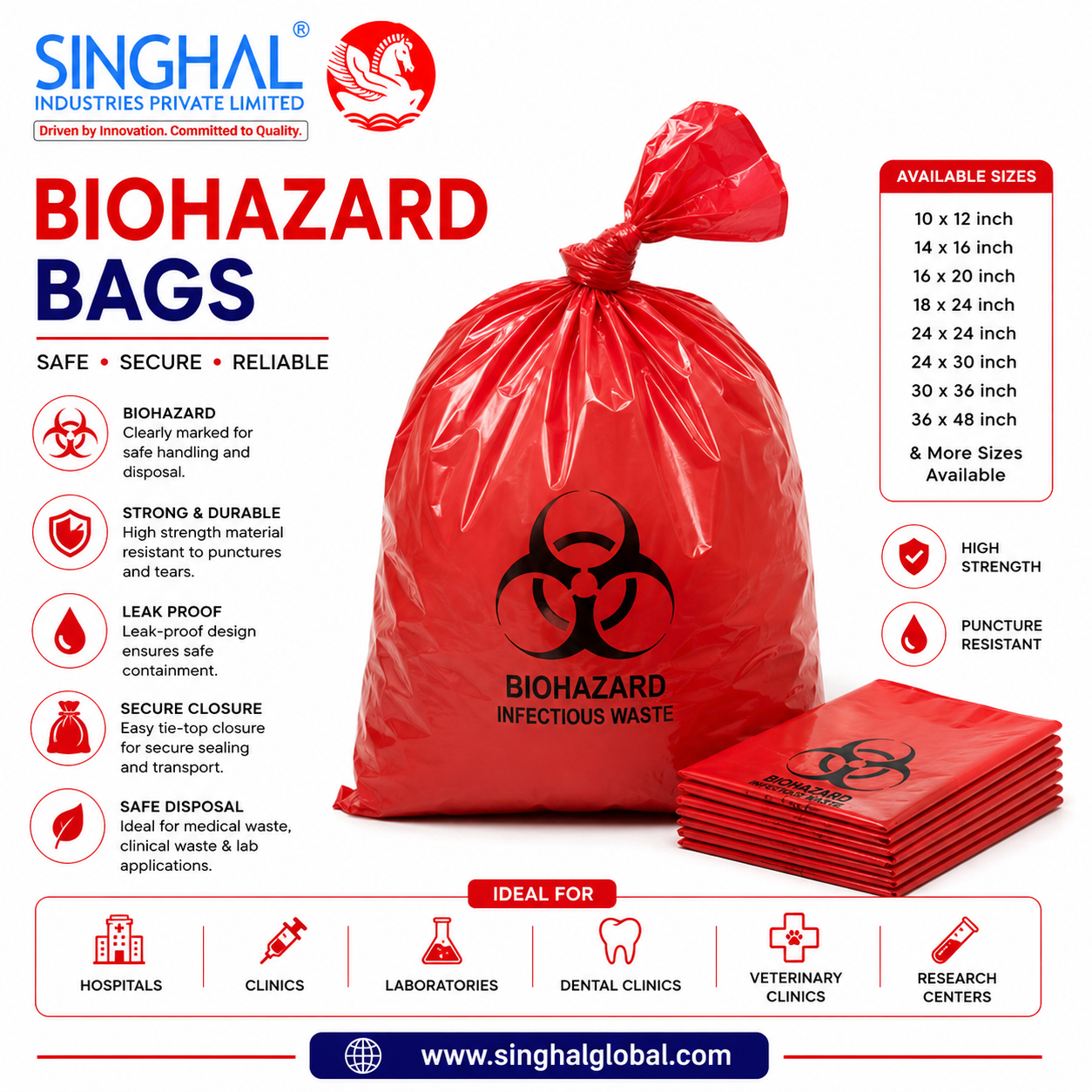
In hospitals, clinics, diagnostic laboratories and research facilities biohazard bags are a first line defensive barrier against infection. They are engineered to securely gather, hold and carry items contaminated with blood, bodily fluids, pathogens and other infectious agents. These bags are not ordinary trash bags; they are colour-coded, stamped with the universal biohazard symbol, and constructed of long-lasting, leak-proof plastic to prevent spills from coming into contact with other materials. They help shield healthcare personnel, sanitation employees, patients and the surroundings from hazardous pollutants. Are they for large-size hospitals only? Not at all. So any facility that generates infectious waste has to have them—from dental clinics to veterinary labs. However, either using the wrong sort or incorrectly discarding them presents significant health hazards, safety risks and legal liability.
Hospital Applications- Wards, OTs Isolation Rooms More
In health facilities, biohazard bags are adapted to different spaces from wards, operating theatres, isolation rooms, emergency departments and intensive care units to contain infectious waste at the point of origin. Yellow bags are mainly for dirty waste such as dressings that can be smeared with liquids, such as blood, which cannot be drained out of intravenous (IV) sets and other items like expired medicine, cotton and tissues used by the patients. Red bags deal with recyclable disposable waste products that cannot be autoclaved and recycled, including plastic, rubber, glass, and metal. And in isolation rooms or infectious disease wards, being separated totally is critical for the prevention of cross-contamination. Biohazard bags are used by staff as PPE, gowns, masks and gloves worn by the patient care provider. Certain facilities such as hospitals utilize autoclave-safe bags for any waste which needs sterilization at the site of management before disposal. Consistency is the key clear colour-coding, trained/ competent operators and good quality bags lead to fewer mistakes and improved safety.
Applications in Laboratory: Pathology, Microbiology and Research Laboratories
Clinical and research labs produce large amounts of biohazardous waste every day. In pathology labs, disposable sample tubes, culture plates, slides, gloves and contaminated consumables are collected in biohazard bags. They are used in microbiology labs for petri dishes, agar plates and microbial cultures when autoclaved and cooled. Research labs that work on BSL-2 or higher pathogens have to use biohazard symbol plastic bags and follow other biosafety regulations. Other labs use red or orange bags for non-sharp infectious waste whereas sharps are separated into puncture-proof containers. Autoclave-safe bags are used in place for areas where we need to sterilise the use of waste before disposal. The labelling should be clear and there should be separate segregation to avoid the co-mixing of any infectious waste with general trash or recyclables biosafety.
Choosing The Right Specifications: Thickness, Size Compliance
Choosing the right spec biohazard bag is vital for safety and regulatory compliance. Crucial parameters are thickness (microns or mils), size (to fit your bins or containers), colour-coding, and any certifications that apply to you (e.g., biomedical waste compliance, autoclave-safe, leak-proof testing/UN marking for transport). Thick bags (e.g. 1.5–2 mil or 40–50+ microns) are less susceptible to puncturing and more appropriate for heavy / sharp contaminated items. Our smaller bags can be placed in desktop bins found in clinics, and our larger bags are suitable for use in hospital wards with clinical trash and labs. If you are looking for maximum strength and clarity, ask if the bags are made from virgin LDPE/HDPE. Many bags are printed with biohazard symbols, waste category labels, fill lines,guidelines for the volume of waste transported in each bag (UN 3291). You are not tested on like after you place an order; request samples and test for leak resistance, seal integrity, fit into your autoclave or waste containers before placing a large order.
Developing with a reputable Biohazard bags
Not all Biohazard Bags suppliers are created equal in terms of quality and credibility. A good supplier of Biohazard Bags should have clear and precise details regarding material type, thickness, size, colour, print quality and biomedical waste compliance. Inquire about test data on tensile strength, puncture resistance, leak performance and autoclave compatibility. The key is consistency: bags can vary in terms of thickness, seal quality or print clarity which can lead to confusion, leaks or issues with regulatory compliance. Price matters, but it should not be the only factor. If your bag is cheap and rips or leaks, and it hauls the wrong kind of biomedical waste without proper biohazard markings — which we all know can happen then cleanup, fines, safety incidents can create far higher costs. It has Singhal Industries Pvt Ltd, Company Trade Profiles as a top Manufacturer Supplier Exporter of Biohazard Bags in Ahmedabad, Gujarat biohazard bags biomedical waste bags and related Medical Packaging products. However, buyers must check current specifications and testing data as well as delivery terms in advance before making a bulk order.
Sourcing exporting from a reliable Biohazard Bags
Buyers who really feel challenged with the logistical and documentation requirements of buying goods from India can easily take the help of a renowned Biohazard Bags Exporter. Even exporters experienced in biohazard shipping will be able to offer good guidance on items such as packaging, transport requirements for large orders and more. They may also provide coordination with respect to delivery timelines so stock comes when needed not too early and not too late. In some markets, various certificates or test reports must also be provided for customs clearance or client approval — particularly in cases of autoclave-safe, leak-proof, UN-marked and regulated medical waste applications. Indian manufacturers Singhal Industries Pvt Ltd claims to manufacture, export its range of flexible packaging and lining products like biohazard bags for the customers in America, Africa, Asia, Australia and Europe. International buyers must ensure material specifications, thickness, roll or bale packing and lead-times with the supplier to eliminate any misunderstanding.
Best Practise of Proper Usage, Sealing Disposing
Choosing the right biohazard bag to utilize is not only essential but correct use of them as well. Efficient segregation requires that bags be disposed of in identified, labelled bins at the points of waste generation. If you fill bags — even paper ones never overfill them, bagel or box. Contaminated waste must be handled with staff wearing appropriate PPE (gloves, masks, aprons, eye protection). Empty bags need to be tied tight typically with a gooseneck tie or heat seal and all must carry the universal biohazard symbol and the appropriate way of waste. Full bags must be kept in closed, leak-tight rooms or containers awaiting removal by an authorized medical waste service provider. Never throw biohazardous waste in city rubbish cans. Depending on local regulations, some waste streams must be autoclaved or other pre-treatmenot before being treated and disposed of further.
Conclusion
Biohazard bags are a very small but vital component of safe medical waste disposal, helping to maintain proper hygiene and follow regulatory compliance at hospitals, clinics, labs, and many other healthcare locations. Their primary advantages are enhanced safety, compliance to regulatory demands, leak prevention and delineation of waste using colour-coding and biohazard symbols. Yellow wastes, red waste disposables, black and white autoclave-safe disposable materials are used for different types of disposal and proper documentation while minimizing risk. Buffing, polishing, welding, and blending are unsuccessful without experts at choosing the right thickness and size for the application as well as certification, training any number of staff members to use correctly for success or sourcing from a reliable supplier or exporter. When selected and used correctly, biohazard bags can prevent harmful contaminants from reaching those transporting them as well as the surrounding environment, protecting workers and patients.
Frequently Asked Questions
Q1. Why are biohazard bags used in hospitals?
Biohazard bags or bags for infectious waste (e.g., blood-soaked dressings, contaminated PPE, tissues, IV sets and expired medicines are generated in wards, OTs, isolation rooms and emergency departments.
Q2. Difference between red and yellow biohazard bags ?
Containers with red bags are designated for contaminated recyclable waste (plastic, glass, metal) that can be recycled through autoclaving. What are yellow bags? Yellow bags for contaminated waste that are non-recyclables such as dressings, cotton, tissues and expired medicines.
Q3. Biohazard bags Lab Biohazard Bags Are biohazard bags in the lab?
Labs that manage BSL-2 or higher pathogens should place non-sharp infectious waste in biohazard bags marked with the biohazard symbol, and sharps go into a puncture-resistant container.
Q4. How are biohazard bags to be sealed and stored?
Biohazard bags should be closed (gooseneck tie or heat seal), labelled with the biohazard symbol and waste category, and kept in a separate containment unit/room to await collection by a licensed professional. biosafety.
Q5. Who is the largest Manufacture of Biohazard Bags?
As such, there is no definitive public ranking that wears the crown as the largest manufacturing company in the world. SINGHAL INDUSTRIES PVT LTD is a well-known Indian manufacturer and exporter of biohazard bags, biomedical waste bags, biohazard waste bags, medical packaging products; buyers should compare the specification, testing data delivery terms before making an order.

 Arabic
 French
 Spanish
 Portuguese
 Deutsch
 Turkish
 Dutch
Dutch
 Italiano
 Russian
 Romaian
 Portuguese (Brazil)
 Greek
Greek
 Bengali