


Material Compatibility in Automated Apparel Manufacturing
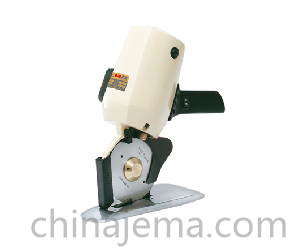
In garment production, small fastening components can have a surprisingly important effect on both usability and appearance, and button attachment is a key process connecting buttons with the fabric structure of a finished product. Shirts, coats, uniforms, dresses, workwear, and fashion garments all depend on secure fastening for everyday use. Although the operation may seem simple from a consumer perspective, reliable manufacturing requires careful coordination between materials, positioning, machine movement, and downstream quality control.
Buttons can be manufactured from plastic, resin, metal, natural materials, or engineered compounds, while fabrics can range from lightweight woven textiles to heavy workwear materials and flexible blended fabrics. Each combination creates different processing conditions. A fastening system should therefore consider the physical relationship between the button and fabric rather than treating every garment in exactly the same way. Material knowledge becomes an important foundation for creating a stable and adaptable production process.
Automation can make repeated fastening operations more consistent. In manual production, workers need to position materials and components repeatedly, and the result can be influenced by fatigue, experience, and working speed. Automated systems can organize repetitive actions into a defined workflow, helping manufacturers maintain greater uniformity across production batches. This is especially useful when a factory produces large quantities of garments that need to maintain a consistent appearance.
Positioning is one of the most important elements of fastening. A button needs to correspond correctly with its matching opening or fastening structure. If its location is inconsistent, the finished garment may become difficult to close or appear visually unbalanced. Controlled automation can support more repeatable placement and reduce unnecessary adjustments during later stages. For manufacturers, this can improve workflow organization while helping maintain the intended design of the garment.
The relationship between material and fastening technology becomes particularly important with delicate or flexible textiles. Lightweight fabrics may require careful support during processing, while stretch materials can move or change shape when tension is applied. Heavy fabrics create different demands because they may require stronger mechanical interaction. A well-organized manufacturing process considers these material behaviors before establishing the fastening workflow, allowing machinery and operators to work together more effectively.
From the consumer's perspective, fastening quality is closely connected with comfort and confidence. A button should feel secure while remaining easy to use. Its position should support natural movement, and its appearance should complement the overall garment design. These characteristics can influence how customers perceive a product even though they may never consider the manufacturing process behind them. Reliable fastening is therefore part of the quiet quality that makes clothing comfortable and practical in everyday life.
Fashion also gives buttons an aesthetic role. They can act as decorative elements, reinforce a brand's visual identity, or become a distinctive part of a garment's design language. Different materials, shapes, surfaces, and colors can create very different impressions. This means automated fastening should not be viewed only as a functional operation. It also supports manufacturers in translating design concepts into repeatable physical products.
JEMA develops textile machinery with attention to practical production environments, where automation needs to work alongside human operators and other manufacturing stages. A fastening process may connect with fabric preparation, sewing, inspection, finishing, and packaging. When these operations are coordinated effectively, manufacturers can reduce unnecessary handling and create a more predictable movement of products through the factory.
Production flexibility is increasingly important because apparel companies regularly introduce new styles and materials. Manufacturers may need to switch between different fabrics, button types, and garment constructions while maintaining efficient production. Adaptable automation can help factories respond to these changes without depending entirely on repetitive manual operations. This flexibility is especially valuable for businesses serving multiple clothing categories or producing customized orders.
Sustainability also influences the development of modern textile production. Better process control can reduce avoidable rework and material waste associated with inconsistent fastening operations. More organized workflows can also improve the use of labor and production resources. Durable garment construction has an additional benefit because products that remain functional through repeated use can better support longer product life and more responsible consumption.
Operator experience should remain part of equipment selection. Automated machinery does not eliminate the need for people; instead, it changes their role toward supervision, setup, material management, inspection, and production coordination. Equipment that is practical to operate can make this relationship more effective. A well-designed manufacturing environment allows automation to provide consistency while workers retain the flexibility needed to respond to real production conditions.
As apparel technology continues to evolve, button attachment represents more than a single fastening action. It brings together material compatibility, automated positioning, production efficiency, garment design, and consumer comfort. Manufacturers seeking textile automation solutions can explore JEMA's equipment and production capabilities at https://www.chinajema.com/product/ when planning more organized and adaptable garment manufacturing workflows.

 English
 Arabic
 Spanish
 Portuguese
 Deutsch
 Turkish
 Dutch
Dutch
 Italiano
 Russian
 Romaian
 Portuguese (Brazil)
 Greek
Greek
 Bengali