


Choosing Airflow Equipment for Industrial Systems
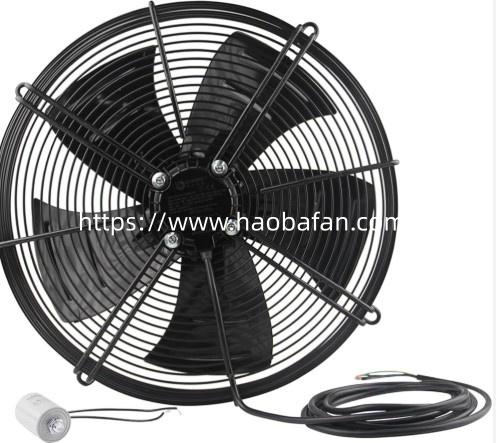
Industrial ventilation systems depend on carefully coordinated mechanical components, and choosing a capable Centrifugal Fan Factory can help buyers better understand how materials, impeller construction, housing geometry, motor integration, and manufacturing processes influence the final equipment. Centrifugal systems are widely used for controlled air movement because their operating principle allows air to enter the impeller and move outward before being guided toward the discharge side.
The impeller is central to this process. As the rotating component turns, its blades transfer energy to the surrounding air. Blade profile, spacing, orientation, and structural consistency influence airflow behavior. Manufacturing accuracy therefore matters because even relatively small differences between blades can affect balance, vibration, and the consistency of the rotating assembly.
Housing design works together with the impeller. After air leaves the rotating assembly, the casing guides it toward the outlet. The internal shape of the housing can influence airflow transitions and turbulence. Accurate fabrication helps maintain the intended relationship between the impeller and casing, supporting stable operation across the complete ventilation system.
Material selection is another important manufacturing consideration. Industrial ventilation equipment may operate in environments containing dust, humidity, temperature variation, or other external influences. Structural materials should provide suitable rigidity and mechanical stability while remaining practical for fabrication. Surface treatment can also be considered when the installation environment creates additional demands on exposed components.
Motor integration provides the rotational energy required to operate the impeller. The motor, shaft arrangement, bearings, mounting structures, and electrical connections need to function as a coordinated mechanical and electrical system. Proper alignment can help reduce unnecessary vibration and mechanical stress, while suitable mounting can provide greater stability during continuous operation.
Balancing is particularly important for rotating assemblies. An imbalanced impeller can create vibration that affects bearings, housing structures, mounting points, and connected ductwork. Careful assembly and balancing procedures can help control these effects. This is why manufacturing quality should be considered as a complete process rather than reduced to the quality of a single component.
Noise management also involves both mechanical and aerodynamic factors. Rotating imbalance can produce mechanical sound, while turbulent airflow can create aerodynamic noise. Blade design, housing geometry, inlet conditions, mounting stability, and system configuration can all influence the acoustic result. A ventilation solution should therefore be evaluated within its intended installation environment.
Different industries have different airflow requirements. Manufacturing workshops may use centrifugal equipment for general ventilation or process-related air movement. Warehouses, commercial buildings, equipment rooms, and agricultural facilities may incorporate similar technology into broader ventilation networks. The correct configuration depends on building layout, airflow routes, environmental conditions, and the relationship between the fan and connected equipment.
Maintenance considerations should be incorporated from the beginning of equipment selection. Dust and airborne particles can accumulate on impeller surfaces and within airflow passages. Over time, contamination can influence airflow and rotating balance. Routine inspection, cleaning, connection checks, and mechanical observation can help identify developing problems before they affect broader system operation.
A professional Centrifugal Fan Factory should maintain controlled manufacturing procedures across material preparation, blade forming, impeller assembly, balancing, housing fabrication, motor integration, and final inspection. Quality control at each stage helps reduce manufacturing variation and supports consistency for distributors and contractors handling multiple ventilation projects.
For B2B buyers, supplier evaluation should also include communication and technical support. A manufacturer should be able to discuss the intended operating environment, airflow arrangement, installation conditions, maintenance requirements, and system integration. This information provides a stronger basis for selecting equipment than general product descriptions alone.
Energy management should be considered at the complete system level. Ductwork, filters, bends, grilles, outlets, and other components can create resistance that influences the amount of work required to move air. Proper system planning can help equipment operate in a more suitable range while reducing unnecessary airflow losses.
Installation quality also has a direct relationship with long-term operation. Secure mounting, appropriate alignment, suitable electrical connections, and sufficient maintenance access should be established before commissioning. Incorrect installation can introduce vibration or airflow restrictions even when the equipment itself has been manufactured carefully.
Safety remains fundamental in industrial ventilation. Rotating components should have appropriate guarding where required, electrical systems should be installed according to applicable practices, and supporting structures should be secure. Maintenance procedures should also account for moving components and electrical energy before inspection or service begins.
For international buyers, manufacturing capability, material control, assembly consistency, technical communication, and after-sales support can all influence supplier suitability. Evaluating these factors together helps contractors and distributors establish more reliable procurement decisions for long-term ventilation projects.
Taizhou Haoba Electromechanical Co Ltd. provides air movement equipment for industrial and commercial applications, focusing on practical manufacturing and ventilation system integration. Buyers looking for related airflow solutions can explore https://www.haobafan.com/product/mixed-flow-fan/ when evaluating equipment for industrial air handling and ventilation projects.

 English
 Arabic
 French
 Spanish
 Portuguese
 Deutsch
 Turkish
 Dutch
Dutch
 Italiano
 Russian
 Portuguese (Brazil)
 Greek
Greek
 Bengali