


Tesamorelin Peptide: Clinical Research, Benefits, Safety & Growth Hormone Insights | ZyCarePeptides
Tesamorelin Peptide: Clinical Research, Benefits, Safety & Growth Hormone Insights | ZyCarePeptides
Tesamorelin is a synthetic growth hormone–releasing factor (GHRF) analog that has been studied for its effects on growth hormone signaling and visceral adipose tissue. Research has primarily focused on adults living with HIV who develop excess abdominal fat associated with lipodystrophy. At ZyCarePeptides, understanding the clinical evidence behind Tesamorelin can help readers distinguish established medical uses from claims that go beyond current research.
What Is Tesamorelin?
Tesamorelin works by mimicking growth hormone–releasing hormone activity. This stimulates the body's natural release of growth hormone and can increase levels of insulin-like growth factor 1 (IGF-1). Clinical studies have investigated whether this pathway can selectively reduce visceral adipose tissue—the fat stored around internal abdominal organs.
In the United States, tesamorelin is available as EGRIFTA SV and has an FDA-approved indication for reducing excess abdominal fat in HIV-infected adults with lipodystrophy. The FDA specifically states that it is not indicated for weight-loss management.
Tesamorelin Benefits Supported by Research
One of the most studied potential benefits of tesamorelin is its effect on visceral fat. A randomized clinical trial involving 404 HIV-infected adults with excess abdominal fat found that tesamorelin reduced visceral adipose tissue more than placebo after six months. Continued treatment over 12 months was associated with further reduction, while some of the improvement was rapidly lost after treatment was stopped.
Additional research has examined its effects on liver fat. In a randomized study, participants receiving tesamorelin experienced a greater reduction in visceral adipose tissue and liver fat compared with placebo over six months.
These findings make Tesamorelin an important subject in research concerning body composition, visceral adiposity, and growth hormone signaling. However, results from studies in specific patient populations should not automatically be interpreted as evidence for use in healthy individuals.
Tesamorelin and Growth Hormone
Tesamorelin is sometimes described online as a “growth hormone peptide.” More precisely, it is a growth hormone–releasing factor analog that stimulates the body's growth hormone pathway. Clinical research has demonstrated increases in IGF-1 during treatment.
This distinction is important because Tesamorelin does not simply provide growth hormone. Instead, it acts through the body's hormonal signaling system.
Tesamorelin Dosage and Medical Supervision
Dosage should always follow the specific FDA-approved product instructions and a qualified healthcare professional's guidance. The FDA prescribing information for EGRIFTA SV applies to its 2 mg formulation and provides specific administration instructions.
People should not use online “Tesamorelin dosage” recommendations as a substitute for individualized medical advice. Appropriate treatment can depend on medical history, glucose metabolism, IGF-1 levels, other medications, and the reason for treatment.
Tesamorelin Side Effects and Safety
Tesamorelin affects the growth hormone/IGF-1 pathway, so safety monitoring is important. FDA labeling warns about increased IGF-1, fluid retention, and potential effects such as edema, joint discomfort, and carpal tunnel syndrome. The prescribing information also contains warnings concerning malignancy and states that long-term cardiovascular safety has not been established.
Tesamorelin is contraindicated in certain situations, including active malignancy, pregnancy, disruption of the hypothalamic-pituitary axis, and known hypersensitivity to the product.
What Does Current Research Tell Us?
Clinical evidence provides the strongest support for Tesamorelin in its studied and approved setting: HIV-associated lipodystrophy with excess abdominal fat. Randomized trials have consistently investigated visceral adipose tissue as a major outcome, with studies reporting meaningful reductions compared with placebo.
A recent systematic review and meta-analysis also evaluated randomized controlled trials of tesamorelin in people with HIV-associated lipodystrophy, reflecting continued scientific interest in its effects on visceral adiposity and metabolic outcomes.
Final Thoughts
Tesamorelin is a clinically researched peptide that acts on the growth hormone–releasing pathway. Evidence supports its ability to reduce excess visceral abdominal fat in the specific population for which it is FDA-approved. Research has also explored effects on liver fat and metabolic markers.
For readers researching Tesamorelin benefits, Tesamorelin dosage, Tesamorelin side effects, Tesamorelin for growth hormone, or Tesamorelin peptide research, the most reliable approach is to distinguish FDA-approved use from experimental or unsupported claims. ZyCarePeptides aims to provide clear, research-focused information so readers can better understand the science, potential benefits, and safety considerations surrounding Tesamorelin.
Explore More :
Cagrilintide (CAG)
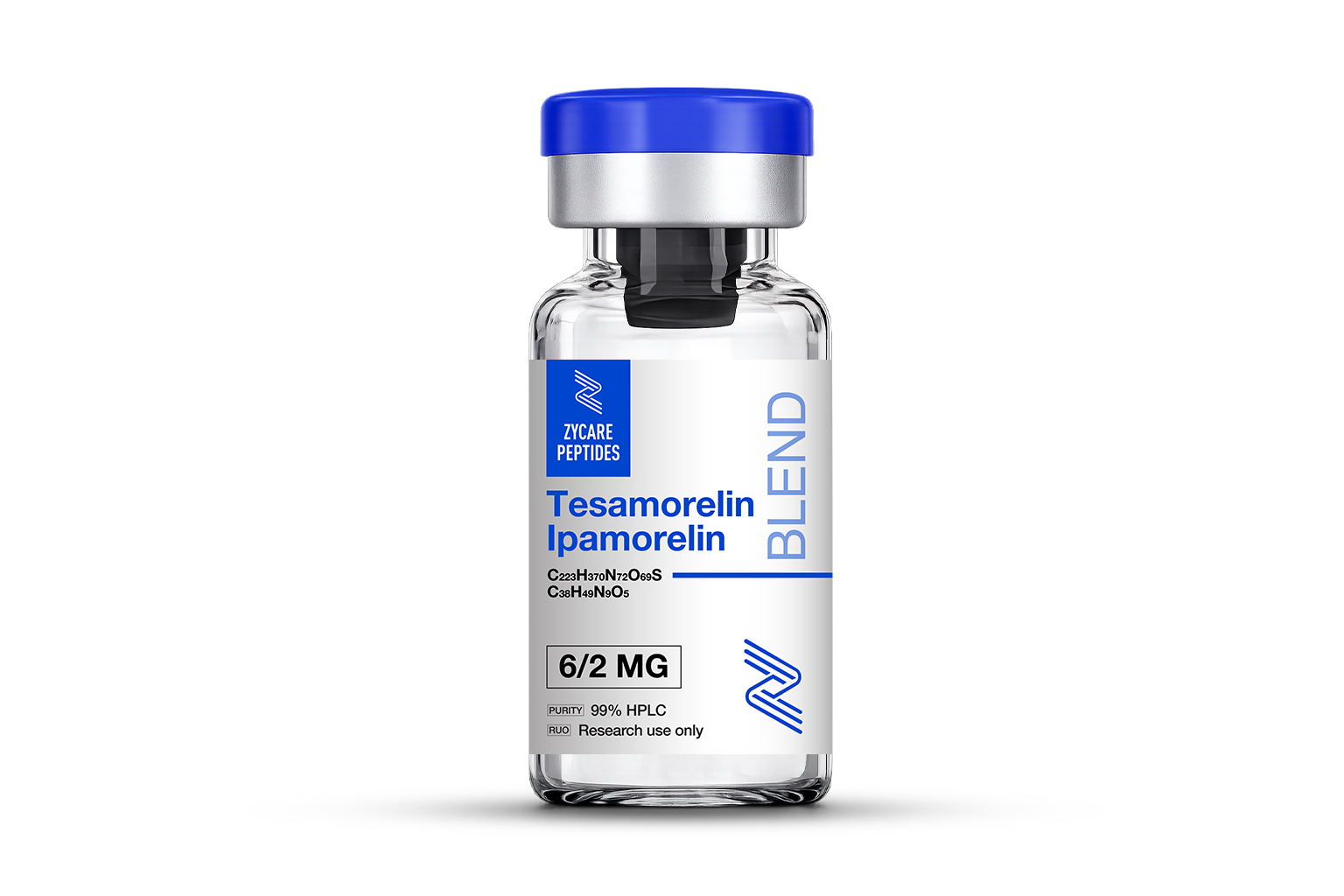
Tesamorelin + Ipamorelin 8mg Blend
Tesamorelin + CJC-1295 + Ipamorelin
BAC Water

 English
 French
 Spanish
 Portuguese
 Deutsch
 Turkish
 Dutch
Dutch
 Italiano
 Russian
 Romaian
 Portuguese (Brazil)
 Greek
Greek
 Bengali