


Choosing pvcfloortile Vinyl Flooring Factory: What Should Buyers Consider?
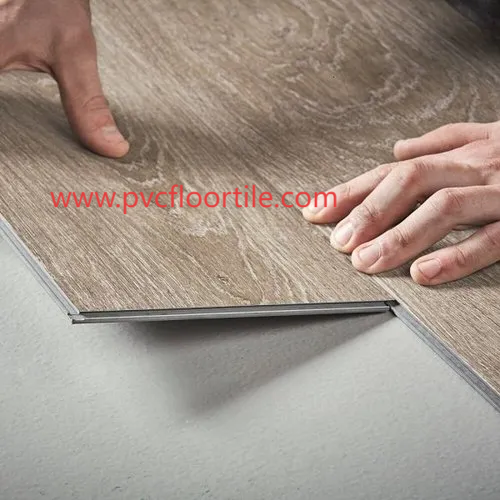
Vinyl Flooring Factory selection involves much more than checking a catalog or comparing quoted prices. Buyers need to consider material structure, product dimensions, appearance, manufacturing consistency, customization, packaging, production planning, and communication. A careful evaluation before ordering can make it easier to identify a supplier whose capabilities match the requirements of a particular project or distribution market.
Start With Clear Technical Information
The first step is to request detailed product specifications. Buyers should check overall thickness, core structure, surface layer, backing construction, dimensions, edge treatment, and installation method. These details provide a practical basis for comparing different products.
Product names alone may not explain how two similar-looking items differ. A detailed specification sheet allows purchasers to compare measurable characteristics instead of relying entirely on photographs or general descriptions.
It is also useful to ask whether the stated specifications apply to standard production or can be adjusted for customized orders.
Examine Physical Samples Carefully
A physical sample can provide information that a digital catalog cannot fully communicate. Buyers should inspect the surface texture, color, pattern, edge finish, dimensions, and connection system.
When several pieces are available, place them together and check how consistently they align. This can provide a simple indication of dimensional control and connection accuracy.
Color should also be reviewed under different lighting conditions, particularly when the material is intended for a large commercial or residential project. Buyers can keep an approved sample as a reference for later production discussions.
Ask How Production Is Controlled
Manufacturing procedures deserve attention before a large order is confirmed. Buyers can ask how incoming materials are checked, how production parameters are monitored, and how finished products are inspected.
Questions about inspection frequency, dimensional measurement, appearance checks, and finished-goods handling can help purchasers understand how quality is managed during regular production.
For repeat orders, buyers may also want to know how previously approved specifications are recorded. Maintaining clear product references can make future communication more efficient and reduce uncertainty when ordering the same design again.
Consider Design and Customization
Different markets have different preferences for colors, patterns, dimensions, textures, and packaging. Buyers who require customized products should discuss these requirements early in the purchasing process.
Ask about available design options, sample preparation, minimum order quantities, customization procedures, labeling, and estimated production time. Having these details confirmed in advance helps buyers plan their purchasing schedule more effectively.
Customization should also be evaluated from a practical perspective. Buyers need to know which elements can actually be adjusted and which specifications remain fixed.
Review Installation-Related Details
Installation requirements can affect product selection. Buyers should confirm whether the product uses a click-lock system, adhesive installation, or another method. Edge design, thickness, dimensions, and supporting materials may also need to match the intended application.
For distributors, it can be useful to collect installation information together with product specifications. This allows sales teams and customers to receive consistent information when the product reaches the market.
Check Packaging Before Shipment
Packaging is another detail that should not be overlooked. Products may experience loading, unloading, transportation, and warehouse handling before reaching their final destination.
Buyers should ask about carton dimensions, pieces per carton, pallet arrangements, protective materials, product labels, and loading methods. These details can help purchasers estimate storage requirements and organize logistics.
For international orders, packaging information should be confirmed together with shipping arrangements to avoid last-minute changes.
Evaluate Production Scheduling
Production capacity should be considered according to the buyer's actual order quantity and expected delivery schedule. Instead of asking only how quickly an order can be produced, buyers can request a clearer timeline covering sample approval, order confirmation, manufacturing, inspection, packing, and shipment.
This staged approach gives both sides a shared understanding of the purchasing process. It can also help buyers coordinate warehouse planning, project installation, and customer delivery commitments.
Look at Communication and Ongoing Support
Communication can influence every stage of an international purchasing relationship. Buyers should consider whether product questions receive clear answers, whether specifications are documented properly, and whether requested changes are confirmed before production.
pvcfloortile works with buyers who need to evaluate product specifications, samples, customization requirements, and production arrangements. This provides purchasers with an opportunity to discuss their needs before confirming an order.
For buyers comparing potential manufacturing partners, a simple checklist covering specifications, samples, production control, customization, installation information, packaging, scheduling, and communication can make the decision process more organized. Those interested in reviewing available products and company information can visit pvcfloortile at https://www.pvcfloortile.com/ and continue discussing suitable solutions according to their project requirements.

 English
 Arabic
 French
 Spanish
 Portuguese
 Turkish
 Dutch
Dutch
 Italiano
 Russian
 Romaian
 Portuguese (Brazil)
 Greek
Greek
 Bengali