


Improving Industrial Fluid Control Through Better Engineering
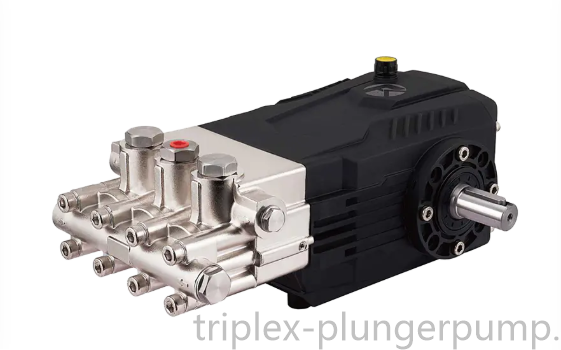
Industrial processes often require fluids to be transferred in a controlled and repeatable manner, particularly when pressure plays an important role in cleaning, processing, water treatment, or manufacturing operations. A High Pressure Pump provides the mechanical foundation for generating controlled fluid pressure and directing that fluid toward a downstream process. The effectiveness of such equipment depends on the complete engineering design, including pumping elements, valves, seals, materials, drive mechanisms, safety controls, and the surrounding fluid system.
Reciprocating technology is commonly used when controlled displacement is important. The pumping element moves through a defined cycle, creating changes in chamber pressure that allow fluid to enter and leave through dedicated flow paths. Each cycle consists of coordinated suction and discharge movements. In multi-element designs, the individual cycles can be arranged to support smoother overall fluid delivery. This makes reciprocating systems useful for applications where predictable movement and pressure management are central to the process.
Material compatibility should be considered early in equipment selection. The pumped fluid may contain water, cleaning chemicals, suspended particles, or other substances that affect component surfaces. Corrosion can weaken unsuitable materials, while abrasive particles may accelerate wear on moving components. Engineers therefore need to consider the chemical composition, concentration, temperature, and physical characteristics of the fluid before choosing materials for chambers, valves, pumping elements, shafts, and connections.
Stainless steel and specialized alloys can provide useful properties in many industrial environments, but the appropriate material depends on the specific application. Material selection should also consider the relationship between different components. If two materials interact under repeated movement, temperature changes, or chemical exposure, their compatibility can influence service life. Surface treatments and controlled finishing processes may provide additional benefits where components experience frequent mechanical contact.
Precision manufacturing is another important part of pressure equipment development. Pumping elements and their surrounding surfaces need to maintain suitable dimensions so that movement remains stable and sealing performance is controlled. Inaccurate machining can contribute to excessive friction, leakage, vibration, or uneven component wear. Manufacturers therefore use dimensional inspection and controlled machining processes to maintain consistency between individual components.
Valve technology determines how fluid enters and exits the pumping chamber. Inlet valves need to open during the appropriate portion of the cycle, while discharge valves must control the movement toward the outlet. Valve seats can experience repeated contact and pressure changes, making their material and surface condition important. Regular inspection can help identify contamination, wear, or changes in valve behavior before these conditions affect the wider system.
Sealing systems provide another layer of fluid control. A seal must prevent unwanted leakage while allowing the pumping element to move repeatedly. Selecting the correct seal material requires consideration of the fluid, temperature, pressure, mechanical movement, and expected operating frequency. Different industrial applications may therefore require different sealing arrangements. Practical access to wear components can also simplify scheduled maintenance.
Safety is essential whenever pressurized fluid is involved. An industrial installation should include suitable pressure-control measures, correctly selected hoses and fittings, protective components, and procedures for isolating and depressurizing the equipment. Operators should understand the hazards associated with stored pressure and moving machinery. Regular inspection of connections, seals, valves, and other pressure-containing components can help detect potential problems before they affect production or personnel safety.
Modern automation can further improve fluid system management. Pressure sensors, temperature monitoring, vibration detection, and flow measurement can provide information about operating conditions. A control system can use this information to coordinate pump operation with valves and other equipment. Such integration may also help production teams identify changes in operating behavior and plan maintenance before an unexpected interruption occurs.
The surrounding piping system should be evaluated together with the pump. Inlet restrictions, filtration, valves, pipe configuration, fluid temperature, and downstream demand can all influence the mechanical and hydraulic conditions experienced by the equipment. A complete system assessment can help avoid unnecessary pressure losses and operating conditions that place additional stress on components.
Maintenance should form part of the equipment strategy from the beginning. Routine inspection of seals, valves, connections, lubrication areas, and moving parts can help identify developing wear. Operators can also monitor changes in noise, vibration, leakage, or pressure behavior. Maintaining service records provides useful information for future maintenance planning and component replacement.
When selecting a High Pressure Pump, industrial buyers should evaluate the complete operating environment rather than relying on a single specification. Material compatibility, mechanical construction, valve response, sealing technology, safety design, automation requirements, and maintenance accessibility should all be considered. This approach makes it easier to match equipment with the actual needs of the production process.
For companies developing industrial fluid-handling systems, an experienced manufacturer can help evaluate mechanical construction and application requirements together. Different processes may require different pumping configurations, materials, sealing systems, and control methods. Businesses interested in reviewing additional industrial pumping solutions can explore the available range at https://www.triplex-plungerpump.com/product/pumps/ when planning pressure-control and fluid-transfer applications.

 Arabic
 French
 Spanish
 Portuguese
 Deutsch
 Turkish
 Dutch
Dutch
 Italiano
 Russian
 Romaian
 Portuguese (Brazil)
 Greek
Greek
 Bengali