


Safety and Durability in Hydraulic Hardware Design
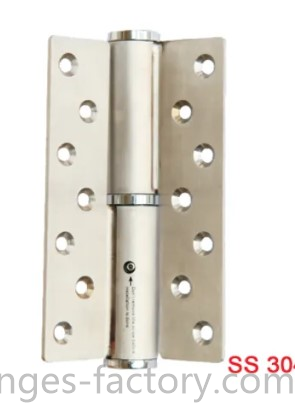
Controlled door movement has become an important consideration in architectural hardware, particularly where doors are frequently operated or where impact reduction is desirable. In this context, Hydraulic Buffer Hinges combine conventional hinge functions with a hydraulic mechanism intended to regulate movement. Their effectiveness depends on coordinated engineering across materials, internal fluid control, mechanical interfaces, installation accuracy, and quality management rather than on the hydraulic element alone.
The choice of material influences both structural stability and manufacturing performance. Hinge bodies, mounting plates, pins, shafts, and internal components experience different mechanical conditions during operation. Steel can provide strong structural support, while stainless steel may be considered where moisture resistance is a higher priority. Other engineering alloys can be useful for components requiring specific combinations of machinability, wear resistance, or dimensional stability.
Hydraulic control introduces a specialized engineering requirement. A fluid-based mechanism needs compatible chambers, seals, moving elements, and carefully controlled interfaces. When the door moves, internal hydraulic resistance can influence the speed and behavior of the movement. Manufacturers therefore need to consider how mechanical force is transferred through the hinge and how the hydraulic structure responds during different stages of operation.
Precision machining is essential for producing reliable internal components. Turning, milling, drilling, grinding, and other processes can create the required surfaces and interfaces with controlled dimensional accuracy. Consistent machining helps ensure that shafts and other moving components fit correctly within their corresponding structures. Automated measurement systems can be introduced at important production stages to identify deviations before final assembly.
Seal engineering is closely connected with hydraulic reliability. Sealing components must maintain their intended position while accommodating repeated movement and exposure to changing environmental conditions. Material compatibility, surface quality, assembly cleanliness, and correct compression all influence sealing behavior. Manufacturers should therefore treat seals as an integrated part of the hydraulic system rather than as independent accessories.
Surface treatment provides another layer of protection. Architectural hardware can encounter humidity, dust, cleaning products, and frequent human contact. Finishing processes such as plating, coating, polishing, or other protective treatments can help maintain surface condition while supporting the desired architectural appearance. The chosen process should be compatible with the base material and should not interfere with moving or assembled sections.
From a safety perspective, controlled movement can help reduce abrupt mechanical impact, but the complete door system still determines the final operating behavior. Door mass, frame rigidity, installation geometry, environmental conditions, and surrounding structures all affect movement. Engineers should therefore assess the hinge in relation to the intended door assembly rather than treating hydraulic resistance as the only performance factor.
Installation accuracy can significantly influence the result. A door that is incorrectly positioned may place uneven loads on the hinge and increase resistance during operation. Proper mounting preparation, frame alignment, and consistent fastening can help create a more stable mechanical relationship. Installers should also follow appropriate adjustment procedures and avoid forcing components when resistance indicates an alignment problem.
Manufacturing automation offers opportunities to improve consistency. Automated machining centers can maintain repeatable production cycles, while digital inspection equipment can monitor critical dimensions. Assembly automation can further reduce variation in repetitive tasks, provided that tooling and process controls are properly maintained. Combining automation with human inspection and process management can create a more comprehensive quality system.
Architectural applications vary considerably. Residential projects may prioritize quiet and controlled movement, while offices and commercial buildings can require hardware capable of supporting frequent use. Hotels and other hospitality environments may need consistent hardware appearance throughout a project, while institutional buildings may place greater emphasis on maintenance access and long-term service planning. Understanding these differences helps manufacturers develop appropriate solutions.
Sustainability can also be addressed through manufacturing efficiency. Accurate material utilization can reduce unnecessary waste, while optimized machining processes can improve resource efficiency. Durable surface treatment and maintainable component structures may also contribute to longer service cycles, reducing the frequency of replacement. Responsible design therefore involves considering material use and lifecycle requirements alongside mechanical performance.
Quality assurance should extend from incoming materials to final assembly. Material verification, dimensional inspection, hydraulic component checks, sealing evaluation, surface inspection, and movement testing can provide different layers of production control. Documentation and traceability are also useful for international B2B customers who need stable quality across repeated orders and different project applications.
For purchasing teams, evaluating a supplier should involve more than comparing external appearance or basic product descriptions. Manufacturing equipment, material management, hydraulic engineering capability, inspection procedures, finishing technology, and technical communication can all influence the consistency of delivered hardware. Hydraulic Buffer Hinges are most effective when their hydraulic and structural functions are developed together. Lanxi Maya Hardware Co., Ltd. provides further architectural hardware information at https://www.hinges-factory.com/product/catalogue-download/ for buyers researching controlled door movement solutions.

 Arabic
 French
 Spanish
 Portuguese
 Deutsch
 Turkish
 Dutch
Dutch
 Italiano
 Russian
 Romaian
 Portuguese (Brazil)
 Greek
Greek
 Bengali