


Hair Transplant in Dubai for Uneven Hairlines
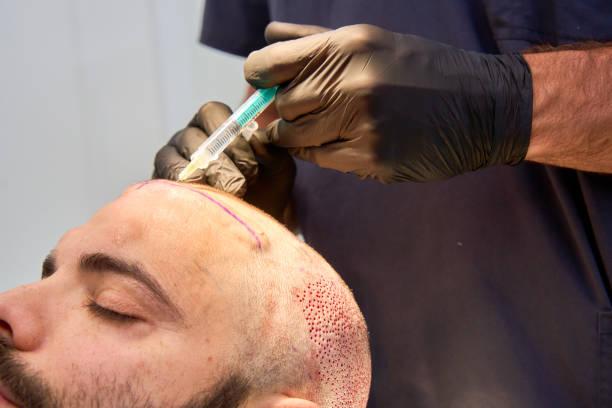
Hairlines are rarely perfectly symmetrical, but noticeable differences between the left and right sides can make recession appear more pronounced. With Hair Transplant in Dubai, individualized placement can address selected areas of asymmetry while preserving the irregularity that makes a restored hairline appear natural.
The objective is not to create mathematical symmetry. It is to improve visual balance without making the reconstructed hairline look artificially uniform.
Why Uneven Hairlines Require Individual Planning
The two sides of the scalp do not always lose hair at exactly the same rate.
One temple may recede farther than the other, one side may have lower density, or an existing hairline may have developed unevenly over time.
Treating both sides identically can therefore produce an unnecessarily aggressive result.
Asymmetry Can Be Structural or Hair-Loss Related
Some differences existed naturally before hair loss began.
Others develop because one side experiences greater recession or thinning.
The distinction matters because transplantation should restore appropriate balance rather than erase every natural anatomical difference.
Existing Hairlines Provide Important Reference Points
A surgeon can examine remaining native hairs to understand the patient's original pattern.
The direction, density, thickness, and position of these hairs can help determine where transplanted follicles should integrate.
This is especially important around the corners and temple regions.
Hair Transplant in Dubai for Uneven Temple Recession
Temple asymmetry is one of the most common reasons a hairline can appear uneven.
A difference of only a small distance can become visually noticeable when the hair is short or styled away from the forehead.
Why Both Temples Should Not Always Receive Equal Grafts
If one side has substantially greater recession, allocating the same number of grafts to both sides may not be efficient.
The more recessed side may require greater reconstruction, while the stronger side may only need limited reinforcement.
Graft distribution should therefore respond to anatomy rather than a predetermined left-right ratio.
Temple Shape Influences the Final Appearance
The temporal region is not simply an extension of the frontal hairline.
Its shape affects the width of the forehead and the transition between the front and sides of the scalp.
Poorly positioned grafts can make the temples look too sharp, too dense, or disconnected from the remaining hair.
Assessing Hairline Symmetry Before Surgery
A proper assessment should examine the scalp from multiple perspectives rather than relying on a single frontal photograph.
| Assessment | What it reveals | Planning value |
|---|---|---|
| Frontal view | Overall left-right balance | Establishes the visual baseline |
| Angled views | Temple transitions | Helps assess lateral recession |
| Existing density | Native hair distribution | Guides graft integration |
| Hair direction | Natural growth pattern | Supports appropriate placement |
| Donor characteristics | Available follicular supply | Determines realistic restoration |
| Hair-loss history | Progression pattern | Helps distinguish stable asymmetry from active recession |
| Facial structure | Relationship between hairline and face | Prevents overcorrection |
| Scalp condition | Recipient-area suitability | Identifies issues requiring attention |
These observations help establish whether the asymmetry is primarily cosmetic, progression-related, or part of the patient's natural anatomy.
Correcting Asymmetry Without Creating a Perfect Line
An overly symmetrical reconstructed hairline can sometimes look less natural than the original uneven structure.
Natural hairlines contain subtle changes in height, density, spacing, and direction.
Controlled Irregularity Can Improve Realism
The goal is to create controlled variation rather than random placement.
A transition zone can be designed so that transplanted follicles gradually merge with existing hair.
This prevents the result from looking like a sharply outlined border.
Matching the Existing Side May Be Better Than Redesigning Both Sides
When one side remains relatively stable, it can provide useful information about the patient's natural anatomy.
Instead of rebuilding both sides from scratch, the surgical plan may use the stronger side as a reference while selectively restoring the more affected area.
This approach can preserve more donor follicles.
The Role of Graft Characteristics
Not every graft is equally suitable for every part of an asymmetric hairline.
The characteristics of available follicular units influence how the transition should be constructed.
Fine Follicles Can Help With Frontal Transitions
Finer grafts may be useful near the visible leading edge because they can create a softer visual boundary.
The exact selection depends on the patient's donor characteristics and surgical strategy.
Denser Grafts Can Support Areas Behind the Transition
As the placement moves behind the frontal edge, greater visual density may be appropriate where anatomy and donor availability permit.
The transition should remain gradual rather than changing abruptly.
When Unevenness Should Not Be Corrected Immediately
Not every uneven hairline requires transplantation.
Some asymmetries are mild and stable.
Others may be changing because hair loss is still progressing.
Recent Asymmetry May Need Monitoring
If one temple has started receding noticeably within a short period, the priority may be understanding the progression rather than immediately correcting the visible difference.
Surgery is a permanent redistribution of follicles, so the underlying pattern should be considered first.
Stable Asymmetry Can Be Easier to Plan
When the hairline has remained relatively consistent, the surgeon can more confidently determine which areas require additional coverage.
This allows grafts to be used selectively rather than unnecessarily treating stable regions.
Avoiding Overcorrection During Hair Transplant in Dubai
One of the biggest planning challenges is the temptation to make both sides look exactly identical.
This can lead to excessive graft use.
It may also create an unnatural appearance because the reconstructed hairline becomes more geometrically perfect than the surrounding natural hair.
Conservative Correction Can Be More Natural
A measured correction can improve the visual relationship between both sides without attempting to eliminate every millimeter of difference.
This can preserve donor resources and maintain a more realistic appearance.
Future Hair Loss Must Be Considered
If native hair around the transplanted region is still vulnerable to progressive thinning, correcting asymmetry too aggressively may create a new imbalance later.
Long-term planning should therefore remain part of the initial assessment.
How Dubai Patients Can Plan Around Recovery
Hair restoration also requires practical scheduling.
Dubai's strong sunlight and hot climate can make postoperative scalp protection particularly relevant.
Patients who spend substantial time outdoors should plan their recovery around the clinic's specific recommendations regarding sun exposure and scalp care.
Frequent travel, swimming, exercise, and professional commitments may also influence the most convenient treatment period.
Outdoor Exposure
Direct sunlight can be an important recovery consideration, particularly during the early healing period.
Planning surgery during a period when outdoor exposure can be managed may make postoperative care easier.
Work and Social Commitments
Patients with frequent meetings or public-facing roles may also want to account for temporary redness, scabbing, or changes in the appearance of the recipient area.
Recovery expectations should be discussed during the consultation rather than assumed from another patient's experience.
When Hair Transplant in Dubai May Be Considered for Asymmetry
Several situations can make targeted transplantation worth discussing:
- One temple has receded noticeably farther than the other.
- The frontal hairline has developed a visible left-right difference.
- A previous hair restoration procedure created uneven density.
- Existing asymmetry has remained stable over time.
- A small localized area creates disproportionate visual imbalance.
- The donor region can support selective restoration without excessive harvesting.
The decision should remain individualized.
A small asymmetry does not automatically justify surgery, particularly when the potential graft requirement outweighs the cosmetic improvement.
Questions to Ask About Uneven Hairline Restoration
Is every uneven hairline abnormal?
No. Mild asymmetry is common in natural hairlines. Treatment is generally considered when the difference is sufficiently noticeable or cosmetically important to the individual.
Should both sides receive the same number of grafts?
Not necessarily. Graft allocation should reflect the actual degree of recession and the desired visual balance.
Can a perfectly symmetrical hairline look unnatural?
Yes. Natural hairlines contain subtle irregularities, so excessive geometric symmetry can sometimes appear artificial.
Does temple asymmetry require rebuilding the entire hairline?
No. In selected cases, targeted restoration may address the more affected region while preserving stable native hair elsewhere.
Why is future hair loss important when correcting asymmetry?
Because native hairs around the restored area may continue to change. Planning for potential progression helps reduce the risk of a new imbalance later.
The Strategic Investment
Correcting an uneven hairline is not about drawing two identical sides onto the scalp. The stronger approach is to understand the patient's existing anatomy, identify where asymmetry is genuinely visible, preserve stable native hair, and use grafts selectively where they create the greatest improvement. Anyone researching hair transplant in Dubai can benefit from an individualized assessment before deciding how much correction is appropriate. A consultation with Tajmeels Clinic can help evaluate hairline symmetry, donor capacity, progression, and realistic restoration options.

 Arabic
 French
 Spanish
 Portuguese
 Deutsch
 Turkish
 Dutch
Dutch
 Italiano
 Russian
 Romaian
 Portuguese (Brazil)
 Greek
Greek
 Bengali