


Zobonpump Industrial Water Pump Small Drainage Water Pump Selection Guide
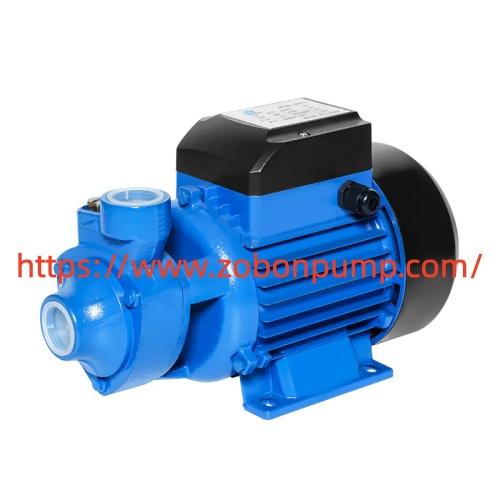
Industrial Water Pump selection should begin with the actual job the equipment needs to perform. A unit moving clean water between storage tanks has different requirements from one handling drainage, circulation, irrigation, cooling, or wastewater. Buyers who define the working conditions before comparing models can make a more practical choice and reduce the risk of capacity problems after installation. Flow, head, liquid characteristics, installation conditions, and operating frequency are useful starting points.
Flow rate is one of the first figures to establish. It describes how much liquid needs to move within a certain period. A facility with continuous production may require steady circulation, while a drainage project may need equipment capable of moving accumulated water within a limited operating window. The required capacity should therefore come from the actual process rather than from a general assumption about equipment size.
Head is equally important. The equipment must overcome elevation differences as well as resistance created by pipes, valves, fittings, and other components. Looking only at flow can produce an unsuitable selection. A unit may move the required volume under one condition but struggle when the discharge distance or vertical lift changes. Calculating system requirements before reviewing performance curves gives buyers a clearer basis for comparison.
The liquid itself also deserves attention. Clean water, rainwater, drainage water, and liquids containing suspended particles can place different demands on internal components. Temperature, solids content, acidity, viscosity, and other characteristics may affect material selection and operating behavior. For drainage tasks where debris or particles may be present, the configuration should be considered carefully rather than treating every water handling application in the same way.
Installation conditions can change the decision as well. Buyers should consider whether the equipment will be installed horizontally, vertically, indoors, outdoors, above the liquid level, or directly within a collection area. Available space, suction conditions, pipe diameter, electrical supply, and access for maintenance should be reviewed before the final configuration is selected. A compact installation may require a different arrangement from a large fixed plant system.
Operating frequency is another useful consideration. Equipment running for several hours every day faces different demands from a unit used occasionally for emergency drainage. Continuous applications require attention to motor selection, cooling, operating range, and maintenance access. Intermittent applications may have different priorities, including convenient operation and servicing. Matching the equipment to its actual duty cycle can help create a more suitable operating arrangement.
For smaller drainage requirements, a Small Drainage Water Pump may be considered when the working conditions call for a compact solution. The important point is still to check the required flow, discharge distance, liquid condition, power supply, and installation environment rather than selecting based on physical size alone.
Energy use should also be part of the purchasing discussion. Equipment operating far from its intended working range may consume unnecessary power and experience additional mechanical stress. Performance curves help buyers see how flow and head change across different operating points. Reviewing these curves together with system requirements gives engineers and purchasing teams a more realistic basis for selection.
Maintenance should not be left until after installation. Buyers can ask about access to wearing components, inspection points, replacement parts, sealing arrangements, and recommended service intervals. Equipment that is difficult to inspect can create unnecessary maintenance delays, particularly in facilities where downtime affects production schedules. A practical design should consider both initial installation and the routine work required throughout its service period.
Zobonpump can support the selection process by reviewing application details before discussing suitable configurations. Buyers can provide information such as required flow, head, liquid conditions, installation method, operating hours, and power requirements. These details help the discussion focus on actual working conditions instead of relying on a general model for every application.
The right choice is rarely determined by one specification. A balanced evaluation of capacity, system resistance, liquid characteristics, installation space, operating pattern, energy requirements, and maintenance conditions can make the purchasing process clearer. Buyers who prepare these details in advance can communicate more effectively with manufacturers and compare equipment based on practical requirements. For product information and application discussions, visit https://www.zobonpump.com/

 Arabic
 French
 Spanish
 Portuguese
 Deutsch
 Turkish
 Dutch
Dutch
 Italiano
 Russian
 Romaian
 Portuguese (Brazil)
 Greek
Greek
 Bengali