


Why You Should Embroidery Digitize Before Stitching
Skip the guesswork with professional embroidery digitizing services. Clean, accurate stitch files that save time, thread, and materials.
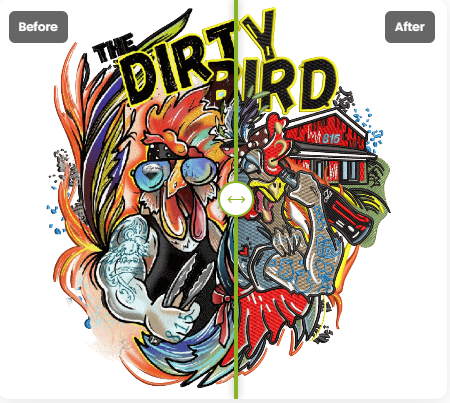
Jumping straight from a logo file to an embroidery machine feels like it should save time, but it almost always creates more problems than it solves. Threads bunch up, designs come out lopsided, and small details disappear completely. This is why the step so many businesses try to skip turns out to be the most important one: you need to properly digitize your artwork before a single stitch is ever sewn.
For business owners ordering uniforms, promotional apparel, or branded merchandise, understanding this process upfront can save a lot of wasted fabric, thread, and money. It's a small step that makes a massive difference in the final result.
What Happens When You Digitize First
Digitizing converts your logo or artwork into a stitch file that tells the embroidery machine exactly where to sew, in what direction, with which thread colors, and at what density. Without this step, a machine simply doesn't know how to interpret a flat image. Some cheaper software tools attempt to auto-convert designs, but they often produce messy results, especially with fine text, gradients, or intricate details.
Working with professional embroidery digitizing services ensures that every element of your design, from small lettering to complex shading, translates into clean, accurate stitching. A skilled digitizer manually maps out stitch paths, adjusts density based on fabric type, and accounts for how thread behaves on different materials.
The Real Risks of Skipping This Step
Businesses that skip proper digitizing, or rely on rushed, low-quality conversions, often run into the same recurring issues:
-
Puckering fabric. Incorrect stitch density can cause fabric to bunch or wrinkle around the design.
-
Thread breaks. Poorly mapped stitch paths put unnecessary strain on the machine and thread.
-
Illegible text. Small lettering often turns into a blurry mess without proper digitizing adjustments.
-
Color bleeding. Improper color separation can cause designs to look muddy instead of sharp.
-
Wasted materials. Every failed stitch-out means wasted fabric, thread, and machine time, all of which cost money.
These issues aren't just cosmetic. For businesses producing uniforms or bulk orders, a bad digitizing job can mean reprinting an entire batch, which quickly adds up in both cost and lost time.
Why Professional Digitizing Saves Money Long-Term
It might seem like skipping the digitizing step or using a cheap automated tool saves money upfront, but the opposite is usually true. A properly digitized file gets reused for every future order without needing rework. Businesses that invest in quality digitizing the first time avoid the cycle of failed stitch-outs, wasted materials, and rushed reorders that come from cutting corners.
This is especially true for companies working with embroidery digitizing services in USA providers who understand local fabric standards, common machine types, and industry expectations. A digitizer familiar with these details can flag potential issues before production even starts, saving time on the back end.
What a Good Digitizing Process Looks Like
A reliable digitizing workflow typically includes a few key steps:
-
Artwork review – The digitizer examines the original design for detail, color count, and complexity.
-
Stitch path mapping – Paths are planned to minimize thread breaks and ensure smooth machine movement.
-
Density and underlay adjustments – Settings are tailored to the specific fabric the design will be stitched on.
-
Test stitch-out – A sample is stitched to confirm the design looks correct before full production begins.
-
Final file delivery – The finished file is delivered in the correct format for your specific embroidery machine.
Skipping any of these steps increases the risk of a failed final product, which is exactly why businesses that value consistency rely on experienced professionals rather than shortcuts.
Choosing the Right Digitizing Partner
Not every provider delivers the same level of quality, so it's worth looking for a few key things: a solid portfolio of previous work, clear turnaround times, free revisions if something doesn't stitch out correctly, and support for multiple embroidery file formats. Companies like AMZ Digitize that specialize specifically in this process tend to understand the small details that separate clean, professional embroidery from a messy, amateur result.
Final Thoughts
Digitizing isn't an optional extra step, it's the foundation of good embroidery. Investing in proper embroidery digitizing services before stitching protects your materials, your budget, and the overall quality of your finished product. Whether you're outfitting a small team or producing merchandise at scale, taking the time to get this step right pays off with every single order.
Frequently Asked Questions
1. Can I skip digitizing and just embroider directly from an image file?
No, embroidery machines can't interpret flat image files on their own. They require a specialized stitch file that tells the machine exactly how and where to sew. Attempting to skip this step, or relying on low-quality automated conversion, usually results in messy, unusable stitching.
2. How long does it take to properly digitize a design?
Most professional providers complete standard digitizing within 12 to 24 hours, depending on the complexity of the artwork. Designs with fine text, gradients, or many colors may take slightly longer to ensure accuracy. Rush turnaround options are often available for urgent orders.
3. What file formats are used for embroidery digitizing?
Common formats include DST, PES, JEF, and EXP, depending on the specific embroidery machine being used. A good digitizing provider will ask which machine you're working with and deliver the file in the correct format. Some providers also include a backup format at no extra charge.
4. Why does digitizing quality matter so much for the final product?
Poor digitizing leads to puckered fabric, broken threads, and designs that don't match the original artwork. High-quality digitizing accounts for stitch density, fabric type, and design complexity to ensure a clean, professional result. This directly affects how the final embroidered product looks and holds up over time.

 Arabic
 French
 Spanish
 Portuguese
 Deutsch
 Turkish
 Dutch
Dutch
 Italiano
 Russian
 Romaian
 Portuguese (Brazil)
 Greek
Greek
 Bengali