


Retaining Walls Landscaping in Canberra: A Practical Guide to Better Outdoor Spaces
A sloping yard can be difficult to landscape, particularly when you want the space to be both attractive and practical. Uneven ground can make it harder to create usable garden areas, install paths, manage soil, or maintain plants. This is where retaining walls can make a significant difference.
For property owners considering retaining walls landscaping in Canberra, the goal should not simply be to build a wall that holds soil. A well-planned retaining wall should work with the rest of the landscape, manage changes in ground level, provide stability, and complement the property.
Whether you are improving a residential garden, upgrading a commercial outdoor area, or preparing a landscape project, understanding the basics can help you make better decisions before construction begins.
What Does a Retaining Wall Actually Do?
A retaining wall is designed to hold soil at different levels. Instead of allowing earth to naturally move downhill, the structure creates a controlled change in elevation.
This can be useful for several landscaping applications, including:
- Creating level garden beds
- Making sloping yards easier to use
- Supporting pathways and outdoor areas
- Defining different sections of a garden
- Reducing soil movement and erosion
- Creating terraced landscaping
- Improving the overall appearance of an uneven block
However, the wall itself is only one part of the project. Drainage, soil conditions, wall height, nearby structures, access, and the surrounding landscape all need to be considered.
Why Canberra Properties Often Need Careful Planning
Canberra properties can have significant changes in elevation, particularly on sloping blocks. A retaining wall may therefore be more than a decorative landscaping feature—it can become an important structural element of the outdoor space.
Another consideration is local approval requirements. The ACT Government distinguishes between different types and sizes of retaining walls, and whether approval is required can depend on factors such as wall height, location, and whether the wall is a cut-in or fill retaining wall.
For larger or more complex projects, it is sensible to check the applicable requirements before excavation or construction starts. This avoids discovering halfway through a project that additional design, certification, or approval is necessary.
Choosing the Right Retaining Wall Material
There is no single material that works for every property. The right choice depends on the height of the wall, ground conditions, intended appearance, budget, and landscaping design.
Concrete or Block Walls
Block retaining walls can provide a clean, structured appearance and work particularly well when the landscape has defined garden beds or multiple levels.
They can also be incorporated into broader garden-wall designs, allowing the wall to serve both a practical and visual purpose.
Natural Stone or Rock
Rock walls can provide a more natural appearance and may suit gardens where the goal is to blend the structure into the surrounding environment.
The shape, size, placement, and colour of the stone can significantly influence the final result.
Timber
Timber can create a warmer, more informal appearance and may be appropriate for certain garden applications. However, the suitability of timber depends on the project and expected exposure to moisture and soil.
A good contractor should discuss material choices based on the actual site rather than recommending one option for every project.
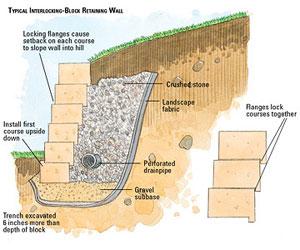
Drainage Is Just as Important as the Wall
One of the most common mistakes in retaining wall projects is treating drainage as an afterthought.
Water creates pressure behind a retaining wall. If that water has nowhere to go, the additional pressure can contribute to movement, cracking, leaning, or other problems.
A properly planned system may include drainage aggregate, an agricultural drain, appropriate outlets, and other measures depending on the site.
The important point is simple: a retaining wall needs to manage water as well as soil.
Professional site assessment is particularly valuable when the wall is close to buildings, boundaries, driveways, underground services, or other structures.
A Practical Retaining Wall Landscaping Process
A successful project normally starts well before the first block or stone is installed.
1. Assess the Site
The first step is understanding the existing slope, soil, access, drainage, vegetation, boundaries, and nearby structures.
2. Establish the Purpose
Decide what the wall needs to achieve. Is it creating a level garden? Supporting a pathway? Separating garden areas? Managing an existing slope?
The answer influences the design.
3. Select Materials and Design
Once the practical requirements are understood, choose a wall system that fits both the engineering needs and the visual style of the landscape.
4. Prepare the Ground
Proper excavation and foundation preparation are critical. A wall built on poorly prepared ground may experience problems even if the visible construction looks good.
5. Install Drainage
Drainage should be incorporated during construction rather than added later.
6. Complete the Landscape
The final stage can include garden beds, planting, edging, paths, lawn, mulch, paving, or other landscape features that make the retaining wall feel like part of the overall design.
What Should You Ask a Contractor?
Before hiring someone for a retaining wall project, ask practical questions rather than focusing only on the quoted price.
Find out:
- What preparation does the site require?
- How will water behind the wall be managed?
- What materials are being recommended and why?
- Does the project require engineering or approval?
- How will nearby services and boundaries be handled?
- What is included in the quotation?
- Who is responsible for excavation and removal of excess soil?
- How will the finished wall connect with the surrounding landscape?
A detailed answer to these questions can tell you a lot about how seriously a contractor approaches the work.
ACT Government infrastructure guidance also recommends using appropriately qualified and experienced structural engineers for the design and certification of retaining walls in relevant infrastructure situations, while stressing that walls should not interfere with adjacent services or easements.
Common Mistakes to Avoid
Trying to save money by skipping proper preparation can become expensive later.
Some common problems include building without understanding drainage, ignoring boundary conditions, choosing materials based only on appearance, underestimating excavation requirements, and failing to check local regulations.
It is also worth considering the landscape beyond the wall. A technically sound retaining wall can still look out of place if the garden beds, plants, paving, and levels around it have not been planned together.
Frequently Asked Questions
How high should a retaining wall be?
There is no universal height. The appropriate height depends on the site, soil, loads, construction method, and applicable regulations. In Canberra, different approval and exemption requirements can apply depending on the wall type, height, and location.
Are retaining walls only useful on steep properties?
No. Even a relatively gentle slope can benefit from a retaining wall if the objective is to create usable garden levels, define spaces, or improve drainage and landscape layout.
Can a retaining wall be part of a garden design?
Absolutely. Retaining walls can become garden features themselves. They can frame planting areas, create terraces, define pathways, and give an otherwise uneven garden a more organised appearance.
Should drainage be included in every project?
Drainage requirements depend on the site and wall design, but water management should always be considered during planning. The larger or more complex the wall, the more important professional assessment becomes.
Plan the Landscape, Not Just the Wall
Good retaining walls landscaping in Canberra is about more than putting a structure against a slope. The best results come from treating the retaining wall, drainage, garden levels, materials, planting, and surrounding features as one coordinated landscape.
If you are considering a retaining wall project, start with a site assessment and a clear idea of what you want the finished space to achieve. From there, an experienced landscaping or retaining-wall professional can help determine the appropriate design, materials, drainage approach, and construction requirements.

 English
 Arabic
 French
 Spanish
 Portuguese
 Deutsch
 Turkish
 Dutch
Dutch
 Italiano
 Romaian
 Portuguese (Brazil)
 Greek
Greek
 Bengali