


Building the Look From the Ground Up: Designing a New Home With Intention
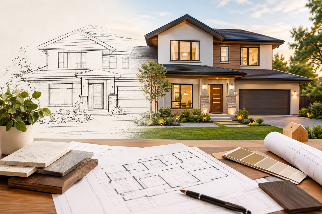
Building a new home is an exciting opportunity to create a space that truly fits your lifestyle. Unlike decorating an existing house, new construction gives you the chance to make important design decisions before the walls are finished and the furniture arrives. From architectural details and flooring to lighting, paint, and furnishings, every choice can contribute to the way your finished home feels.
But a blank canvas can also be overwhelming. With so many selections to make, it's easy to focus on individual rooms without considering how they will work together. An experienced interior designer for new construction can help homeowners establish a cohesive vision early and carry it through to the final details.
Start With Your Lifestyle, Not a Trend
The most successful interiors begin with the people who live in them. Before selecting finishes, think about how you spend your time at home.
Do you enjoy entertaining? Is the kitchen where everyone naturally gathers? Do you need a quiet home office or a comfortable guest space? Understanding these everyday patterns can help determine everything from furniture placement to storage, lighting, and room layouts.
Questions to Consider Before Construction Begins
-
How will your family use each room?
-
Which spaces will need the most flexibility?
-
Where would additional storage be useful?
-
Do you plan to entertain frequently?
-
Which furniture, artwork, or antiques will move into the new home?
-
Which architectural features do you want to emphasize?
-
What elements should remain timeless as your tastes evolve?
Answering these questions early can help ensure that design decisions are based on your actual needs rather than temporary trends.
Create a Design Direction for the Entire Home
A new house provides a unique opportunity to establish visual continuity from the beginning. Instead of selecting finishes one room at a time, consider how the entryway, kitchen, living spaces, bedrooms, and hallways will relate to one another.
This doesn't mean every room needs to look identical. A well-designed home can have variety while still feeling connected through complementary colors, materials, textures, and architectural details.
An interior designer for new construction can help coordinate these elements so that decisions made during the early stages continue to make sense as the project progresses.
Make Color Part of the Plan
Color is one of the most influential elements in an interior, yet it is often left until the end of a construction project. By then, homeowners may already have selected flooring, countertops, cabinetry, tile, and lighting that need to work with the paint.
A professional color expert for home interiors looks beyond individual paint samples. Factors such as natural light, artificial lighting, undertones, room orientation, architectural flow, and surrounding finishes can all influence how a color ultimately appears.
What to Consider When Developing Your Home's Color Story
-
Natural light and the direction each room faces
-
Undertones in wood, stone, tile, and cabinetry
-
Colors visible from adjoining spaces
-
Trim, doors, ceilings, and architectural details
-
Lighting fixtures and bulb temperatures
-
Rugs, upholstery, and window treatments
-
Artwork and accent pieces
Choose a Timeless Foundation
A new home involves many significant investments, so permanent features deserve careful consideration. Flooring, cabinetry, countertops, tile, doors, and hardware should ideally have longevity beyond a particular design trend.
A timeless foundation also gives you freedom to change smaller details later. Fabrics, rugs, artwork, accessories, and furnishings can evolve as your preferences change without requiring another major renovation.
This is one reason the guidance of a color expert for home interiors can be so valuable. A carefully considered palette can provide a versatile backdrop for both classic and changing decorative elements.
Bring Warmth Through Furnishings and Texture
Once the architectural foundation is established, furnishings and textiles give the home its personality. A newly built house can sometimes feel too polished or impersonal if every element is brand new and perfectly coordinated.
Layering rugs, fabrics, window treatments, lighting, artwork, antiques, and custom furnishings can create warmth and visual depth. Meaningful pieces from your existing home can also be incorporated, giving the new space a sense of history from day one.
Consider the Details Before the Final Walkthrough
Some of the most important design decisions happen behind the scenes. Lighting placement, outlet locations, window treatment dimensions, furniture scale, storage needs, and circulation should all be considered before construction is complete.
This is where an interior designer for new construction can provide valuable coordination. Thinking about these details early can reduce compromises later and help ensure that the finished home functions as beautifully as it looks.
Create a Home That Feels Personal
A new home doesn't have to feel like a blank slate forever. With thoughtful planning, it can become a warm, welcoming environment that reflects your personality, lifestyle, and sense of style.
Jancy Ervin Interiors takes a classic and timeless approach to interior design, combining elegant details with comfortable, personal spaces. From construction planning and finish selections to color and furnishings, every layer can be considered part of the larger design.
Working with a color expert for home interiors and an experienced interior designer for new construction can make the process more organized and purposeful. Instead of making hundreds of disconnected choices, you can create one cohesive vision from the floor plan to the final accessory.

 English
 Arabic
 French
 Spanish
 Deutsch
 Turkish
 Dutch
Dutch
 Italiano
 Russian
 Romaian
 Portuguese (Brazil)
 Greek
Greek
 Bengali