


Flanging Machine and Small Press Brake: Efficient Solutions for Modern Metal Fabrication
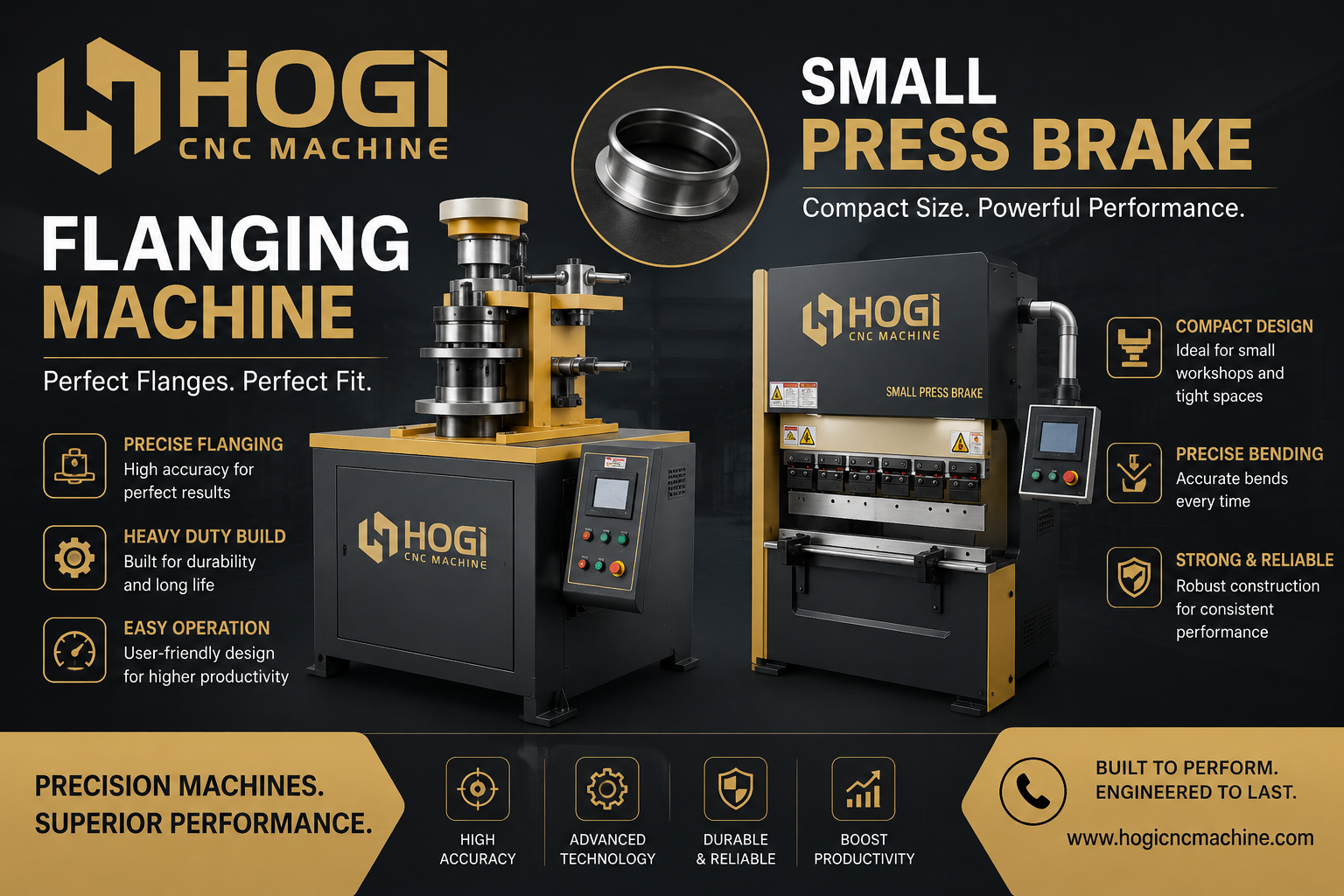
Metal fabrication requires precision, consistency, and the right machinery to transform sheets and components into accurate finished products. As industries continue to demand faster production and better dimensional accuracy, specialized machines have become an important part of modern manufacturing. A Flanging machine and a small press brake are two useful solutions that can help manufacturers handle different forming and bending requirements efficiently.
From automotive components and HVAC systems to industrial equipment, electrical enclosures, ducting, and general fabrication, these machines can support a wide range of applications. Selecting the appropriate machine depends on factors such as material thickness, component size, production volume, required bend accuracy, and the type of fabrication work being performed.
Understanding a Flanging Machine
A flanging machine is designed to create flanges or formed edges on metal components. A flange can provide additional strength, create a connection point, improve the rigidity of a component, or help prepare a part for joining with another component.
Flanging operations are commonly required when manufacturers need a consistent edge profile across multiple components. Instead of relying entirely on manual forming, a dedicated machine can provide greater repeatability and help reduce production time.
The machine can be used with different types of sheet metal depending on its design and specifications. Industries that manufacture cylindrical, rectangular, or specially formed components may find flanging equipment particularly useful.
Benefits of Using a Flanging Machine
One of the major advantages of using a dedicated flanging machine is consistency. Producing flanges manually can result in variations between components, particularly when large quantities are involved. Machinery provides a more controlled forming operation, helping manufacturers achieve repeatable results.
Another important benefit is productivity. Automated or mechanically assisted forming can reduce the amount of manual effort required for repetitive operations. This allows operators to focus on other stages of production while maintaining a consistent workflow.
A flanging machine can also help improve the overall appearance of finished components. Properly formed edges can contribute to a cleaner and more professional final product.
Depending on the machine configuration, manufacturers can also benefit from easier operation, reduced setup time, and improved production efficiency.
Applications of Flanging Equipment
Flanging operations are used across many industries. HVAC manufacturers may use flanged components in ducting and ventilation systems. Industrial equipment manufacturers may require formed edges on tanks, housings, covers, and other fabricated components.
Automotive and transportation applications can also involve formed sheet-metal components. Electrical and engineering industries may use flanged parts in enclosures, cabinets, and structural assemblies.
The exact machine configuration should be selected according to the component design and material requirements.
Why Choose a Small Press Brake?
A small press brake is designed for bending sheet metal and other suitable materials when compact equipment is preferred. It can be especially useful for workshops, small fabrication businesses, maintenance departments, prototype development, and manufacturers working with relatively small components.
A press brake uses a punch and die arrangement to apply controlled force to the workpiece. Depending on the machine, different tooling configurations can be used to create straight bends, channels, angles, and other profiles.
The compact nature of a small press brake can make it easier to integrate into workshops where floor space is limited.
Advantages of a Small Press Brake
One of the biggest advantages of a small press brake is its versatility. It can perform different bending operations using appropriate tooling, allowing manufacturers to work on a variety of components.
For smaller fabrication shops, compact equipment can provide an efficient way to perform professional bending operations without requiring the footprint of a large industrial machine.
A small press brake can also be useful for prototype work. Product designers and engineers may need to create a limited number of components while testing a new design. Having suitable bending equipment available can make these development processes more convenient.
Another advantage is accessibility. Smaller machines may be easier to operate in workshops where production requirements do not justify a large-capacity press brake.
Flanging Machine vs. Small Press Brake
Although both machines are used for metal forming, their primary functions are different.
A flanging machine focuses on creating formed edges or flanges. Its design is optimized for specific forming operations where the edge geometry is important.
A small press brake, on the other hand, is primarily used for bending sheet metal into specific angles or profiles. It offers greater flexibility for general bending work.
The right choice depends on the application. If a manufacturer frequently produces components requiring consistent flanges, dedicated flanging equipment can be beneficial. If the main requirement is general sheet-metal bending, a small press brake may be a more suitable option.
In some workshops, both machines can complement each other. One machine can handle specialized flange formation while the press brake performs general bending operations.
Factors to Consider Before Buying
Before investing in metal-forming equipment, manufacturers should carefully evaluate their production requirements.
Material thickness is one of the most important considerations. The machine should have sufficient capacity for the materials being processed.
Component dimensions are also important. Manufacturers should determine the maximum workpiece size they expect to handle.
Production volume should be considered as well. A machine intended for occasional workshop use may have different requirements from equipment used continuously in a production environment.
Tooling compatibility, operating controls, maintenance requirements, available workspace, energy consumption, and operator training should also be evaluated.
Improving Fabrication Efficiency
The right machinery can help businesses streamline their fabrication workflow. By reducing repetitive manual operations, manufacturers can improve consistency and potentially increase productivity.
However, equipment is only one part of the process. Proper operator training, routine maintenance, correct tooling, and suitable material handling are equally important.
Keeping machines properly maintained can help minimize unexpected downtime and maintain reliable performance over time.
Choosing the Right Manufacturer or Supplier
When purchasing a Flanging machine or small press brake, businesses should work with a manufacturer or supplier that understands metal-forming applications.
Important factors include machine construction, technical specifications, tooling options, control systems, after-sales support, spare-parts availability, and service assistance.
A reliable supplier should also be able to understand the customer's application and recommend equipment based on actual production requirements rather than simply suggesting the largest available machine.
FAQ
What is a Flanging machine?
A Flanging machine is equipment used to form flanges or shaped edges on metal components. It is commonly used where consistent and repeatable edge forming is required.
What is a small press brake used for?
A small press brake is primarily used to bend sheet metal into specific angles and profiles. It is suitable for workshops, smaller components, prototypes, and general fabrication work.
Can a flanging machine be used for different materials?
The suitable material depends on the machine's design and specifications. Manufacturers should verify material compatibility and thickness capacity before operation.
Is a small press brake suitable for a workshop?
Yes. A compact press brake can be a practical choice for workshops with limited space or businesses that primarily manufacture smaller components.
Which machine should I choose?
The right choice depends on your application. A flanging machine is more specialized for flange formation, while a small press brake provides flexibility for general sheet-metal bending.
How can machine performance be maintained?
Regular maintenance, proper lubrication where required, correct tooling, operator training, inspection, and following the manufacturer's operating recommendations can help maintain machine performance.
CTA
Looking for reliable metal-forming equipment for your workshop or production facility? Whether you need a Flanging machine for consistent edge formation or a small press brake for accurate sheet-metal bending, selecting equipment according to your material, component size, production volume, and fabrication requirements is essential. Consult an experienced machinery manufacturer or supplier to find a solution that fits your production needs and helps improve efficiency, consistency, and long-term value.

 Arabic
 French
 Spanish
 Portuguese
 Deutsch
 Turkish
 Dutch
Dutch
 Italiano
 Russian
 Romaian
 Portuguese (Brazil)
 Greek
Greek
 Bengali