


What Should Importers Ask yh-jinyi About Radiator Support Bracket Production?
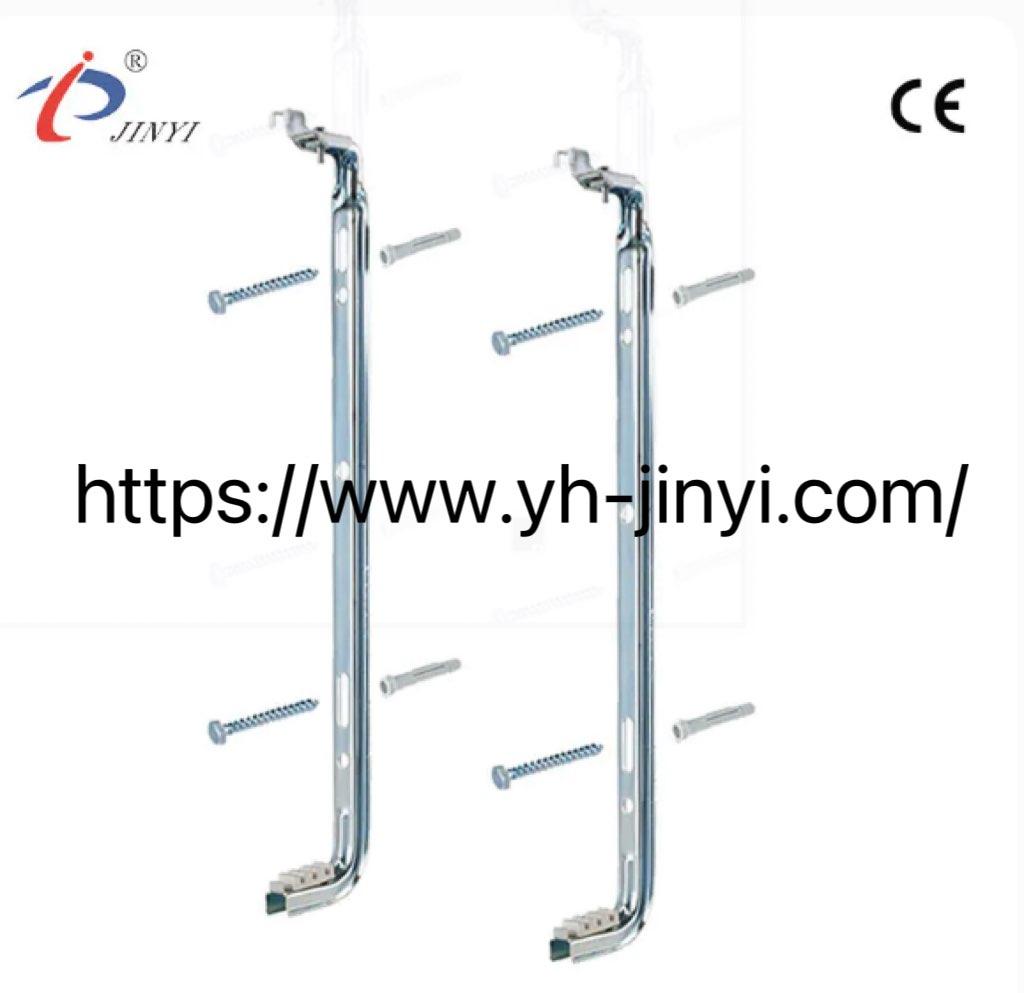
Radiator Support Bracket selection should start with technical requirements rather than appearance or price alone. Buyers should examine equipment dimensions, operating weight, fixing positions, mounting distance, material, structural design, surface treatment, production consistency, customization options, packaging, and supplier communication. For distributors, contractors, importers, and heating equipment brands, these factors can create a practical framework for comparing manufacturers before placing an order.
Begin With Equipment Specifications
Before requesting a quotation, buyers should collect accurate information about the heating equipment involved in the project. Useful details include height, width, depth, weight, fixing-point spacing, connection position, and installation orientation.
Different equipment models can have different mounting arrangements. A component that looks similar to another model may still have different dimensions or hole positions.
A clear specification sheet can make communication easier. Buyers managing several models can list the required measurements separately and send the information to the manufacturer for review.
Consider the Complete Load
The empty weight of a heating unit may not represent its actual operating load. Water and other contents can increase the total weight after installation.
Procurement teams should therefore provide operating conditions when discussing the required hardware. The component, fasteners, fixing points, mounting surface, and load distribution should be considered together.
For larger construction projects, buyers can also provide the quantity of units, installation environment, and expected purchasing schedule. This gives manufacturers more information when preparing production recommendations.
Review Material Details
Material selection can influence weight, corrosion resistance, fabrication, appearance, and cost. Steel and aluminum are commonly used for this type of hardware, while the appropriate choice depends on the intended application.
Instead of asking only whether a product is made from steel or aluminum, buyers can request information about material grade, thickness, forming method, welding process, machining, and surface treatment.
These details can be especially useful when comparing quotations from several manufacturers. Two products may look similar while having different material specifications.
Examine Fixing Positions
Mounting compatibility depends heavily on dimensional accuracy. Buyers should check hole spacing, fixing locations, component length, bends, contact areas, and installation distance.
Technical drawings are valuable during this stage. The supplier drawing can be compared with measurements from the intended heating equipment before a sample is approved.
If the project involves several equipment models, buyers should avoid assuming that one configuration will suit every model. Separate specifications may be needed for different product sizes.
Check Structural Details
The shape of the hardware can affect how the heating unit sits after installation. Buyers can inspect bends, reinforcement areas, mounting arms, contact points, and overall geometry.
The structure should correspond with the intended installation method. Buyers can also consider whether installers need adjustable dimensions or fixed positioning.
For customized projects, all dimensional changes should be documented clearly. This may include thickness, hole spacing, component length, mounting distance, or other design requirements.
Pay Attention to Surface Finishing
Surface finishing can influence appearance and environmental resistance. Depending on the material and intended application, buyers may consider powder coating, zinc plating, anodizing, or other finishing methods.
During sample inspection, buyers can check surface coverage, visible marks, uneven areas, color consistency, and general finishing condition.
For distributors, consistent finishing can also help maintain a uniform appearance across repeated orders. This can be useful when products are sold under the same catalog or private-label program.
Request Samples Before Production
A physical sample gives buyers an opportunity to check the actual product before ordering larger quantities.
The sample should be compared with the approved drawing. Buyers can measure dimensions, inspect fixing positions, check material thickness, review surface finishing, and verify compatibility with the intended equipment.
If modifications are required, the changes should be recorded before mass production. An approved sample can later serve as a reference for repeat orders.
This process can be particularly useful for importers who cannot inspect every production stage in person.
Evaluate Manufacturing Capability
A manufacturer's production capability is an important part of supplier selection. Buyers can ask how raw materials are inspected, how dimensions are controlled, how forming and welding are handled, and how finished products are checked.
Batch consistency also deserves attention when buyers expect repeated purchasing. Stable specifications can make assembly and product management easier.
yh-jinyi presents multiple product configurations and offers customized manufacturing based on customer drawings or requirements. Its product information also covers different materials and production options for buyers with specific project needs.
Discuss Customization Requirements
Standard dimensions may not suit every heating equipment model. Buyers may require changes to thickness, hole patterns, dimensions, mounting geometry, material, or surface finishing.
Customization should be discussed before the order is confirmed. Buyers should provide drawings or detailed measurements whenever possible.
For OEM and private-label projects, additional requirements can include logos, labels, packaging, product identification, and other brand-related details.
yh-jinyi states that customized production can cover size, thickness, hole patterns, surface finish, packaging, and branding. This allows buyers to communicate project-specific requirements during the sourcing process.
Compare Packaging Arrangements
Packaging becomes particularly relevant for international purchasing. Buyers should confirm the number of pieces per carton, carton dimensions, protective materials, labeling, and identification requirements.
Wholesale buyers may prefer bulk packing, while retail programs may require individual packages.
Packaging specifications should be confirmed before production because changes made later may affect shipment arrangements and warehouse planning.
Review Quality Inspection
Buyers should ask how finished products are inspected before shipment. Useful inspection points may include dimensions, hole positions, material condition, surface finishing, structural shape, and quantity.
For repeat orders, an agreed inspection standard can provide a consistent reference.
Buyers can also discuss whether inspection records, approved samples, or production specifications can be retained for future orders.
Consider Long-Term Purchasing
Supplier selection should take future purchasing needs into account. A buyer who expects monthly or seasonal orders may need a manufacturer capable of maintaining consistent specifications across multiple batches.
Before confirming cooperation, buyers can ask about production planning, sample retention, packaging records, customization procedures, and communication during repeat orders.
For distributors and importers, this information can help create a more predictable purchasing process.
Compare More Than the Quotation
Price is an important commercial consideration, but the lowest quotation is not necessarily the right comparison point for every project.
Buyers should compare the actual material, dimensions, finishing, customization scope, packaging, inspection procedures, production arrangements, and communication included in each quotation.
A simple comparison table can help procurement teams identify differences between suppliers and avoid evaluating products based only on catalog photographs.
Prepare a Final Specification
Before placing an order, buyers should prepare a final specification covering dimensions, material, thickness, fixing positions, finishing, quantity, packaging, inspection requirements, and branding.
Drawings and approved samples can be kept alongside the purchasing document. This provides a practical reference for production and future orders.
For international projects, clear documentation is especially useful because purchasing teams, engineers, quality personnel, and installers may all need to review the same information.
Choose According to Project Requirements
The purchasing decision should reflect the actual needs of the project. Buyers can evaluate equipment compatibility, material, structure, production capability, customization, finishing, packaging, inspection, and future order arrangements together.
yh-jinyi manufactures mounting hardware for heating applications and provides different configurations as well as customized production options. Buyers can communicate drawings, dimensions, materials, finishing, packaging, and branding requirements according to their projects.
For businesses preparing a new sourcing project, reviewing technical specifications before requesting a quotation can make supplier communication more efficient. Buyers interested in mounting products, customized manufacturing, and other hardware solutions can visit the yh-jinyi product page at https://www.yh-jinyi.com/product/ and discuss their requirements directly with the manufacturer.

 Arabic
 French
 Spanish
 Portuguese
 Deutsch
 Turkish
 Dutch
Dutch
 Italiano
 Russian
 Romaian
 Portuguese (Brazil)
 Greek
Greek
 Bengali