


Chemical Integration and the Future of the Tire Pyrolysis Oil Market
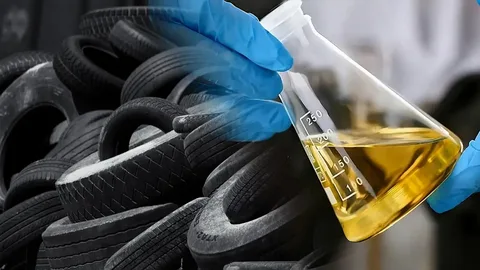
In the industrial landscape of 2026, the transition toward a truly circular economy is no longer a distant goal but a structural reality. Central to this shift is the innovative recovery of hydrocarbons from end-of-life tires (ELTs). The thermal decomposition of scrap rubber in an oxygen-free environment—known as pyrolysis—has evolved into a sophisticated process that yields high-value liquid fuels and chemical feedstocks. This "secondary oil" is becoming a critical resource for industries aiming to decouple their production from virgin fossil fuels, offering a sustainable pathway to reclaim the massive amounts of energy embedded in the over one billion tires discarded globally each year.
As technology advances, the focus is shifting from using tire pyrolysis oil (TPO) as a simple heating fuel to utilizing it as a high-grade chemical intermediate. Modern refineries are increasingly exploring the "co-processing" of pyrolytic oil, where it is refined alongside crude oil to produce sustainable naphtha, which can then be used to create new plastics and synthetic rubber. This molecular upcycling is essential for the automotive industry’s goal of creating a "closed-loop" tire, where the materials from an old tire directly inform the manufacturing of a new one. This high-value application is driving significant investment in purification and hydro-treatment technologies to ensure the oil meets the stringent purity requirements of the global petrochemical sector.
According to a recent report by Market Research Future, the Tire Pyrolysis Oil Market is estimated to reach an industry size of USD 393.16 million in 2026, following a steady expansion from its 2025 valuation. This growth is being meticulously tracked by analysts who utilize Process Oil Market Forecast data to determine how recycled oils are beginning to displace traditional aromatic and naphthenic process oils in industrial manufacturing. The forecast suggests that as tire-derived oils achieve higher levels of refinement and consistency, their adoption as extenders and plasticizers in rubber compounding will see a compound annual growth rate (CAGR) exceeding 5.3% through 2035. This transition is most pronounced in the Asia-Pacific region, which continues to lead the world in both scrap tire generation and the adoption of continuous pyrolysis infrastructure.
Looking toward 2030, the market is poised to be dominated by "smart" automated pyrolysis plants that operate with zero-liquid discharge and minimal emissions. We are seeing the first commercial implementations of AI-driven reactors that optimize the thermal breakdown of rubber based on the specific blend of passenger and truck tires being processed. This level of precision ensures a consistent oil yield and chemical profile, making TPO a reliable "drop-in" substitute for many industrial energy applications. By 2035, the tire pyrolysis oil market will be a foundational pillar of the global green industrial revolution, proving that waste is simply a resource that hasn't been refined yet.

 Arabic
 French
 Spanish
 Portuguese
 Deutsch
 Turkish
 Dutch
Dutch
 Italiano
 Russian
 Romaian
 Portuguese (Brazil)
 Greek
Greek
 Bengali