


Why is a Blast Pipe Better for Blast Protection?
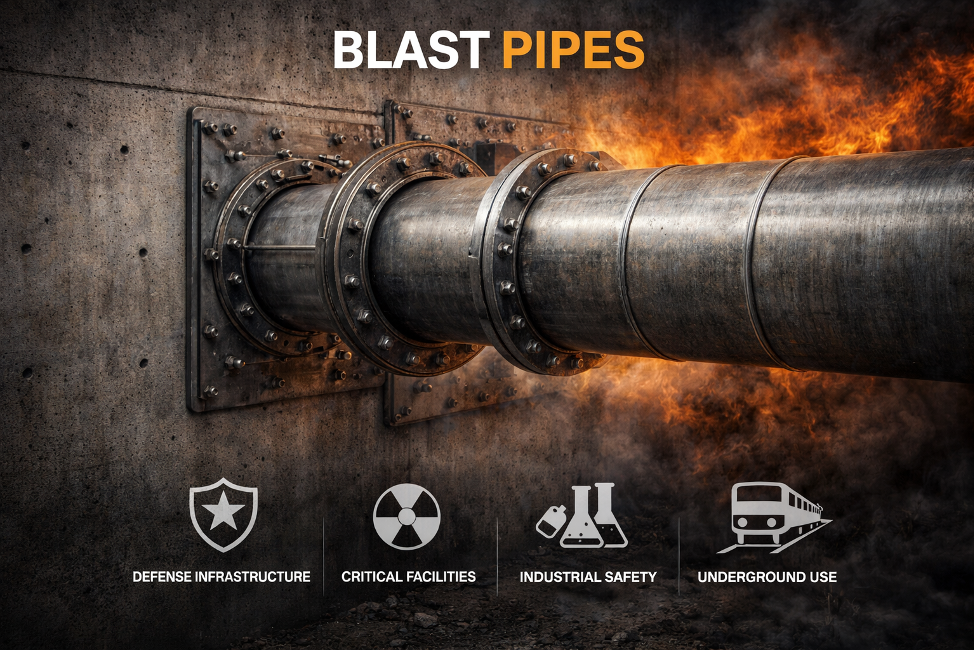
A chemical manufacturing facility experiences an unexpected explosion in one of its processing units. The blast wave travels rapidly through the plant, putting immense pressure on the building's ventilation system. While ordinary duct sections begin to deform, the Blast Pipe installed within the protected ventilation network absorbs the pressure, protects wall penetrations, and helps preserve the structural integrity of the facility. This real-world scenario highlights why understanding the difference between a blast pipe and a standard industrial pipe is essential when designing safe, blast-resistant infrastructure.
What is a Blast Pipe?
A Blast Pipe is a specially engineered ventilation pipe designed to withstand the extreme overpressure generated during an explosion. Unlike conventional industrial piping, it is manufactured to reinforce duct penetrations through blast-resistant walls and distribute blast forces safely.
Its primary purpose is not simply to transport air but to ensure that the ventilation system remains functional without compromising the structural integrity of protected facilities. Products such as the Sigma Power Tech Blast Pipe are specifically engineered for high-risk environments where safety and operational continuity are critical.
Blast Pipe vs Standard Industrial Pipe
At first glance, both products may appear similar because they are made from steel and are used within industrial systems. However, their engineering purpose is entirely different.
A standard industrial pipe is designed to transport air, gases, or fluids under normal operating conditions. It is not intended to resist sudden blast overpressure or protect structural wall penetrations.
A blast pipe, on the other hand, is built specifically for explosion protection. It features reinforced construction, higher pressure resistance, and engineered load distribution that allows it to absorb and transfer blast forces without damaging surrounding structures.
In environments where explosions are a realistic possibility, using a standard pipe instead of a Blast Resistant Pipe can significantly increase the risk of structural damage.
How Does a Blast Pipe Work During an Explosion?
During an explosion, a high-pressure shock wave travels through the surrounding environment within milliseconds. Ventilation openings are often among the most vulnerable parts of a blast-resistant structure.
A properly engineered blast pipe helps protect the facility by:
- Reinforcing ventilation duct penetrations.
- Distributing blast loads across its heavy-duty construction.
- Reducing stress concentrations around wall openings.
- Maintaining the integrity of blast-resistant walls.
- Supporting safe ventilation after the pressure wave has passed.
An engineered blast pipe exhaust pathway also helps protect downstream ventilation equipment by controlling airflow during emergency conditions.
Key Features of a Blast Pipe
Several engineering characteristics distinguish blast pipes from standard industrial pipes.
Reinforced Steel Construction
Blast pipes use heavy-duty steel designed to withstand high mechanical loads and repeated pressure events.
Superior Pressure Resistance
A certified Blast Resistant Pipe is capable of resisting substantial blast overpressure without permanent deformation or structural failure.
Long-Term Durability
Protective coatings improve corrosion resistance, allowing reliable performance in chemical plants, coastal installations, and demanding industrial environments.
Precision Engineering
Accurate fabrication ensures seamless integration with blast walls, ventilation ducts, and other blast protection equipment.
These features allow blast pipes to perform reliably where conventional industrial pipes would likely fail.
Integration with Complete Ventilation Protection Systems
A blast pipe forms only one part of a comprehensive protected ventilation solution.
Modern blast-resistant facilities typically integrate:
- Blast valves that automatically isolate incoming pressure waves.
- Gas-tight valves that prevent hazardous air leakage.
- CBRN filtration systems that remove chemical, biological, radiological, and nuclear contaminants.
- Reinforced ventilation ducts for secure airflow.
When these components work together, they provide continuous protection while maintaining safe ventilation before, during, and after a blast event.
Where Are Blast Pipes Used?
Blast pipe systems are installed wherever explosion risks demand enhanced structural protection.
Typical applications include:
- Defence and military installations.
- Underground bunkers and command centres.
- Nuclear power stations.
- Conventional power generation facilities.
- Chemical processing plants.
- Oil and gas installations.
- Petrochemical refineries.
- Critical government infrastructure and secure data centres.
In each of these environments, blast-resistant ventilation contributes to both personnel safety and operational resilience.
What Affects Blast Pipe Pricing?
The cost of a blast pipe depends on several engineering and project-specific factors.
These include:
- Steel grade and material quality.
- Wall thickness.
- Pipe diameter and length.
- Required blast pressure rating.
- Protective coatings.
- Certification and testing requirements.
- Custom fabrication.
- Installation complexity.
Selecting a product solely because it offers the lowest initial price can compromise long-term performance, maintenance costs, and facility safety.
Choosing Reliable Blast Pipe Manufacturers in India
Choosing the right supplier is just as important as selecting the right product.
When evaluating Blast Pipe Manufacturers in India, look for companies that offer:
- Expertise in blast protection engineering.
- Custom manufacturing capabilities.
- Certified quality assurance processes.
- Technical design and installation support.
- Integration with blast valves and filtration systems.
- Responsive after-sales service.
Working with an experienced manufacturer ensures the blast pipe performs as part of a fully engineered blast protection solution.
Common Mistakes to Avoid
Many projects reduce the effectiveness of their blast protection systems by making avoidable specification errors.
Common mistakes include:
- Using standard industrial pipes in blast-resistant applications.
- Ignoring reinforcement requirements for wall penetrations.
- Choosing products based only on cost.
- Failing to integrate blast pipes with blast valves and filtration systems.
- Neglecting routine inspection and maintenance.
- Selecting suppliers without specialised blast engineering experience.
Avoiding these issues significantly improves long-term safety and system reliability.
Build a Safer Ventilation System
Now is the right time to review your facility's ventilation safety setup and evaluate whether every component meets your operational risk profile.
If your infrastructure supports critical operations, you should also consider upgrading your blast protection systems with engineered blast-resistant ventilation components designed for demanding environments.
To stay ahead of evolving industry standards and technologies, explore more safety insights that help improve infrastructure resilience and operational safety.
Conclusion
Although they may appear similar, a standard industrial pipe and a Blast Pipe serve very different purposes. Standard pipes are designed for routine air or fluid transport, whereas a blast pipe is engineered to withstand explosion pressure, protect duct penetrations, distribute blast loads, and preserve the structural integrity of blast-resistant facilities. When combined with blast valves, gas-tight valves, and advanced filtration systems, it forms an essential part of a complete protected ventilation solution.
Choosing a Sigma Power Tech Blast Pipe from experienced Blast Pipe Manufacturers in India ensures dependable performance in defence facilities, power plants, chemical industries, underground shelters, and other high-risk environments. Investing in a properly engineered Blast Resistant Pipe is more than a compliance decision—it is a commitment to long-term safety, resilience, and the protection of critical infrastructure.

 Arabic
 French
 Spanish
 Portuguese
 Deutsch
 Turkish
 Dutch
Dutch
 Italiano
 Russian
 Romaian
 Portuguese (Brazil)
 Greek
Greek
 Bengali