


Real Estate Tokenization: Why Cross-Chain Property Markets Are Gaining Business Attention
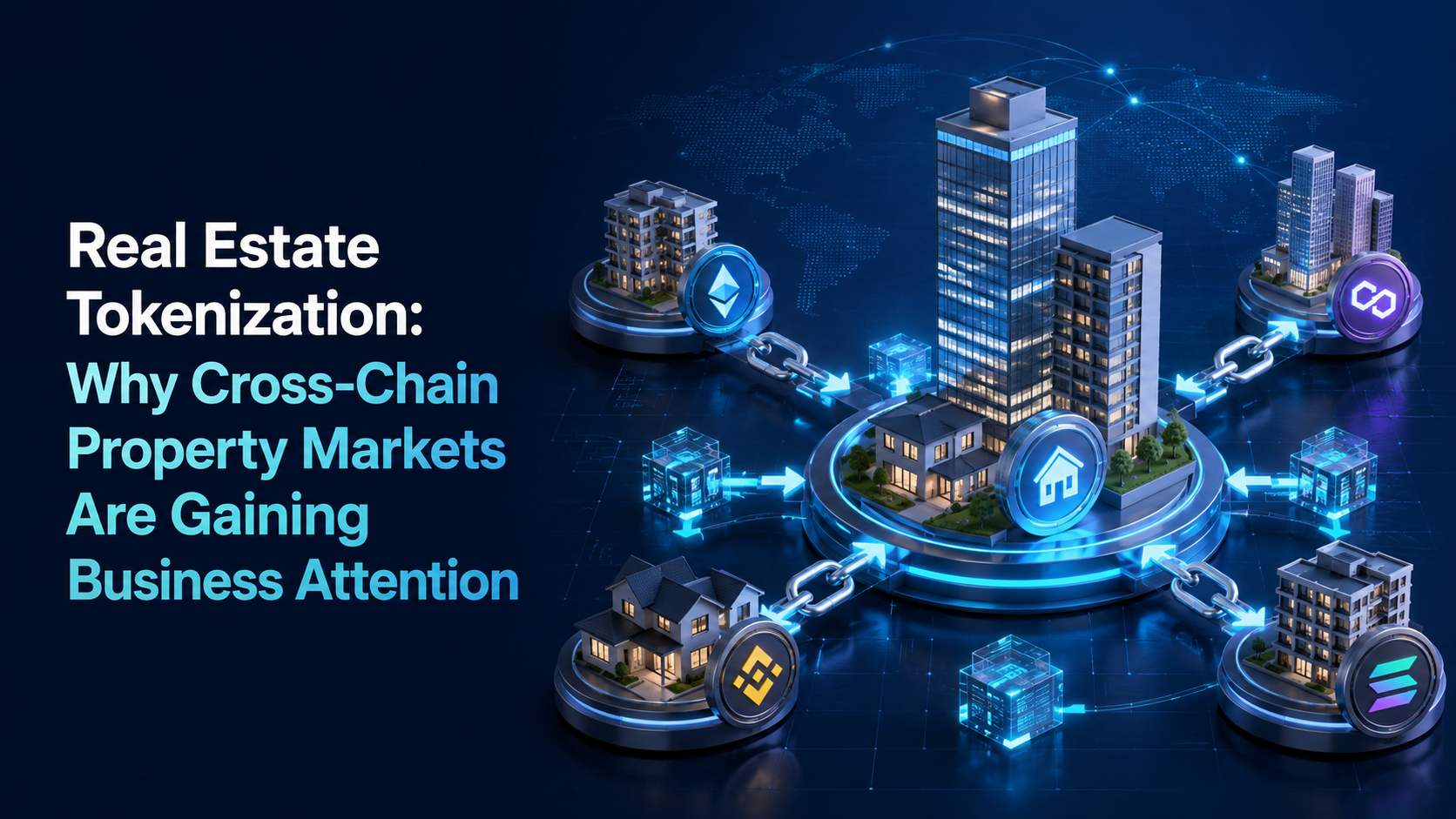
Real estate has traditionally operated through local markets, regional regulations, separate property databases, and financial systems that rarely communicate with one another. Real estate tokenization is changing how businesses think about this structure by representing property ownership or economic interests through blockchain-based tokens. As tokenized property markets develop, another idea is gaining attention: cross-chain property markets.
A cross-chain property market allows tokenized real estate assets to interact across different blockchain networks. Instead of keeping every property token within a single blockchain ecosystem, businesses can consider systems where assets, investors, payment mechanisms, and applications operate across multiple networks. This approach is becoming relevant for property companies, investment platforms, financial institutions, and technology providers looking at wider digital property markets.
The growing interest is not only about blockchain technology. Businesses are looking at cross-chain markets because property investment involves different investor groups, jurisdictions, financial instruments, custody systems, and blockchain environments. A cross-chain model can provide a wider technical environment for handling these requirements while giving businesses more options when developing digital property markets.
What Are Cross-Chain Property Markets?
Cross-chain property markets refer to real estate ecosystems where tokenized property assets can interact with more than one blockchain network. A property may initially be represented through tokens on one network, while investors or applications on another network may interact with those assets through approved cross-chain infrastructure.
For example, a commercial property could be represented by digital tokens on one blockchain. Investors using another compatible network may need access to those tokens for trading, portfolio management, or other permitted activities. Cross-chain infrastructure can facilitate communication between the networks without requiring the property market to remain restricted to one blockchain.
This concept can also apply to different parts of a property transaction. One blockchain could manage token ownership records, another could support payment settlement, and another could provide access to decentralized applications. The exact structure depends on regulatory requirements, technical architecture, asset type, and the business model of the platform.
Why Businesses Are Paying Attention to Cross-Chain Real Estate
The real estate industry includes many participants with different technology preferences. Property developers, investment firms, banks, brokers, custodians, and investors may not operate on the same blockchain. A property token platform restricted to one network can therefore face limitations when connecting with external systems.
Cross-chain infrastructure gives businesses a broader environment for creating connections between different blockchain ecosystems. This can be useful when a real estate marketplace wants to reach investors who already use different networks.
For a real estate tokenization company, cross-chain functionality can also influence the long-term structure of its platform. Rather than designing the marketplace around a single network, the company can consider how different chains may participate in property issuance, transfers, settlement, identity verification, and investor services.
Greater Access to Different Investor Communities
Investor participation is an important reason behind the growing interest in cross-chain property markets. Different blockchain communities may have different user bases, applications, liquidity conditions, and digital asset preferences.
Suppose a tokenized property is available only on one blockchain. Investors who primarily operate on another network may face additional steps before participating. Cross-chain functionality can reduce some of these technical barriers by allowing compatible interaction between networks.
For a real estate asset tokenization company, this can create more options when planning investor access. Instead of considering blockchain selection as a permanent restriction, the company can evaluate how several networks may participate in the property market over time.
Supporting Different Blockchain Requirements
Not every blockchain offers the same technical characteristics. Some networks may be preferred for transaction costs, while others may have stronger ecosystem support for particular applications. Some may be used by financial institutions or specialized digital asset platforms.
A cross-chain property market can assign different functions to different networks when the technical and regulatory environment permits it. For example, one network may handle property token issuance while another supports investor applications or secondary market activities.
This does not mean that businesses should use as many blockchains as possible. Each additional network introduces technical, operational, security, and compliance considerations. The purpose is to select networks according to business requirements rather than treating multi-chain support as a feature that automatically improves a platform.
How Cross-Chain Infrastructure Fits Into Real Estate Tokenization Platform Development
Cross-chain functionality affects several parts of real estate tokenization platform development. The platform architecture may need blockchain adapters, asset-mapping mechanisms, wallet support, transaction monitoring, smart contract controls, and systems for communicating with external networks.
A platform may also require a method for maintaining consistent information when an asset is represented across different environments. Ownership records, token balances, transfer restrictions, investor permissions, and transaction histories need careful handling.
A real estate tokenization platform development company therefore needs to evaluate cross-chain requirements during the architecture stage. Adding multiple networks after the platform is already operational can require substantial technical changes, especially when the original system was designed around a single blockchain.
The Role of Smart Contracts in Cross-Chain Property Markets
Smart contracts remain an important component of tokenized property systems. They can define how tokens are issued, transferred, restricted, or redeemed according to the rules established by the property issuer and applicable regulations.
In a cross-chain environment, smart contracts may operate on multiple networks. Communication between those contracts requires carefully designed infrastructure because an action on one blockchain does not automatically become recognized by another blockchain.
For example, when an approved investor transfers a property token on one network, another system may need reliable confirmation before updating a related record on a second network. Cross-chain messaging and verification mechanisms can support this communication.
The real estate token development process therefore needs to consider not only the smart contract on the original blockchain but also how contract activity interacts with other networks.
Cross-Chain Markets and Secondary Property Trading
Secondary trading is one area where cross-chain infrastructure may have practical value. Tokenized real estate markets may involve investors who use different wallets, blockchain networks, and digital asset applications.
A property marketplace that supports multiple networks can provide more options for approved investors and market participants. However, secondary trading remains closely connected to legal ownership structures, securities regulations, investor eligibility, transfer restrictions, and market rules.
Real estate tokenization does not automatically turn property tokens into freely tradable assets. Businesses still need to establish the legal framework behind each offering. Cross-chain technology operates within that framework rather than replacing it.
Liquidity Considerations for Tokenized Property
Liquidity is often discussed in relation to tokenized real estate. Traditional property transactions can take considerable time because buyers and sellers must complete due diligence, financing, documentation, and legal procedures.
Tokenization can introduce digital representations of property interests that may be transferred through blockchain systems. Cross-chain functionality can potentially widen the technical environment in which these assets can be accessed.
However, blockchain availability does not guarantee active trading. Liquidity depends on investor demand, asset quality, pricing, regulatory permissions, marketplace participation, and market-making arrangements. Businesses should therefore treat cross-chain support as infrastructure rather than a direct guarantee of liquidity.
Regulatory Considerations Across Multiple Networks
Real estate is highly regulated, and cross-chain markets add another layer of consideration. Property ownership laws, securities rules, investor restrictions, taxation, anti-money laundering requirements, and data regulations may differ between jurisdictions.
A token may also have different legal treatment depending on the rights associated with it. A token representing equity in a property-holding entity may have different requirements from a token representing a contractual claim on rental income.
For this reason, businesses working with a real estate tokenization development company should consider compliance architecture from the beginning. Investor verification, wallet screening, transfer restrictions, transaction records, and jurisdiction-based controls may need to work across the supported blockchain networks.
Security Risks in Cross-Chain Property Markets
Cross-chain systems introduce additional security considerations. When multiple blockchains communicate, the connection between those networks becomes an important part of the infrastructure.
Businesses need to examine how messages are verified, how assets are represented on different networks, how unauthorized transfers are prevented, and what happens if a connected system experiences an outage or security incident.
Security reviews should cover smart contracts, bridges or messaging protocols, custody systems, wallet connections, APIs, and administrative controls. A property platform dealing with valuable assets cannot treat cross-chain connectivity as a simple integration.
How Property Businesses Can Approach Cross-Chain Development
A practical approach begins with identifying the business reason for using multiple networks. A company should determine whether cross-chain support is needed for investor access, settlement, marketplace expansion, ecosystem integration, or another specific purpose.
The next step is evaluating the property structure and legal model. The company should determine what the token represents, who can hold it, where investors are located, and what restrictions apply to transfers.
Technology selection can follow these decisions. The business can then assess blockchain networks, interoperability protocols, smart contract frameworks, custody systems, identity tools, and marketplace infrastructure.
A phased approach can also reduce unnecessary technical complexity. A company may initially launch with one blockchain and introduce additional networks after evaluating investor demand and operational requirements.
The Growing Role of Real Estate Tokenization Companies
As property markets become more digital, businesses are looking for specialized providers that understand both real estate and blockchain systems. A real estate tokenization company may provide services covering token creation, smart contracts, investor management, compliance features, property administration, wallets, marketplaces, and blockchain integrations.
Businesses evaluating providers often compare Top real estate tokenization companies based on their technical capabilities, property-sector experience, compliance approach, supported networks, and previous platform work.
The same evaluation applies when researching Best real estate tokenization companies. Rather than judging providers only by the number of features they advertise, businesses should examine how those features relate to the intended property model and investor requirements.
What Businesses Should Look for in a Real Estate Tokenization Platform Development Company
A suitable real estate tokenization platform development company should understand how property assets are structured before recommending technical components. The provider should be able to discuss token standards, smart contracts, investor onboarding, compliance controls, wallets, asset servicing, trading functions, and blockchain connectivity.
Cross-chain development also requires knowledge of interoperability architecture. The provider should explain how assets and messages move between networks, how transaction states are verified, and how failures are handled.
Businesses should also examine the provider's approach to upgrades and maintenance. Blockchain networks change over time, and a multi-chain platform may require ongoing updates as protocols, wallets, and network conditions evolve.
Where Cross-Chain Property Markets Could Go Next
Cross-chain property markets may gradually become part of broader digital asset infrastructure. As more financial and property-related applications operate across different blockchains, businesses may have greater interest in systems that can communicate across these environments.
Future property platforms may combine tokenized ownership, digital identity, compliance systems, payment networks, property management software, and secondary marketplaces. Cross-chain infrastructure could serve as a connection layer between some of these systems.
The direction of the market will depend on regulation, investor demand, blockchain adoption, interoperability standards, and the willingness of property businesses to adopt digital asset infrastructure. Cross-chain technology alone will not determine the future of tokenized property markets, but it can influence how businesses design their platforms.
Conclusion
Cross-chain property markets are gaining business attention because real estate tokenization is moving toward broader digital ecosystems where multiple blockchain networks may participate in the same investment environment. Support for different networks can provide businesses with more choices for investor access, asset distribution, application integration, and marketplace design, while also introducing additional requirements around security, compliance, asset tracking, and technical operations. Companies considering this model should first define the legal structure of the property asset, investor requirements, market objectives, and blockchain needs before selecting a cross-chain architecture. A well-planned approach can help property businesses assess where multi-chain infrastructure has genuine commercial value instead of adopting it simply as a technology trend. Blockchain App Factory provides Real estate tokenization development services for businesses looking to create property token platforms with features covering token issuance, smart contracts, investor management, marketplace functions, blockchain integration, and other digital property requirements.
FAQs
1. What is cross-chain real estate tokenization?
Cross-chain real estate tokenization refers to property token systems that can interact with multiple blockchain networks. It allows tokenized property assets and related applications to communicate across supported blockchain environments.
2. Why are businesses interested in cross-chain property markets?
Businesses may consider cross-chain markets to reach different blockchain communities, support multiple technical environments, connect with external applications, and provide more options for digital property transactions.
3. Does cross-chain functionality increase real estate token liquidity?
It can provide access to additional blockchain ecosystems, but cross-chain support does not automatically create liquidity. Investor demand, regulations, asset quality, marketplace participation, and trading activity remain important factors.
4. What does a real estate tokenization platform need for cross-chain support?
A platform may require blockchain integrations, smart contracts, wallet support, cross-chain messaging, transaction monitoring, asset mapping, investor controls, and systems for handling transactions across different networks.
5. Is cross-chain real estate tokenization suitable for every property business?
Not necessarily. Businesses should consider their investor base, legal structure, geographic markets, blockchain requirements, transaction volume, and operational resources before adopting a multi-chain approach.
6. What role does real estate token development play in cross-chain markets?
Real estate token development involves creating the digital representation of property interests through blockchain tokens. In a cross-chain model, development also considers how those tokens interact with other supported blockchain networks.
7. How should businesses select a real estate tokenization company?
Businesses can assess a provider based on blockchain expertise, property-sector knowledge, smart contract experience, compliance features, cross-chain capabilities, security practices, platform architecture, and post-launch support.
8. Can a tokenized property operate on multiple blockchains?
Depending on the legal and technical model, a property token can be represented or accessed across multiple blockchain environments. The method used must account for ownership records, supply controls, transfer restrictions, and transaction verification.
9. What are the major risks of cross-chain property platforms?
Risks can include smart contract vulnerabilities, interoperability failures, bridge or messaging issues, incorrect asset records, wallet security problems, regulatory differences, and operational complexity across multiple networks.
10. What is the future of cross-chain real estate tokenization?
Its future will depend on regulatory development, investor adoption, blockchain interoperability, institutional participation, and demand for digital property markets. Cross-chain infrastructure may become more relevant as property platforms connect with wider digital asset ecosystems.

 Arabic
 French
 Spanish
 Portuguese
 Deutsch
 Turkish
 Dutch
Dutch
 Italiano
 Russian
 Romaian
 Portuguese (Brazil)
 Greek
Greek
 Bengali