


Food Ordering App Development Guide for Building a Scalable and Profitable Online Food Business
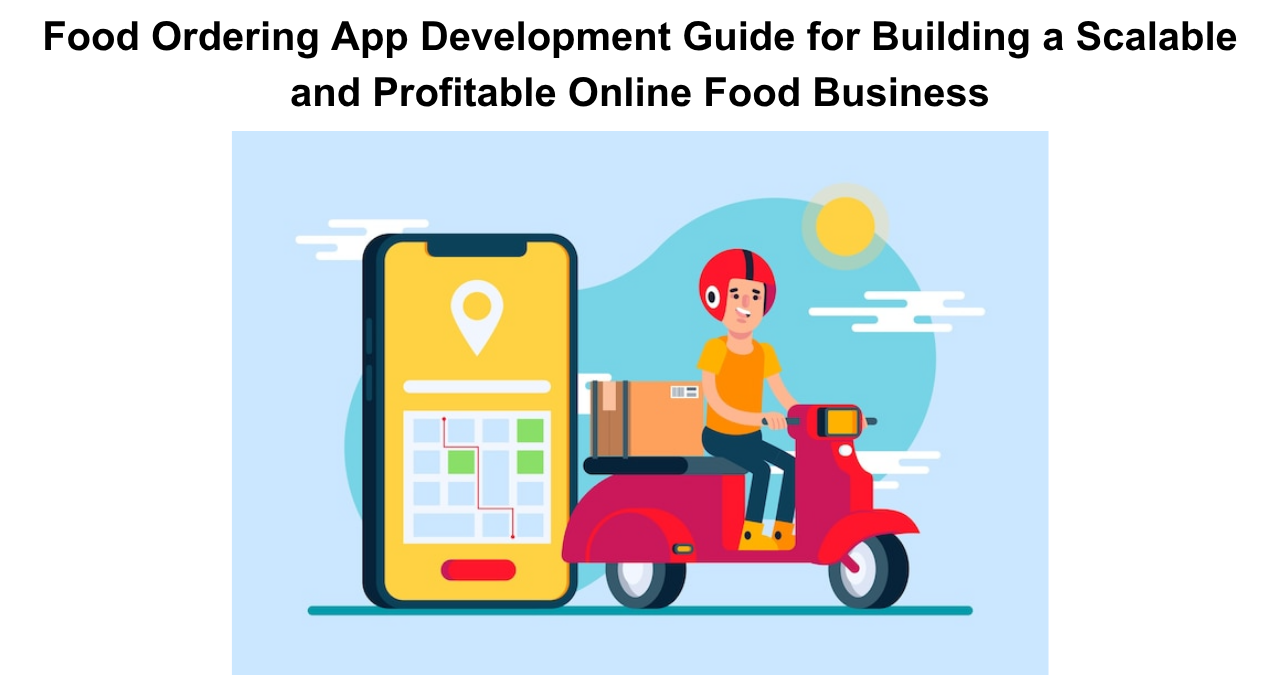
The online food industry has changed how customers discover restaurants, order meals, track deliveries, and interact with food businesses. For startups and entrepreneurs, this shift has created a strong opportunity to build digital food businesses that serve customers across specific cities, regions, or even multiple markets.
However, launching a food ordering platform is not simply about creating an app where customers can select meals and place orders. A successful platform needs a clear business model, reliable operations, convenient user experiences, restaurant partnerships, delivery management, customer retention strategies, and the flexibility to grow as demand increases.
This is where Food Ordering App Development becomes an important business investment. A well-planned food ordering solution can help businesses create a direct connection between customers, restaurants, delivery partners, and administrators while creating multiple opportunities for revenue generation.
For startups entering this competitive market, the objective should not be to copy an existing platform without understanding its business model. Instead, entrepreneurs should study successful platforms, identify gaps in their target market, and build a solution around a specific customer need.
This guide explains the major considerations involved in building a scalable and profitable online food business, from business planning and essential features to monetization, customer retention, scalability, and choosing the right development partner.
Why Start a Food Ordering Business?
Food delivery has become an important part of modern consumer behavior. Customers increasingly expect convenience, quick ordering, digital payments, real-time order updates, personalized recommendations, and easy access to restaurants.
For entrepreneurs, this creates opportunities beyond operating a traditional restaurant.
A food ordering platform can connect multiple restaurants with customers and create a marketplace-based business model. Alternatively, a restaurant group can build its own ordering platform to create a direct digital sales channel.
Some businesses may focus on a single city, while others can expand into multiple locations after validating their business model.
Major opportunities for entrepreneurs
A food ordering platform can provide opportunities to:
- Connect customers with multiple restaurants
- Create a direct ordering channel for food businesses
- Serve a specific geographic market
- Target specific food categories or customer segments
- Build a recurring customer base
- Introduce subscription or loyalty programs
- Expand into additional locations
- Offer restaurants digital tools for managing orders
- Develop partnerships with delivery providers
- Create multiple revenue streams
The opportunity is particularly attractive for startups because businesses can begin with a focused market strategy and expand after establishing product-market fit.
What Is Food Ordering App Development?
Food Ordering App Development refers to the process of creating a digital platform that allows customers to discover food businesses, browse menus, place orders, make payments, receive order updates, and provide feedback.
Depending on the business model, the platform can support different user groups.
A marketplace model generally involves:
- Customer application
- Restaurant or merchant application
- Delivery partner application
- Admin management system
Each participant has a different role in the ordering ecosystem.
Customers need a simple way to discover and order food. Restaurants need tools to manage menus and incoming orders. Delivery partners need efficient order assignment and delivery workflows. Administrators need centralized control over the entire marketplace.
A successful platform connects these activities into one coordinated ecosystem.
Define Your Food Delivery Business Model First
Before starting Food Delivery App Development, entrepreneurs should define exactly how the business will operate.
A common mistake is to begin with a list of features before understanding the business model. Features should support the business strategy, not replace it.
Marketplace model
In a marketplace model, the platform connects multiple restaurants with customers.
The platform can attract restaurants, bring customers to the marketplace, facilitate orders, and coordinate delivery operations.
This model is suitable for entrepreneurs who want to build a multi-restaurant food marketplace.
Restaurant-owned ordering platform
A restaurant chain or food brand can create its own ordering platform.
Instead of competing as a broad marketplace, the business can focus on its own customers, menu, promotions, loyalty programs, and ordering experience.
This model provides greater control over customer relationships and brand communication.
Niche food ordering platform
A startup can also target a specific niche instead of trying to serve every type of restaurant.
Examples include:
- Healthy food
- Vegan meals
- Organic food
- Local restaurants
- Home chefs
- Corporate meal delivery
- Grocery and meal combinations
- Specialty cuisines
A focused niche can make customer acquisition and brand positioning easier during the initial launch.
Essential Features for a Successful Food Ordering Platform
Features should be selected according to business requirements and customer expectations. Adding every possible feature at launch can create unnecessary complexity.
The objective should be to provide the functions that directly improve ordering, restaurant operations, delivery coordination, and customer retention.
Customer features
The customer experience should make discovering and ordering food simple.
Important capabilities include:
- Account registration and login
- Location selection
- Restaurant discovery
- Search and filtering
- Restaurant profiles
- Digital menus
- Food item details
- Cart management
- Order placement
- Multiple payment options
- Order confirmation
- Real-time order status
- Delivery tracking
- Order history
- Ratings and reviews
- Offers and promotional codes
- Favorites
- Notifications
- Customer support
A strong search and discovery experience is especially important because customers may browse several restaurants before making a decision.
Restaurant features
Restaurants are a critical part of a marketplace. If merchants find the platform difficult to use, they may not remain active.
Restaurant capabilities can include:
- Restaurant registration
- Business profile management
- Menu management
- Food category management
- Item availability controls
- Order management
- Order acceptance or rejection
- Operating hour management
- Promotion management
- Sales monitoring
- Customer review management
- Notification management
The platform should make it easy for restaurants to keep information accurate and respond to incoming orders quickly.
Delivery partner features
Delivery operations can directly influence customer satisfaction.
Delivery partners may need:
- Registration and verification
- Availability controls
- Order requests
- Order acceptance
- Pickup information
- Customer information
- Navigation support
- Delivery status updates
- Delivery history
- Earnings information
- Notifications
- Support access
Efficient delivery management becomes increasingly important as order volume grows.
Admin capabilities
The administrator needs visibility across the entire platform.
Administrative capabilities can include:
- Customer management
- Restaurant management
- Delivery partner management
- Order monitoring
- Commission management
- Promotion management
- Content management
- Review moderation
- Service-area management
- Notification management
- Customer support management
- Business reporting
- Platform settings
A centralized management system allows the business to monitor operations and respond to issues quickly.
How to Build a Scalable Food Ordering Business
Scalability should be considered from the beginning.
A platform that performs well with a few restaurants and hundreds of users may face operational challenges when it grows to thousands of restaurants and significantly higher order volumes.
For entrepreneurs, scalability is not only a technical consideration. It also includes business processes, restaurant onboarding, delivery operations, customer support, marketing, and geographic expansion.
Start with a focused market
Launching everywhere at once can make customer acquisition and operations difficult.
A better approach is to select a defined market based on factors such as:
- Population
- Restaurant availability
- Customer demand
- Competition
- Delivery infrastructure
- Customer spending behavior
- Local food preferences
Once the model works in the initial market, the business can expand gradually.
Build a strong restaurant network
Restaurant selection can influence the success of a marketplace.
Customers expect variety, but the platform should prioritize reliable restaurants that maintain quality and service standards.
Entrepreneurs can create different merchant categories and develop onboarding criteria based on their target market.
Prioritize customer experience
Customer experience should remain a central business priority.
Customers are more likely to return when the ordering process is simple, information is clear, delivery updates are reliable, and support is responsive.
A good Food Delivery App Development strategy should therefore focus on convenience rather than simply increasing the number of features.
Personalization Can Improve Customer Retention
Food ordering platforms collect useful behavioral information through customer interactions.
Businesses can use this information to understand:
- Frequently ordered meals
- Favorite restaurants
- Preferred cuisines
- Ordering times
- Location patterns
- Promotional responses
- Repeat ordering behavior
This can support personalized recommendations and targeted promotions.
For example, a customer who frequently orders breakfast can receive relevant breakfast recommendations rather than generic promotions.
Personalization should provide genuine value. Excessive or irrelevant notifications can negatively affect customer engagement.
Loyalty Programs and Retention Strategies
Customer acquisition is only one part of building a profitable food business. Retaining existing customers can be equally important.
A platform can introduce:
Loyalty rewards
Customers can receive points or benefits based on their ordering activity.
Membership programs
Memberships can provide benefits such as special offers, loyalty rewards, or other exclusive advantages.
Referral programs
Existing customers can be encouraged to introduce new users to the platform.
Personalized promotions
Offers can be targeted according to customer preferences and previous ordering behavior.
Re-engagement campaigns
Customers who have not ordered for a certain period can receive relevant reminders or offers.
The goal is to create reasons for customers to return instead of relying on discounts for every transaction.
Monetization Strategies for Food Ordering Platforms
A profitable business needs a clear monetization strategy.
Different platforms can use different combinations depending on their business model.
Restaurant commissions
The platform can generate revenue by charging participating restaurants a commission based on completed orders.
Delivery charges
Customers may pay delivery-related charges depending on factors such as location, distance, demand, or service conditions.
Advertising and sponsored listings
Restaurants can pay for additional visibility within the marketplace.
For example, businesses may promote specific restaurants or food items within relevant discovery sections.
Subscription programs
A platform can introduce a membership model that provides recurring benefits to customers.
Promotional partnerships
Food brands can collaborate with the platform for campaigns, launches, seasonal promotions, or special events.
A diversified monetization strategy can help reduce dependence on a single source of revenue.
How On Demand Food Delivery App Development Supports Business Growth
On demand food delivery app development is particularly relevant for businesses that want customers to order meals whenever they need them while enabling restaurants and delivery partners to respond efficiently.
The model depends heavily on real-time coordination.
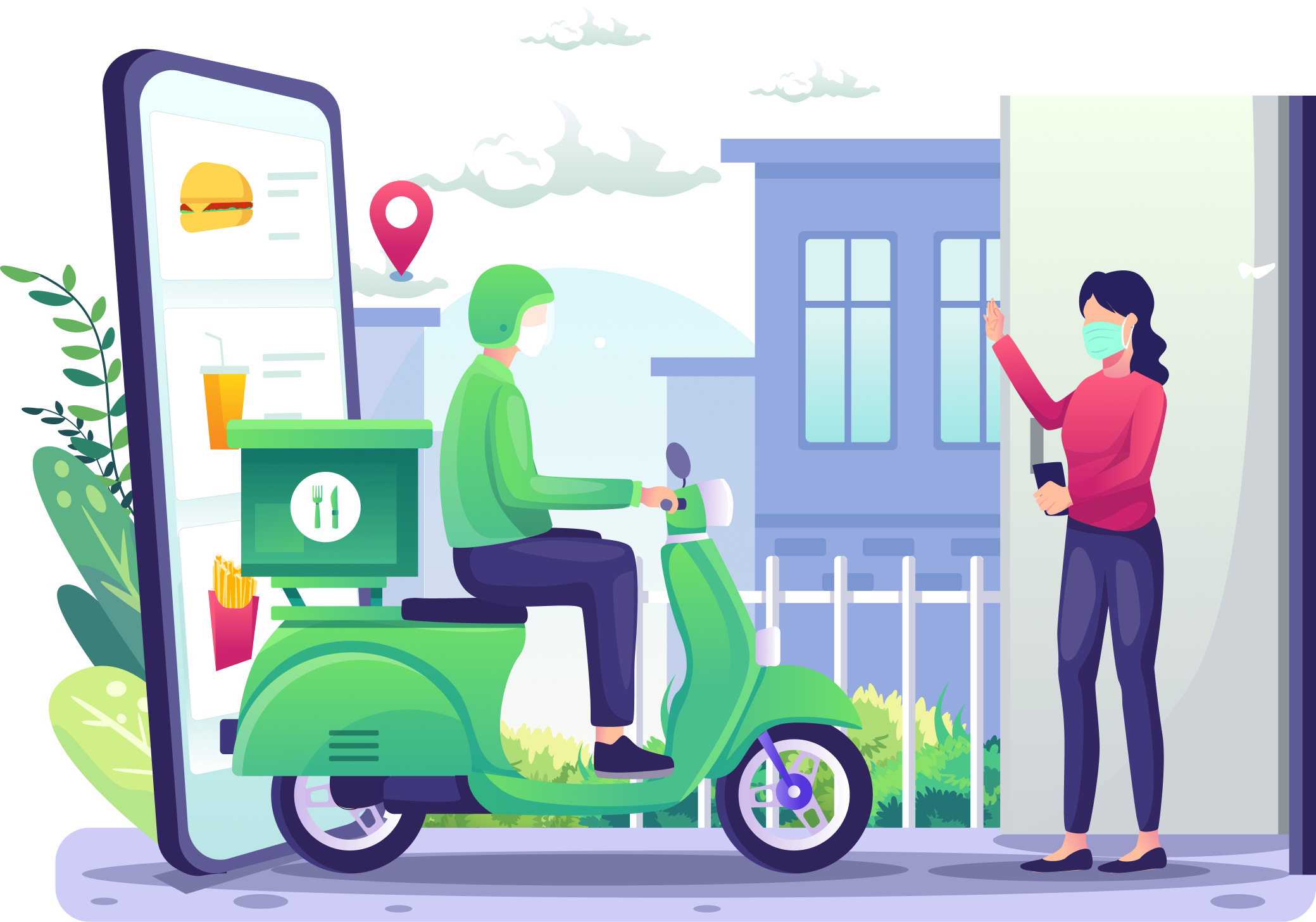
A typical order journey includes:
- Customer selects a restaurant.
- Customer chooses food items.
- Customer confirms the order.
- Restaurant receives and accepts the order.
- Food preparation begins.
- Delivery partner receives the delivery request.
- Delivery partner collects the order.
- Customer receives delivery updates.
- Order is completed.
- Customer can provide feedback.
Every stage contributes to the overall customer experience.
A business should therefore analyze the complete journey instead of optimizing only the ordering screen.
Read More: How Online Food Delivery System Helpful For Your Startup Business?
Choosing a Food Delivery App Development Company
The development partner you select can have a major impact on the quality and scalability of your platform.
Startups should evaluate development companies based on more than technical capability.
Review relevant experience
Look for experience with marketplace platforms, food delivery solutions, on-demand services, and multi-user applications.
A company that understands marketplace operations may provide more practical guidance than a general development provider.
Evaluate customization capabilities
Your business may have requirements that are different from existing food delivery platforms.
The development partner should be able to adapt the solution to your business model, target market, workflows, branding, and growth plans.
Examine previous projects
Review the provider's portfolio and understand what types of platforms they have delivered.
Pay attention to functionality, usability, scalability, and the industries they have served.
Consider long-term support
Launching the application is only the beginning.
Your business may require future improvements, feature additions, maintenance, security updates, integrations, and scalability improvements.
Therefore, consider a partner that can support the product beyond the initial launch.
Why a White Label Food Delivery App Can Help Startups Launch Faster
Startups often need to validate their business model before investing heavily in a completely new product.
A white label food delivery app can provide a pre-developed foundation that businesses can customize according to their branding and market requirements.
Instead of starting every component from the ground up, entrepreneurs can use an established solution as the foundation for their business.
This approach can be useful when:
- The business needs faster market entry
- The startup wants to test a new market
- The entrepreneur wants an established feature structure
- The business requires customization without starting from zero
- The company plans to launch a branded marketplace
However, businesses should evaluate the flexibility of a white-label solution before choosing one.
A solution that cannot adapt to future business requirements can become a limitation as the company grows.
Why Businesses Choose Food Delivery App Development Services
Professional Food Delivery App Development services can support businesses throughout the product lifecycle.
Depending on the provider, services may cover:
- Business requirement analysis
- Product planning
- UI/UX planning
- Application development
- Third-party integrations
- Quality testing
- Deployment
- Maintenance
- Product enhancement
- Scalability support
For startups, working with an experienced team can also reduce the complexity of coordinating multiple technology providers.
The right partner should understand both the product requirements and the commercial objectives behind the platform.
Food Delivery App Development vs. Building a Generic Ordering Platform
Not every food ordering platform needs the same functionality.
A basic restaurant ordering application may only require ordering, payment, notifications, and order management.
A large marketplace may require much more extensive functionality involving restaurants, delivery partners, promotions, customer retention, reporting, and multiple geographic markets.
This distinction is important because entrepreneurs should avoid building unnecessary features simply because competitors have them.
Instead, identify the features that support your specific business model.
For example, a niche healthy-food platform may benefit more from dietary filters, subscription meals, and personalized recommendations than from a large collection of unrelated features.
How AI Can Improve Modern Food Ordering Platforms
Artificial intelligence can create additional opportunities for food businesses.
Potential applications include:
- Personalized food recommendations
- Intelligent search
- Customer behavior analysis
- Automated customer support
- Demand forecasting
- Promotional optimization
- Restaurant recommendations
- Review analysis
- Fraud detection
- Operational insights
AI should not be added simply because it is trending.
The better approach is to identify a business problem and determine whether AI can solve it efficiently.
For example, personalized recommendations can help customers discover relevant meals, while predictive analytics can help businesses understand demand patterns.
Geographic Expansion Requires More Than Translation
Businesses targeting international markets should think beyond language translation.
Different markets may have different:
- Food preferences
- Payment methods
- Delivery expectations
- Restaurant structures
- Regulations
- Customer behaviors
- Promotional preferences
- Working hours
- Tax requirements
An online food business should therefore be designed with localization and market-specific requirements in mind.
An online food delivery app development company with experience across multiple markets can help entrepreneurs understand these differences during product planning.
Common Mistakes to Avoid
Several mistakes can reduce the chances of success for a new food ordering business.
Trying to serve everyone
A broad target market can make positioning unclear.
Start with a specific customer segment or geographic market and expand after gaining traction.
Focusing only on features
More features do not automatically create a better product.
Every feature should solve a customer or business problem.
Ignoring restaurant experience
A marketplace cannot succeed without active and reliable merchants.
Restaurants need simple processes, clear communication, and useful business tools.
Underestimating customer support
Problems can occur with orders, payments, restaurants, delivery, and cancellations.
Fast support can significantly influence customer trust.
Depending entirely on discounts
Heavy discounting can attract users but may not create long-term loyalty.
Businesses should build retention through convenience, quality, personalization, loyalty, and reliable service.
Ignoring scalability
Growth can expose weaknesses that were not visible during the early launch stage.
The product and business processes should be designed with future expansion in mind.
Steps to Launch Your Food Ordering Business
A structured approach can reduce unnecessary complexity.
Step 1: Research the target market
Study customers, restaurants, competitors, delivery providers, and existing demand.
Step 2: Select the business model
Determine whether you want to build a marketplace, restaurant-specific platform, niche service, or another model.
Step 3: Define your unique value proposition
Identify why customers and restaurants should choose your platform.
Step 4: Plan the minimum viable product
Prioritize the features required to validate the core business model.
Step 5: Select a development partner
Evaluate experience, customization capabilities, scalability, support, and previous work.
Step 6: Build and test the product
Conduct functional, usability, security, performance, and workflow testing before launch.
Step 7: Onboard restaurants and delivery partners
Build a reliable supply network before investing heavily in customer acquisition.
Step 8: Launch in a focused market
Start with a manageable geographic area and monitor real customer behavior.
Step 9: Measure business performance
Track metrics such as:
- Number of active customers
- Order frequency
- Repeat order rate
- Average order value
- Restaurant retention
- Delivery completion rate
- Customer acquisition
- Customer churn
- Promotion performance
Step 10: Expand strategically
Use customer data and operational insights to determine when and where to expand.
How to Select an Online Food Delivery App Development Company
Choosing an online food delivery app development company should be treated as a strategic decision rather than simply a vendor selection exercise.
Ask potential providers:
- Have you developed marketplace applications?
- Can the platform support multiple user types?
- Can the solution be customized?
- Can the product support geographic expansion?
- What integrations can be supported?
- How do you approach quality testing?
- What post-launch support is available?
- Can the platform be enhanced as business requirements change?
Clear answers to these questions can help entrepreneurs identify whether a development partner is suitable for their long-term plans.
Future Trends in the Food Ordering Industry
The food delivery industry will continue evolving as consumer expectations and technology change.
Several areas are likely to remain important.
Hyperlocal food delivery
Platforms can focus on specific communities and local restaurant networks rather than competing only at a national level.
Subscription-based ordering
Recurring plans can help businesses develop stronger customer relationships.
Personalized discovery
Recommendation systems can make food discovery more relevant.
Automated customer support
AI-powered assistance can help businesses respond to common customer questions quickly.
Multiple delivery models
Businesses may combine dedicated delivery fleets, third-party logistics, and other delivery models depending on market conditions.
Omnichannel ordering
Customers may interact with food brands through applications, websites, social channels, QR codes, and other digital touchpoints.
Businesses that adapt to changing customer behavior will have greater opportunities to build long-term relationships.
Final Thoughts
Building an online food business requires more than launching an application. Entrepreneurs need a clear market strategy, strong restaurant relationships, reliable delivery operations, customer-focused experiences, and a sustainable monetization model.
Food Delivery App Development can provide the digital foundation for connecting these different parts of the business. However, technology should support the business strategy rather than become the strategy itself.
Startups should begin by identifying a specific market opportunity, validating customer demand, selecting the right business model, and prioritizing the features that directly support their objectives.
As the business grows, additional capabilities such as personalization, loyalty programs, analytics, AI, subscriptions, and geographic expansion can be introduced according to customer demand.
Whether you are planning a marketplace similar to major food delivery platforms or developing a specialized food ordering service, choosing an experienced food ordering app development company can make the product development process more structured and scalable.
For businesses looking to launch quickly, a white-label approach can also provide a practical starting point while allowing room for customization and future growth.
Ultimately, the strongest food platforms are not necessarily those with the most features. They are the ones that make ordering convenient, help restaurants operate efficiently, provide reliable delivery experiences, and give customers a reason to return.
A specialized clone app development company can help startups and entrepreneurs turn an established business concept into a customized digital platform while adapting the solution to their target market and business goals.
Frequently Asked Questions
1. What is Food Ordering App Development?
Food Ordering App Development involves creating a digital platform that enables customers to discover restaurants, browse menus, place orders, make payments, track orders, and interact with food businesses. Depending on the business model, the platform can also connect restaurants, delivery partners, and administrators.
2. What features should a food ordering platform have?
Important features can include restaurant discovery, search, menus, cart management, order placement, payments, order tracking, notifications, reviews, promotions, restaurant management, delivery management, customer support, and administrative controls.
3. Is a white-label food delivery app suitable for startups?
Yes. A white-label solution can be suitable for startups that want to enter the market faster and begin with an established product foundation. Entrepreneurs should ensure that the solution provides sufficient customization and scalability for their long-term business requirements.
4. How can a food ordering platform generate revenue?
A platform can generate revenue through restaurant commissions, delivery-related charges, sponsored listings, advertising, subscriptions, partnerships, and other marketplace-based revenue models. The best approach depends on the target market and business strategy.
5. How do I choose the right food delivery app development company?
Evaluate the company's experience with marketplace and on-demand applications, customization capabilities, portfolio, scalability approach, testing practices, integrations, and post-launch support. Choose a development partner that understands your business objectives instead of focusing only on application development.

 English
 Arabic
 French
 Spanish
 Portuguese
 Deutsch
 Turkish
 Dutch
Dutch
 Italiano
 Russian
 Portuguese (Brazil)
 Greek
Greek
 Bengali