


How Can Buyers Match minidumperfactory Power Barrow With Project Requirements?
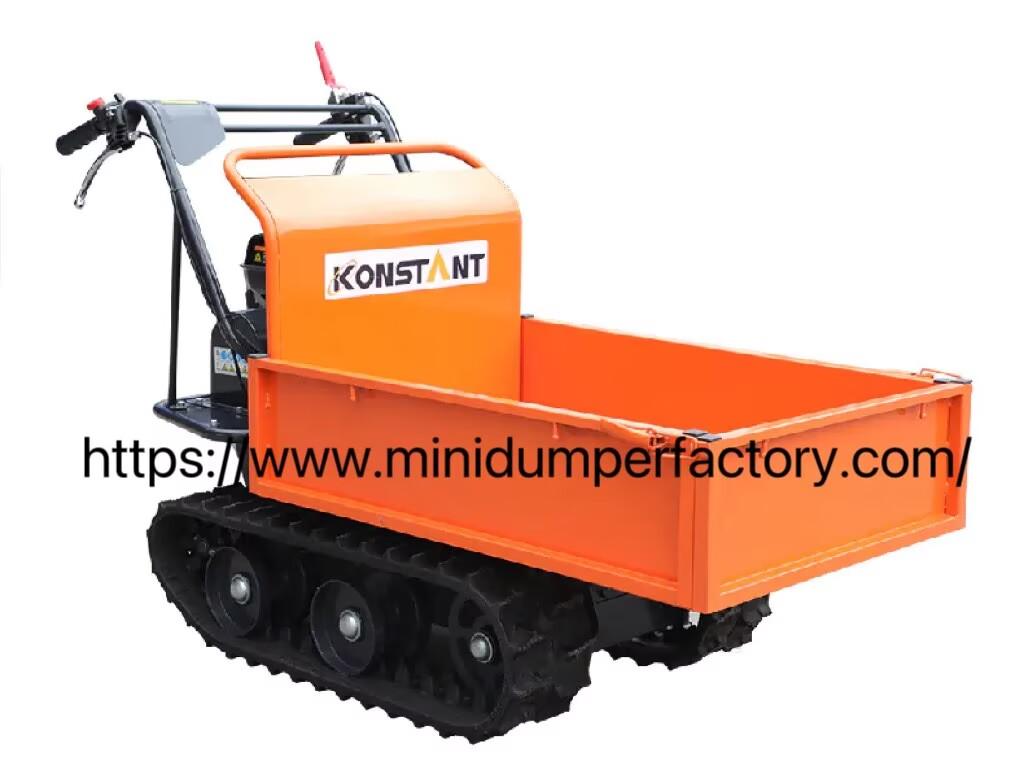
Power Barrow is commonly considered by contractors, landscapers, farmers, property maintenance teams, and construction businesses that need compact equipment for transporting materials through areas where larger vehicles may be difficult to use. Before selecting a suitable model, buyers should consider the material being moved, expected load, route conditions, machine dimensions, drive arrangement, energy source, tipping method, maintenance requirements, and operator needs. Looking at the complete application rather than one specification can make the purchasing process more practical.
Identify the Material First
The material being transported should influence the equipment selection. Soil, gravel, sand, concrete, stones, mulch, branches, crops, and other materials have different weights and handling characteristics.
Buyers should estimate the typical weight carried during each trip. Volume alone may not provide enough information because two loads occupying the same hopper space can have very different weights.
It is also useful to estimate the average number of trips per day. This helps buyers consider whether a smaller configuration with easier maneuverability or a larger carrying capacity would better fit the project.
The expected material should remain within the published operating limits of the selected model.
Examine the Worksite Route
Compact transport equipment is often used where access is restricted. Buyers should measure the complete route before choosing a model.
Important measurements include gate width, doorway width, pathway width, turning areas, ramps, storage locations, and unloading spaces.
For garden renovation and residential projects, a machine may need to pass through a narrow side entrance before reaching the main working area. In construction environments, temporary barriers and uneven paths may also affect access.
Providing accurate measurements allows the purchasing team to compare machine dimensions with real site conditions rather than relying on general descriptions.
Evaluate the Ground Surface
Ground conditions can influence the choice between wheeled and tracked configurations.
Concrete, asphalt, compacted soil, grass, mud, gravel, and uneven ground can create different traction and maneuverability requirements. Buyers should describe the surfaces that the machine will encounter most frequently.
Slopes deserve additional attention. The approximate incline, ground condition, expected load, and travel direction should be considered together.
Tracked designs may be considered for some soft or uneven surfaces, while wheeled designs can be practical for firm routes. The appropriate choice depends on the actual application and the specifications of each model.
Review Carrying Capacity
Carrying capacity should be matched with the normal workload instead of occasional maximum requirements.
A landscaping company may regularly transport light organic materials, while a construction contractor may handle heavier soil, gravel, or demolition materials.
Buyers can calculate the typical load and expected daily trips. They should also consider whether the route contains slopes or rough terrain.
The product range at minidumperfactory includes different capacity configurations, allowing buyers to compare models according to their intended applications. (minidumperfactory.com)
Operating limits should always be followed, and materials should be distributed properly inside the hopper.
Compare Battery and Engine Configurations
The energy source should correspond with the working environment.
Battery-powered models can be considered for indoor renovation, residential landscaping, garden maintenance, and other locations where exhaust management is relevant. Engine-powered configurations may be considered for outdoor projects where refueling is convenient.
For battery equipment, buyers should ask about voltage, capacity, charger requirements, charging duration, replacement batteries, and expected operating time.
Actual working duration can vary according to payload, surface, incline, temperature, speed, and operating habits. Buyers should therefore describe the expected daily schedule when discussing battery requirements.
The website includes several battery-powered configurations with different motor, battery, drive, and tipping arrangements. (minidumperfactory.com)
Check the Drive and Steering Arrangement
Maneuverability can be especially important on narrow sites.
Buyers should ask how the equipment turns, how the drive system operates, and whether the controls are suitable for the intended operators.
An articulated configuration may provide a different turning behavior from a conventional frame. Hydrostatic systems can also provide another approach to speed and movement control.
The decision should be based on the actual route. Buyers should consider tight corners, obstacles, slopes, surface changes, and the amount of reversing required during normal operation.
Review the Hopper Design
The hopper affects loading, carrying, and unloading.
Buyers should check hopper dimensions, loading height, usable volume, tipping angle, discharge height, and the available clearance around the unloading location.
A landscaping project may require discharge beside a garden bed, while a construction project may require unloading into a trench or pile. Agricultural users may have different requirements around barns, storage areas, or field paths.
The unloading destination should therefore be explained before selecting the hopper and tipping arrangement.
Consider the Tipping System
Repeated manual unloading can influence workflow, particularly when a project involves many transport cycles.
Hydraulic tipping can provide powered unloading for certain applications. Buyers should ask about the hydraulic arrangement, tipping control, discharge height, and maintenance requirements.
The product range includes configurations equipped with hydraulic tipping systems. (minidumperfactory.com)
However, a powered tipping system should still be evaluated according to the actual unloading location. Buyers should confirm that the available clearance and discharge height fit the project.
Think About Operator Use
Equipment selection should also consider who will operate the machine.
Operators should be able to understand the controls, loading limits, steering method, braking procedure, and safe operation on slopes.
Materials should be distributed evenly rather than concentrated heavily on one side. Operators should also avoid exceeding the stated load rating.
For businesses with several workers, clear operating instructions can help establish consistent daily procedures.
Ask About Customization
Customization may be useful for distributors, rental businesses, contractors, importers, and companies purchasing equipment for a particular market.
Buyers can ask about available options for color, Logo, nameplate, manuals, accessories, packaging, and selected technical configurations.
minidumperfactory provides compact transport equipment and customization options according to its product information. Buyers with specific branding or technical requirements should prepare drawings, samples, artwork, specifications, quantities, and destination details before production.
Early communication can make customized orders easier to coordinate.
Review Maintenance Requirements
Before purchasing, buyers should understand the regular maintenance involved.
Questions may cover battery care, charging equipment, engine maintenance, hydraulic components, filters, belts, tires, tracks, motors, fasteners, and control components.
The working environment should also be considered. Mud, dust, gravel, moisture, and frequent loading can create different maintenance requirements from occasional operation on clean surfaces.
A basic maintenance schedule can help businesses monitor inspections and plan replacement parts before components become unavailable.
Compare the Complete Purchase
Buyers should compare complete equipment specifications rather than looking only at the quoted price.
The comparison can include machine dimensions, carrying capacity, energy source, drive arrangement, hopper design, tipping system, accessories, documentation, spare parts, packaging, inspection, and delivery.
For customized orders, the final specification should be confirmed in writing before production begins.
This approach gives purchasing teams a clearer reference when comparing different offers and can reduce misunderstandings about configuration.
Prepare Questions Before Contacting the Company
A useful inquiry should include the material type, expected load, daily operating frequency, route dimensions, ground conditions, slope, preferred configuration, unloading location, customization requirements, quantity, and destination.
Providing this information allows the production team to focus on the actual application instead of giving generic recommendations.
minidumperfactory offers compact material-handling equipment in various configurations for construction, landscaping, agriculture, and other working environments. Buyers can review the available products at https://www.minidumperfactory.com/ and contact the company to discuss machine specifications, customization requirements, quantities, and delivery arrangements.

 Arabic
 French
 Spanish
 Portuguese
 Deutsch
 Turkish
 Dutch
Dutch
 Italiano
 Russian
 Romaian
 Portuguese (Brazil)
 Greek
Greek
 Bengali