


The Engine of the Digital Age: An Overview of the Data Center Service Industry
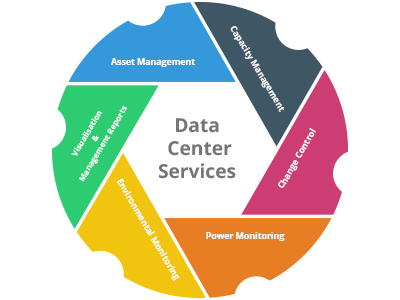
Defining the Foundation of Modern Digital Infrastructure
In a world that runs on data, the physical and operational backbone that supports our entire digital existence resides within highly specialized facilities known as data centers. Fueling this critical infrastructure is the vast and ever-expanding global Data Center Service industry, a sector dedicated to providing the space, power, cooling, connectivity, and management required to keep the digital world online. This industry is not about the servers themselves, but about the comprehensive ecosystem of services that surrounds them. It encompasses a wide spectrum of offerings, from leasing physical space and power in a colocation facility to providing a full suite of managed services for an organization's IT infrastructure. As businesses of all sizes increasingly rely on digital applications and data analytics, the complexity and cost of building and operating a private, enterprise-grade data center have become prohibitive for many. The data center service industry provides the essential solution, offering a more cost-effective, scalable, and resilient alternative, and serving as the foundational layer upon which cloud computing and countless other digital services are built.
The Spectrum of Services: From Colocation to Managed Hosting
The data center service industry offers a broad spectrum of services that can be categorized along a continuum of management responsibility. At one end is "Colocation." In this model, a business rents physical space—ranging from a single rack to a private cage or suite—within a third-party data center. The colocation provider is responsible for the physical facility, including the building, security, power, and cooling infrastructure. The customer, however, owns, manages, and maintains their own servers, storage, and networking equipment within that space. Moving up the value chain is "Managed Hosting." In this model, the service provider not only provides the physical space and infrastructure but also leases dedicated servers and other hardware to the customer. The provider typically takes on the responsibility for managing the hardware, the operating system, and the network, freeing the customer from the burden of day-to-day infrastructure management. At the far end of the spectrum are more comprehensive "Managed Services," which can include managing databases, providing backup and disaster recovery, and offering managed security services, providing a fully outsourced IT infrastructure solution for businesses that want to focus entirely on their applications and not on the underlying infrastructure.
The Critical Role of Connectivity and Interconnection
A modern data center is more than just a secure building with power and cooling; it is a critical hub of connectivity. A key value proposition of the data center service industry is the rich ecosystem of interconnection it provides. Major colocation data centers are "carrier-neutral," meaning they house connection points for dozens or even hundreds of different telecommunications carriers, internet service providers (ISPs), and cloud providers. This creates a vibrant marketplace for connectivity. A customer in a colocation facility can easily and cost-effectively establish direct, high-speed, low-latency connections to a wide range of networks and services without having to run expensive fiber optic cables to their own premises. This interconnection is particularly crucial for accessing the major public cloud platforms like Amazon Web Services (AWS), Microsoft Azure, and Google Cloud. Most major colocation providers offer "cloud on-ramps," which are dedicated, private connections directly into the cloud provider's network, offering better performance, reliability, and security than connecting over the public internet. This role as a central interconnection hub is a key differentiator for the data center service industry, making it the physical meeting point for the digital economy.
The Ecosystem of Players: Colocation Giants, Telcos, and Specialists
The data center service industry is a dynamic ecosystem composed of several key types of players. The landscape is dominated by a group of large, global colocation giants, such as Equinix, Digital Realty, and CyrusOne. These companies operate vast portfolios of data centers in major metropolitan markets around the world and are the primary providers of interconnection-rich retail and wholesale colocation services. Another major group of players consists of the large telecommunications companies (telcos). Many telcos have leveraged their extensive network infrastructure and enterprise customer relationships to build and operate their own data centers, often bundling connectivity and data center services together. In addition to these large players, there is a thriving market of regional and specialized service providers. Some may focus on serving a specific geographic market, while others might specialize in providing high-power-density hosting for applications like High-Performance Computing (HPC), or in offering services that meet the stringent compliance requirements of specific industries like healthcare or finance. This diverse ecosystem ensures that businesses have a wide range of choices when it comes to selecting a partner for their data center needs, from global scale to specialized expertise.
➤ Latest Market Intelligence from Market Research Future:

 English
 Arabic
 Spanish
 Portuguese
 Deutsch
 Turkish
 Dutch
Dutch
 Italiano
 Russian
 Romaian
 Portuguese (Brazil)
 Greek
Greek
 Bengali