


Chronic Ear Discharge: Causes, Symptoms, and Treatment
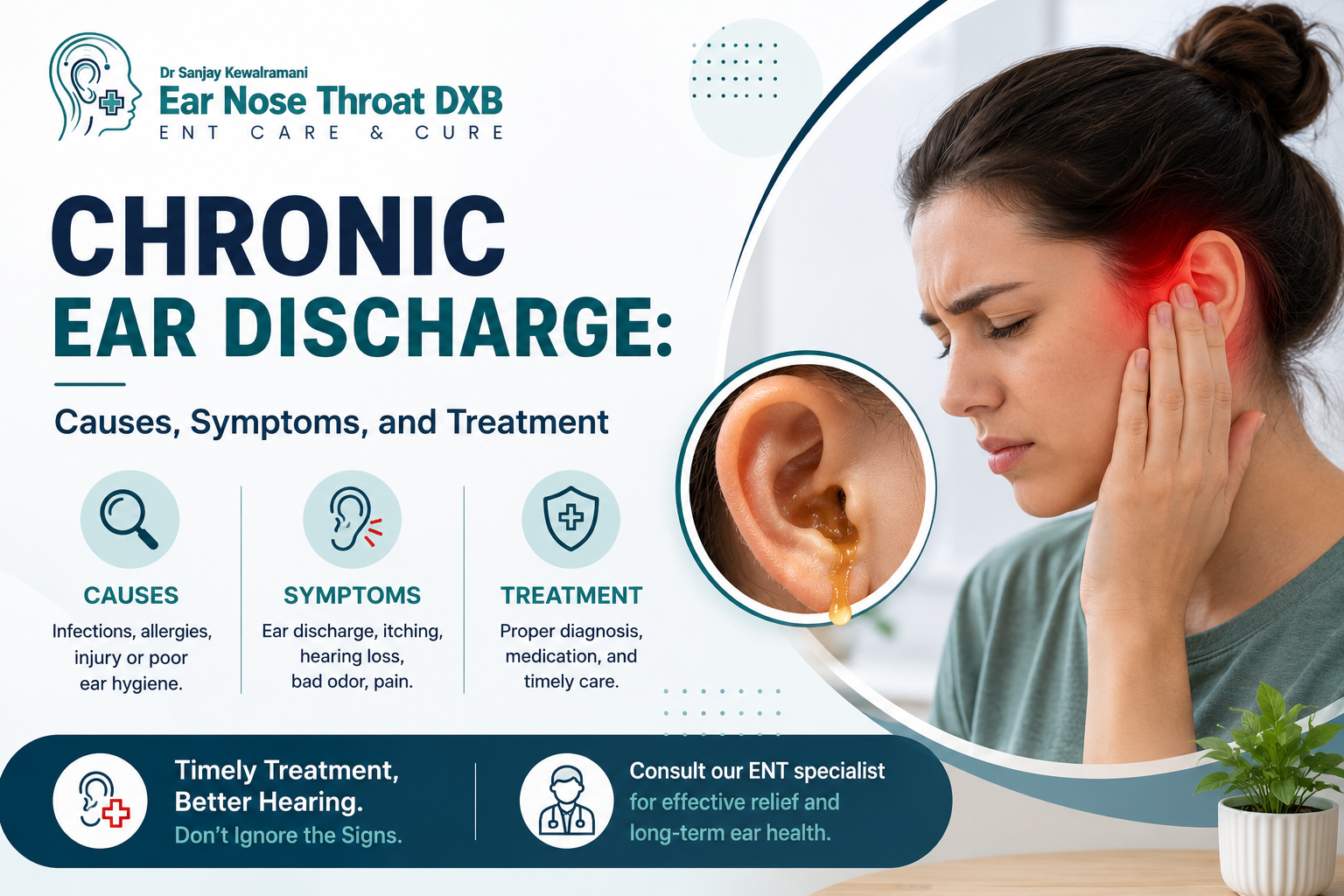
Ear discharge can occur occasionally because of infection or irritation, but drainage that continues for a long period or repeatedly returns may indicate an underlying ear problem. Known medically as otorrhea, ear discharge can vary in appearance from clear or watery fluid to thick, yellowish, blood-stained, or unpleasant-smelling drainage.
Chronic ear discharge is not a diagnosis by itself. It is a symptom that may develop due to conditions affecting the outer ear canal, eardrum, or middle ear. Some causes can be managed with medication and appropriate ear care, while others require more detailed assessment by an ENT specialist.
Understanding the cause is important because treatment should address the underlying condition rather than simply stopping the drainage temporarily.
What Is Chronic Ear Discharge?
Ear discharge refers to fluid or material coming from the ear canal. When the problem persists or repeatedly returns, it may be considered chronic.
The drainage may originate from the outer ear canal. Alternatively, if there is an opening in the eardrum, fluid from the middle ear can pass through it and become visible as ear discharge.
The amount, color, smell, and frequency of discharge can vary considerably. These characteristics can provide useful information, but they are not enough to diagnose the problem without examining the ear.
What Causes Chronic Ear Discharge?
Several conditions can result in persistent or recurring drainage.
Chronic Middle Ear Infection
Chronic middle ear disease is one possible cause.
If an infection develops behind an eardrum that has a persistent perforation, fluid can drain through the opening into the ear canal.
Some people experience repeated episodes in which the discharge improves and later returns. Hearing may also become reduced, particularly when the eardrum or middle ear structures are affected.
Perforated Eardrum
An eardrum perforation is a hole or tear in the membrane separating the ear canal from the middle ear.
It can develop following infection, injury, pressure changes, or other causes.
Some perforations heal naturally, but others remain open. A persistent opening can make the middle ear more vulnerable to repeated drainage, particularly if water enters the ear.
The effect on hearing depends on factors such as the size and location of the perforation and the condition of the middle ear.
Outer Ear Infection
Otitis externa is inflammation or infection of the ear canal.
It may cause discharge along with pain, itching, redness, swelling, or tenderness around the outer ear.
Moisture, frequent scratching, inserting objects into the ear, and certain skin conditions can contribute to irritation of the ear canal.
Recurring inflammation may result in repeated episodes of drainage.
Cholesteatoma
Another important cause that may be considered in someone with persistent ear discharge is cholesteatoma.
A cholesteatoma is an abnormal collection of skin cells and debris that develops within the middle ear or nearby spaces. It is not cancer, but it can gradually enlarge and affect surrounding structures.
Persistent or recurring discharge, particularly when it has an unpleasant smell, can be one possible symptom. Hearing loss, tinnitus, ear fullness, or dizziness may also occur.
Because these symptoms can resemble other chronic ear conditions, an ENT examination is needed for diagnosis.
You can learn more about chronic ear discharge and its possible connection with cholesteatoma if you want to understand why repeated drainage from the ear deserves appropriate evaluation.
Skin Conditions
Eczema, dermatitis, and other skin conditions can affect the skin inside and around the ear canal.
The affected area may become itchy, dry, flaky, or inflamed. Scratching can damage the skin and increase the possibility of secondary infection and discharge.
Foreign Object in the Ear
Foreign objects are another possible cause, particularly in children.
An object remaining inside the ear canal can lead to irritation, infection, and sometimes foul-smelling discharge from one ear.
Attempting to remove it at home may push the object deeper or damage the ear canal or eardrum.
What Symptoms Can Occur With Chronic Ear Discharge?
The symptoms accompanying the discharge can provide important clues about what is happening inside the ear.
Common associated symptoms include:
- Reduced or muffled hearing
- Ear pain or discomfort
- Itching inside the ear
- Ear fullness or pressure
- Unpleasant smell
- Tinnitus or ringing
- Dizziness
- Repeated ear infections
- Blood-stained drainage
- Fever during active infection
Not everyone develops all these symptoms.
Some chronic middle ear conditions can cause discharge with little or no pain. Therefore, an ear that repeatedly drains should not be assumed to be healthy simply because it does not hurt.
Can Chronic Ear Discharge Affect Hearing?
Yes, depending on its underlying cause.
Normal hearing depends on sound traveling through the ear canal, eardrum, and middle ear before reaching the inner ear.
A perforated eardrum or chronic middle ear disease can interfere with this process. Certain conditions may also affect the small middle ear bones involved in sound transmission.
If you notice hearing changes along with recurring drainage, a hearing assessment may be recommended.
How Is Chronic Ear Discharge Diagnosed?
Diagnosis begins with understanding your symptoms and examining the ear.
An ENT specialist may ask:
- When the discharge started
- How frequently it occurs
- Whether one or both ears are affected
- What the discharge looks or smells like
- Whether you have pain
- Whether your hearing has changed
- Whether you experience tinnitus or dizziness
- Whether you have had previous ear infections or surgery
The ear canal and eardrum may then be examined using an otoscope or microscope.
Discharge and debris may sometimes need to be carefully removed to obtain a clearer view.
Are Additional Tests Needed?
Not everyone with chronic ear discharge requires the same investigations.
A hearing test may be recommended if there is reduced hearing or suspected chronic middle ear disease.
In selected cases, imaging such as a CT scan may be considered, particularly if the ENT specialist suspects cholesteatoma or complications involving deeper ear structures.
Testing is usually chosen according to symptoms and examination findings.
How Is Chronic Ear Discharge Treated?
Treatment varies because different conditions can cause the same symptom.
Professional Ear Cleaning
An ENT specialist may carefully remove accumulated discharge and debris.
Cleaning can make the ear easier to examine and may help prescribed topical medication reach the affected area.
Medicated Ear Drops
Certain bacterial infections or inflammatory conditions may be treated with prescribed ear drops.
The choice of medication can depend on the underlying condition and whether the eardrum is intact.
Avoid using old or unprescribed ear drops without medical advice.
Keeping the Ear Dry
When an eardrum perforation or active infection is present, patients may be advised to prevent water from entering the affected ear.
Your doctor can provide specific guidance regarding bathing and swimming.
Managing an Eardrum Perforation
Some eardrum perforations close naturally, while persistent ones may need further evaluation.
If a perforation is associated with repeated infections or hearing problems, surgical repair may be considered in selected patients.
Treatment for Cholesteatoma
Cholesteatoma generally requires specialist treatment. Surgery may be recommended to remove the abnormal tissue and control the disease.
The treatment plan depends on the location and extent of the condition and whether surrounding structures have been affected.
What Should You Avoid When Your Ear Is Draining?
Avoid inserting cotton buds, pins, keys, or other objects deep inside the ear.
These can irritate the ear canal, push debris further inside, or damage the eardrum.
Oils, home remedies, leftover antibiotics, and previously prescribed ear drops should also not be used without appropriate medical advice. The treatment that worked for an earlier episode may not be suitable for the current problem.
When Should You Seek Medical Attention?
Persistent or recurring ear discharge should be evaluated, especially when accompanied by:
- Increasing ear pain
- Significant hearing loss
- Foul-smelling drainage
- Fever
- Severe dizziness
- Swelling or redness behind the ear
- Facial weakness
- Significant bleeding
- Severe headache
Severe symptoms, particularly facial weakness, marked swelling, neurological changes, or significant illness, require prompt medical assessment.
Frequently Asked Questions
Is chronic ear discharge always caused by infection?
No. Infection is one possible cause, but eardrum perforation, cholesteatoma, skin conditions, and foreign objects can also cause drainage.
Can chronic ear discharge cause hearing loss?
Some underlying conditions associated with chronic discharge can affect the eardrum or middle ear and lead to hearing changes.
Is foul-smelling ear discharge normal?
Persistent unpleasant-smelling drainage should be assessed because it may occur with chronic infection or conditions such as cholesteatoma.
Can I clean ear discharge with cotton buds?
Avoid inserting cotton buds deep into the ear. They can irritate the canal or push debris further inside.
Does chronic ear discharge always need surgery?
No. Treatment depends on the cause. Medication, professional cleaning, and ear care may be sufficient in some cases, while conditions such as cholesteatoma or selected persistent eardrum perforations may require surgery.
Find the Cause, Not Just a Temporary Solution
Chronic ear discharge can have several causes, from outer ear inflammation and chronic infection to eardrum perforation or cholesteatoma. The symptoms may vary, and some patients can have ongoing drainage without significant pain.
Because repeated discharge is a symptom rather than a diagnosis, identifying the underlying condition is the most important step toward appropriate treatment.
If ear discharge continues, repeatedly returns, smells unpleasant, or occurs with hearing loss, pain, dizziness, or other concerning symptoms, arrange an ENT evaluation. A detailed examination can help identify the cause and determine the treatment needed to protect your ear and hearing.

 English
 Arabic
 Spanish
 Portuguese
 Deutsch
 Turkish
 Dutch
Dutch
 Italiano
 Russian
 Romaian
 Portuguese (Brazil)
 Greek
Greek
 Bengali