


Step by Step Guide to Launching a Ride Hailing Startup with an Uber Clone Script
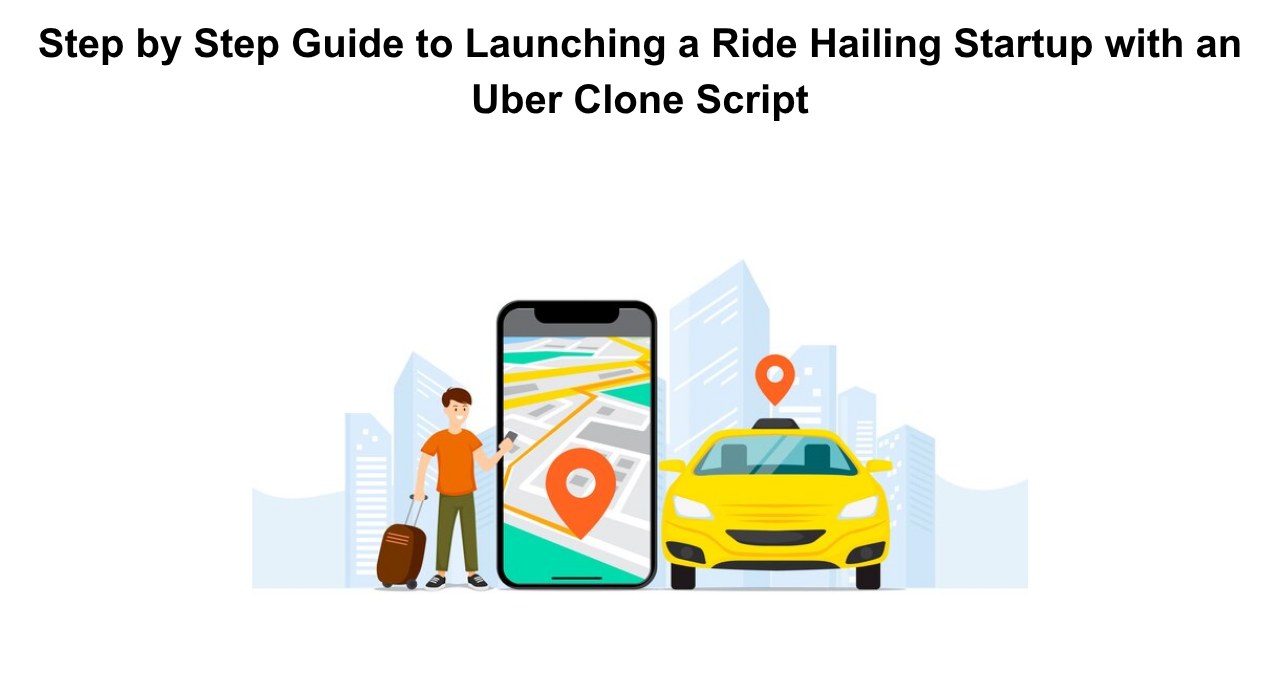
The ride-hailing industry has changed how people move around cities. With smartphones, GPS technology, digital payments, and on-demand services becoming part of everyday life, customers now expect transportation to be fast, convenient, and easy to book.
This shift has also created opportunities for startups and entrepreneurs looking to build their own mobility businesses. However, launching a ride-hailing platform from the ground up requires careful planning, market research, strong product development, and an understanding of how passengers and drivers interact with the service.
An Uber Clone Script can provide a practical starting point for entrepreneurs who want to launch a ride-hailing business without building every business process from scratch. Instead of creating an entirely new concept, entrepreneurs can use an established ride-hailing model as a foundation and adapt it to their target market.
This guide explains how to launch a ride-hailing startup step by step using an Uber Clone Script, from identifying your market and defining the business model to launching, marketing, and scaling the platform.
What Is an Uber Clone Script?
An Uber Clone Script is a ready-made ride-hailing software solution based on the core business concept of popular taxi-booking platforms. It typically provides the essential functionality required to connect passengers with drivers through a digital platform.
The purpose is not to duplicate another company's brand or identity. Instead, the concept allows entrepreneurs to build their own branded ride-hailing marketplace around a proven service model.
A startup can use the foundation of a clone solution and customize the platform according to its business requirements, service area, customer preferences, and operational strategy.
For example, an entrepreneur may want to launch:
- A city-based taxi booking platform
- A regional ride-hailing marketplace
- A corporate transportation service
- A premium chauffeur booking platform
- A motorcycle taxi service
- An airport transfer platform
- A multi-service mobility application
The business idea remains familiar to customers, while the startup creates its own brand, positioning, service rules, and market strategy.
Why Startups Choose the Clone App Model
Building a digital business does not always mean starting every process from zero. Entrepreneurs often use established business models to reduce uncertainty and focus their resources on market execution.
A clone app development approach can help startups begin with a proven concept and then modify it to create a differentiated service.
The biggest advantage is strategic rather than simply technical. Entrepreneurs can spend more time understanding their customers, developing partnerships, creating a strong brand, and improving the user experience instead of spending the entire early stage defining basic ride-booking processes.
An established model can also make it easier to identify the essential elements of a ride-hailing marketplace. These include passenger booking, driver participation, trip management, location-based services, notifications, payments, ratings, and administrative controls.
However, a successful startup should never treat a clone as a simple copy. The objective should be to create a platform that solves a specific transportation problem better than existing alternatives.
Step 1: Research Your Target Ride-Hailing Market
Before beginning development, identify the market where your platform will operate.
This is one of the most important steps because the requirements of a ride-hailing business can vary significantly between countries, cities, and customer segments.
Start by researching:
- Existing ride-hailing services
- Local taxi operators
- Customer transportation problems
- Driver availability
- Popular vehicle categories
- Local payment preferences
- Transportation regulations
- Peak travel periods
- Customer demographics
- Competitor strengths and weaknesses
Do not assume that a successful model in one country will automatically work in another.
For example, a market may have strong demand for motorcycle rides, while another may primarily require cars. Some customers may prioritize affordable transportation, whereas business travelers may be more interested in premium vehicles and reliable scheduled rides.
Market research should therefore determine your product strategy rather than simply confirm that a market exists.
Step 2: Define Your Ride-Hailing Business Model
Once the market is understood, define exactly what your startup will offer.
A taxi booking app can support several business models depending on the target audience and service area.
You could operate a traditional passenger-to-driver marketplace where users request rides and nearby drivers accept them.
Another option is to focus on scheduled transportation, allowing customers to book rides in advance for airports, business meetings, events, or other planned journeys.
You could also create a specialized platform for:
- Women-focused transportation
- Corporate travel
- Luxury transportation
- Intercity rides
- Electric vehicle transportation
- Motorcycle rides
- Medical transportation
- Airport transfers
- Local transportation
A focused business model can help a new startup establish a clearer market position.
Rather than trying to serve everyone from the first day, identify the customer segment with the strongest unmet demand and build your initial strategy around it.
Step 3: Study Your Competitors
Competition research is essential before launching an Uber app clone.
Look beyond the biggest global brands. Local taxi businesses, regional transportation platforms, private drivers, and niche mobility services can also compete for the same customers.
Analyze competitors based on:
Service Availability
Determine where competitors operate and which areas they do not serve effectively.
Booking Experience
Study how quickly customers can request a ride and how easy the booking process is.
Vehicle Categories
Identify the vehicle options offered to passengers and whether specific categories are missing.
Driver Experience
Understand how competitors attract and retain drivers. Driver supply is just as important as passenger demand.
Customer Support
Look at how competitors handle cancellations, complaints, lost items, trip issues, and account-related problems.
Brand Positioning
Determine whether competitors compete mainly on convenience, affordability, premium service, availability, safety, or another factor.
The purpose of competitor research is not to copy features. It is to identify opportunities for differentiation.
Step 4: Plan the Core Features
After defining the business model, determine the functionality required for launch.
An Uber Clone can provide the foundation for common ride-hailing operations, but the exact feature set should be selected according to your business objectives.
Passenger Registration and Profiles
Customers should be able to create accounts and manage their basic information easily.
The registration experience should be simple because unnecessary friction at the beginning can reduce user adoption.
Ride Booking
Passengers should be able to enter pickup and destination information and request a ride conveniently.
The booking flow should communicate important information clearly so customers understand the journey before confirming.
Driver Registration
Drivers need a straightforward process for joining the marketplace and providing the required information.
A clear driver onboarding process can help your business build supply more efficiently.
Driver Availability
Drivers should be able to indicate when they are available for rides.
This helps create a marketplace where passenger demand can be connected with available transportation providers.
Ride Tracking
Location-based tracking allows passengers and drivers to understand the status and location of a journey.
This has become an expected part of modern ride-hailing services because customers want visibility after requesting transportation.
Notifications
Timely notifications can keep both passengers and drivers informed about booking activity, ride status, and other important events.
Ratings and Reviews
A feedback system allows passengers and drivers to rate their experience.
Ratings can also help create accountability within the marketplace.
Digital Payments
Customers increasingly expect convenient payment methods. Depending on the market, your platform may support cards, digital wallets, local payment methods, or other options.
Ride History
Passengers and drivers should be able to review previous journeys and relevant booking information.
Customer Support
A reliable support system gives customers a way to report problems and receive assistance when something goes wrong.
Step 5: Build a Strong Driver Acquisition Strategy
A ride-hailing platform cannot succeed without enough drivers.
Many startups focus heavily on acquiring passengers but underestimate the importance of driver supply. If customers frequently open your application and cannot find an available driver, they may stop using the service.
Your driver acquisition strategy should therefore begin before the public launch.
Consider working with:
- Independent drivers
- Existing taxi operators
- Fleet owners
- Transportation companies
- Local driver communities
- Corporate transportation providers
Create clear onboarding requirements and communicate the advantages of joining your platform.
Your goal should be to establish enough driver availability in selected launch areas rather than attempting to cover an entire city immediately.
A concentrated launch can create better service availability and improve the customer experience.
Step 6: Customize the Platform for Your Brand
One of the biggest mistakes entrepreneurs can make with clone app development is launching a product that looks and feels generic.
The technology may be based on an established model, but the business should have its own identity.
Customization can include:
- Brand identity
- Service categories
- Geographic coverage
- Customer segments
- Ride options
- Booking policies
- Communication approach
- Driver onboarding rules
- Support processes
- Marketing strategy
Your goal should be to make the platform relevant to your audience.
For example, a premium corporate transportation platform should communicate reliability and professionalism, while a local affordable mobility service may focus on convenience and accessibility.
Step 7: Choose the Right Development Partner
Selecting an experienced development partner is another important part of launching your startup.
An on demand taxi app development company should understand more than application development. It should also understand the operational structure of a ride-hailing marketplace.
Before choosing a partner, evaluate:
- Previous ride-hailing projects
- Understanding of marketplace businesses
- Customization capabilities
- Product scalability
- Security practices
- Support and maintenance
- Integration experience
- Development methodology
- Communication process
Ask potential partners how they approach customization and what happens when your business requirements differ from the standard model.
A good development partner should help convert your business requirements into a practical product strategy.
Step 8: Validate the Product Before a Full Launch
Do not immediately launch across multiple cities or countries.
Start with a controlled market.
A pilot launch allows you to observe how passengers and drivers interact with the platform in real-world conditions.
During this stage, monitor:
- Booking completion rates
- Driver acceptance
- Ride cancellations
- Customer complaints
- Repeat bookings
- Average response times
- Driver activity
- Customer feedback
- Support requests
The objective is to identify operational problems before expanding.
For example, if passengers frequently cancel because drivers take too long to arrive, increasing marketing activity will not solve the underlying problem. You need to improve driver availability and marketplace efficiency first.
Step 9: Create a Customer Acquisition Strategy
Once your service is ready, you need a plan for attracting your first passengers.
Marketing for a ride-hailing startup should focus on the specific market rather than attempting to compete with established brands everywhere.
Consider combining:
Local SEO
Create location-focused pages targeting searches related to taxi services, ride booking, airport transportation, and local mobility.
Search Advertising
Paid search can help capture customers who are already searching for transportation services.
Social Media Marketing
Use social platforms to build awareness, explain your service, highlight customer benefits, and communicate promotions.
Referral Marketing
Existing customers can become an important acquisition channel when they recommend the service to friends, colleagues, and family.
Driver Partnerships
Drivers can also help introduce your platform to their existing customers and communities.
Business Partnerships
Hotels, restaurants, travel companies, event organizers, and corporate organizations can become valuable sources of recurring ride demand.
The objective is to build multiple acquisition channels rather than depending entirely on one marketing platform.
Step 10: Focus on Customer Retention
Acquiring customers is only the first part of building a sustainable ride-hailing company.
Retention is equally important.
Customers are more likely to return when the service consistently delivers:
- Reliable ride availability
- Simple booking
- Accurate pickup information
- Professional drivers
- Transparent communication
- Convenient payment
- Responsive support
- Consistent service quality
Your startup should track customer behavior after launch.
If many users register but never book again, investigate why.
If customers frequently book once and disappear, examine the entire customer journey. Sometimes the issue is not marketing but service quality.
Step 11: Prioritize Safety and Trust
Safety should be a core part of a ride-hailing business strategy.
Customers need confidence that they are using a legitimate transportation service, while drivers also need to feel protected when accepting trips.
Depending on the market and applicable regulations, consider appropriate measures such as:
- Driver verification
- Vehicle verification
- Ride information sharing
- Emergency assistance
- Customer reporting
- Driver reporting
- Trip records
- Support channels
You should also understand the transportation laws and data protection requirements applicable to every market where you operate.
Regulatory compliance is not something to address after launch. It should be considered during business planning.
Step 12: Launch in One Market Before Expanding
Global ambitions are valuable, but launching everywhere at once can create operational challenges.
A better approach for many startups is to establish a strong presence in one carefully selected market before expanding.
A successful initial market can provide:
- Customer feedback
- Driver insights
- Operational data
- Brand awareness
- Business partnerships
- Marketing learnings
- Product improvement opportunities
Once the model performs consistently, expansion becomes easier to plan.
This approach is particularly useful for entrepreneurs using an Uber Clone App because the initial platform can be adapted as the company enters different markets.
How an Uber Clone Can Support Business Growth
The value of an Uber Clone is not simply that it resembles a familiar ride-booking service.
Its real value is that it can give entrepreneurs a structured foundation for entering a complex marketplace.
A startup can begin with a focused service and gradually introduce additional capabilities as customer demand develops.
For example, a company could begin with local taxi rides and later expand into:
- Airport transportation
- Scheduled rides
- Corporate transportation
- Intercity travel
- Premium vehicles
- Motorcycle transportation
- Fleet services
This makes the platform more than a simple taxi booking application. It can become the foundation of a broader mobility business.
Common Mistakes to Avoid When Launching a Ride-Hailing Startup
Trying to Compete Everywhere
A new business does not need to target every city from day one.
Start with a clearly defined market where you can build sufficient driver supply and customer demand.
Copying Competitors Without Differentiation
An Uber Clone should be treated as a business foundation, not a reason to create an identical service.
Identify what your target customers actually need and build your value proposition around those needs.
Ignoring Drivers
Drivers are a critical part of the marketplace. Poor driver acquisition or retention can directly affect customer satisfaction.
Launching Before Testing
Even a well-planned product can have real-world issues. A controlled pilot can reveal problems before they affect a larger customer base.
Focusing Only on Downloads
Application downloads do not automatically represent business success.
Track meaningful metrics such as completed rides, repeat customers, active drivers, cancellations, and customer satisfaction.
Neglecting Customer Support
Transportation problems can be time-sensitive. Customers need access to support when issues occur.
Key Metrics to Track After Launch
Once the platform is live, use measurable indicators to understand business performance.
Important ride-hailing metrics include:
- Number of completed rides
- Active passengers
- Active drivers
- Booking conversion rate
- Driver acceptance rate
- Cancellation rate
- Repeat customer rate
- Customer retention
- Average ride frequency
- Support request volume
- Customer ratings
- Driver ratings
- Average pickup time
These metrics can help identify both opportunities and operational problems.
For example, a high number of bookings with a low completion rate may indicate problems with driver availability. A strong first-time booking rate combined with poor repeat usage may indicate customer experience issues.
Data should therefore guide product and business decisions after launch.
Why Uber App Clone Solutions Are Popular Among Entrepreneurs
The popularity of the uber app clone model comes from the strength of the underlying marketplace concept.
Entrepreneurs already understand the basic customer journey: open the application, choose a destination, request a ride, connect with a driver, complete the journey, and provide feedback.
This familiarity can reduce the amount of education required when introducing the service to a new audience.
However, entrepreneurs should focus on creating their own competitive advantage instead of relying solely on familiarity.
Your advantage could come from better local coverage, specialized services, stronger customer support, driver relationships, corporate partnerships, or a more focused target market.
How to Make Your Ride-Hailing Startup Competitive
Competition in mobility is rarely won by simply adding more features.
A stronger approach is to solve a specific customer problem better.
For example, your business might compete through:
Better Local Coverage
Serve areas that larger platforms do not cover effectively.
Specialized Transportation
Focus on a specific segment such as airport rides, corporate travel, luxury transportation, or motorcycle rides.
Strong Driver Relationships
Build a marketplace where transportation providers have a positive experience working with your company.
Better Customer Experience
Make booking, communication, support, and ride management simple.
Local Partnerships
Develop relationships with businesses that regularly need transportation services.
Strong Brand Positioning
Give customers a clear reason to choose your service instead of another ride-hailing platform.
These strategies can help an entrepreneur turn a familiar business model into a differentiated company.
Final Thoughts
Launching a ride-hailing startup requires more than simply creating an application. Entrepreneurs need a clear market strategy, reliable driver supply, customer-focused services, effective marketing, regulatory awareness, and a long-term growth plan.
An Uber Clone Script can provide a practical foundation for this journey by giving startups a proven ride-hailing structure that can be adapted to their business requirements.
The most successful approach is to avoid treating the platform as a direct copy of an existing brand. Instead, use the established ride-hailing model as a starting point and build a business around a specific customer need.
From market research and business model planning to driver acquisition, product customization, pilot testing, marketing, and expansion, each stage plays an important role in determining long-term success.
For entrepreneurs planning to enter the mobility industry, working with an experienced clone app development company can help turn a ride-hailing concept into a market-ready digital business while allowing the company to focus on its customers, partnerships, and growth strategy.
Frequently Asked Questions
1. What is an Uber Clone Script?
An Uber Clone Script is a ready-made ride-hailing software solution based on the core operational model of popular taxi-booking platforms. It provides a foundation that entrepreneurs can customize for their own brand, market, services, and business requirements.
2. Is an Uber Clone suitable for a new startup?
Yes. An Uber Clone can be suitable for startups that want to enter the ride-hailing market with an established business concept. However, success depends on market research, differentiation, driver availability, customer acquisition, service quality, and effective business execution.
3. Can an Uber Clone be customized for different markets?
Yes. Entrepreneurs can adapt the platform to their target geography, customer segment, transportation services, branding, operational requirements, and local market preferences. Customization is particularly important when launching in different countries or regions.
4. What features should a taxi booking app include?
A taxi booking app should generally provide essential capabilities such as passenger registration, driver onboarding, ride booking, location tracking, notifications, digital payments, ratings and reviews, ride history, and customer support. The final feature set should depend on the startup's business model and target customers.
5. How can entrepreneurs make their ride-hailing startup successful?
Entrepreneurs should begin with strong market research, select a specific target segment, build reliable driver supply, provide a smooth customer experience, test the service before a wider launch, and continuously measure customer and driver behavior. Differentiation and consistent service quality are critical for long-term growth.

 Arabic
 French
 Spanish
 Portuguese
 Deutsch
 Turkish
 Dutch
Dutch
 Italiano
 Russian
 Romaian
 Portuguese (Brazil)
 Greek
Greek
 Bengali