


When Should an MSME Replace Old Machinery? A Practical Energy and Finance Guide
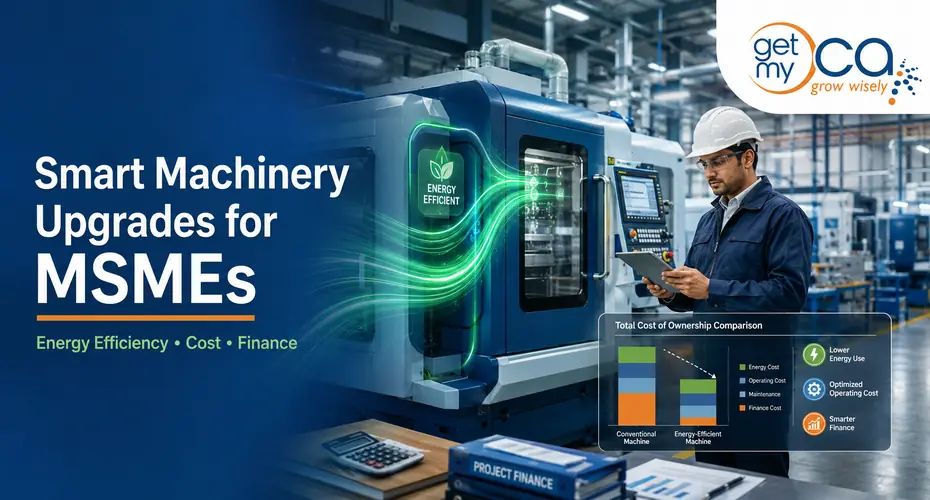
An old machine does not always need to stop working before it becomes expensive. Manufacturing equipment may continue producing goods while consuming excessive electricity, requiring frequent maintenance or restricting production capacity.
For an MSME, deciding whether to repair or replace machinery can be difficult. A new machine involves a substantial investment, while continuing with inefficient equipment may increase operating costs every month.
The decision should be based on measurable production, energy, maintenance and financial information rather than assumptions. A structured review can help the enterprise understand whether replacement is commercially reasonable and whether an energy-efficiency programme may support the proposed investment.
What Are the Warning Signs of Inefficient Machinery?
Age alone is not enough to determine whether equipment should be replaced. Some older machines continue to perform efficiently when properly maintained, while relatively new equipment may become unsuitable because of changing production requirements.
An MSME should examine whether its machinery is showing the following warning signs:
- Increasing electricity or fuel consumption
- Frequent breakdowns and emergency repairs
- Difficulty finding suitable spare parts
- Repeated production delays
- High rejection or wastage levels
- Declining production output
- Inconsistent product quality
- Excessive noise, heat or vibration
- Inability to meet new customer specifications
- Dependence on manual controls that reduce efficiency
One isolated repair may not justify replacement. However, when several problems occur regularly, the overall cost of continuing with the existing machine should be calculated.
Why Is an Energy Baseline Important?
An energy baseline records how much electricity or fuel the existing machine consumes during normal production. Without this information, it becomes difficult to verify whether a new machine is genuinely more efficient.
The MSME should collect recent electricity bills, machine-level readings where available, operating hours and production data. Energy use should ideally be compared per unit of production rather than only on a monthly basis.
For example, a new machine may consume more total electricity because it produces significantly more output. In such a case, energy consumed per finished unit may provide a more meaningful comparison.
A reliable baseline also supports the technical assessment of the proposed energy-efficiency project.
Can ADEETIE Support Machinery Replacement?
ADEETIE is intended to encourage eligible MSMEs to adopt qualifying energy-efficient technologies. The programme provides interest subvention and technical assistance, subject to the applicable conditions.
Micro and Small enterprises may receive 5% interest subvention, while Medium enterprises may receive 3%. Eligible project loans generally fall within the prescribed range of ₹10 lakh to ₹15 crore.
Businesses exploring the financing available for an upgrade can review the applicable interest subsidy options for energy-efficient MSMEs, including enterprise classification, sector, cluster, loan and energy-saving requirements.
ADEETIE is not a general incentive for every type of machine. The unit must satisfy the applicable eligibility criteria, and the proposed project must demonstrate the required energy-saving potential.
What Other Eligibility Factors May Apply?
Udyam registration is an important requirement, but it does not automatically make every manufacturing unit eligible.
The enterprise may also need to operate within a notified industrial cluster and belong to a covered energy-intensive sector. Eligible sectors include textiles, leather, pharmaceuticals, chemicals, food processing, foundry, forging, paper, ceramics and certain other industries.
The financing institution, project cost, loan structure and technical assessment may also affect eligibility. Businesses should check the current requirements against their own project facts before estimating any benefit.
The final decision remains subject to the prescribed process, documentation and verification.
Why Should Technical Assessment Come Before Purchase?
A supplier quotation explains the price and specifications of a machine, but it does not necessarily establish scheme eligibility or expected energy savings.
Before placing an order, the MSME should assess:
- Current energy performance of the existing equipment
- Technical suitability of the proposed machine
- Expected reduction in energy consumption
- Effect on production capacity and product quality
- Installation and commissioning requirements
- Required electrical or civil modifications
- Availability of trained operators
- Compatibility with the existing production line
A machinery upgrade should solve an identified operational problem. Purchasing equipment only because it is newer or more automated may not produce the expected financial result.
What Should Be Checked Before Making Payment?
The sequence of activities can be important where the project requires an energy audit, DPR, application, lender review or technical approval.
Before issuing a binding purchase order or making a substantial advance payment, businesses can review this machinery upgrade eligibility and planning guide to understand the checks that may be relevant during the pre-investment stage.
Important questions include:
- Is the unit located in an eligible cluster?
- Does the manufacturing activity fall within a covered sector?
- Can the required energy savings be demonstrated?
- Has the appropriate energy assessment been completed?
- Is the proposed lender eligible?
- Are the quotations and specifications sufficiently detailed?
- Does the purchase timeline match the required process?
- Which records must be maintained after installation?
Completing these checks early can reduce the risk of discovering an important eligibility or documentation issue after funds have been committed.
How Should the Financing Decision Be Evaluated?
A machinery replacement may be technically justified but financially difficult. The enterprise should examine whether its cash flow can support the proposed investment.
The financial evaluation should include:
- Total machinery price
- Freight and installation expenses
- Electrical and civil-work costs
- Promoter contribution
- Proposed loan amount
- Interest and repayment period
- Additional working-capital requirement
- Expected maintenance savings
- Expected reduction in energy expenses
- Increase in production or revenue
- Estimated payback period
Interest subvention may reduce the eligible borrowing cost, but it should not be treated as guaranteed income. Approval, verification and disbursement remain subject to the applicable requirements.
The project should remain commercially practical even if the expected benefit is delayed or lower than initially estimated.
What Documents Should an MSME Maintain?
Proper documentation can help establish the purpose, cost and implementation of the project.
Records may include:
- Udyam Registration Certificate
- GST registration and PAN
- Electricity and fuel bills
- Production and operating-hour records
- Maintenance and breakdown history
- Energy-audit report
- Detailed Project Report
- Machinery quotations
- Technical specifications
- Financial statements
- Loan documents
- Purchase orders and invoices
- Banking and payment records
- Installation and commissioning certificates
- Post-installation performance data
Invoices, payments and machinery descriptions should remain consistent across the project records.
What Common Mistakes Should Be Avoided?
A common mistake is comparing only the purchase price of the new machine with the repair cost of the existing machine. This ignores energy consumption, downtime, output and maintenance over the equipment’s remaining life.
Other mistakes include:
- Depending entirely on supplier saving estimates
- Not recording current energy consumption
- Assuming every Udyam-registered MSME is eligible
- Ignoring sector and cluster conditions
- Making payment before reviewing the process
- Submitting unclear machinery specifications
- Using unrealistic production or saving projections
- Mixing unrelated equipment costs with the project
- Assuming a fixed approval timeline
- Treating interest support as guaranteed
Avoiding these mistakes can make the investment review more reliable.
Final Thoughts
Replacing old machinery is not simply a purchase decision. It is a technical, operational and financial decision that can affect the business for several years.
MSMEs should examine energy consumption, repair history, production losses, proposed technology, financing capacity and scheme conditions together. Early assessment can help the enterprise choose suitable equipment, maintain the required records and follow the appropriate investment sequence.
No scheme can guarantee that a machinery upgrade will succeed commercially. The final decision should be based on project-specific data, practical financial estimates and the applicable eligibility requirements.

 Arabic
 French
 Spanish
 Portuguese
 Deutsch
 Turkish
 Dutch
Dutch
 Italiano
 Russian
 Romaian
 Portuguese (Brazil)
 Greek
Greek
 Bengali