


FUT Hair Transplant in Jeddah: A Comprehensive Guide to Hair Restoration
FUT Hair Transplant in Jeddah: A Comprehensive Guide to Hair Restoration
Hair loss can affect both appearance and confidence, making people search for reliable and effective hair restoration solutions. FUT Hair Transplant in Jeddah is one of the established surgical techniques used to restore hair in areas affected by thinning or baldness. FUT, or Follicular Unit Transplantation, involves removing a narrow strip of skin containing healthy hair follicles from a donor area and carefully preparing individual follicular units for transplantation into areas with insufficient hair.
Unlike temporary hair-loss treatments, a hair transplant aims to redistribute existing healthy hair follicles to areas where natural hair growth has become limited. FUT has remained an important option in hair restoration because it can provide a substantial number of grafts in a single procedure, depending on the patient's donor supply and treatment requirements. Understanding how the procedure works, who may benefit from it, and what recovery involves can help individuals make informed decisions.
What Is FUT Hair Transplantation?
FUT stands for Follicular Unit Transplantation. It is a surgical hair restoration method based on the principle of harvesting naturally occurring groups of hair follicles, known as follicular units. These units generally contain one to four hairs and can be transplanted to areas experiencing hair loss.
During FUT, a thin strip of tissue is removed from the donor region, usually from an area where hair is genetically more resistant to common forms of pattern hair loss. The harvested strip is then divided into individual grafts under magnification. These grafts are subsequently placed into carefully prepared recipient sites.
The goal is to create a natural-looking distribution of hair that follows the patient's existing growth pattern. Proper graft placement is important because hair grows in different directions and angles across the scalp.
Why Consider FUT Hair Transplant in Jeddah?
People considering hair restoration often compare different techniques before choosing the most appropriate approach. FUT can be particularly useful for individuals who need a relatively large number of grafts and have an adequate donor area.
One of the advantages of FUT is that a substantial quantity of grafts can potentially be harvested during one session. This can make the technique suitable for individuals with significant hair loss who require extensive coverage.
Another consideration is the preservation of the donor area's follicular resources. Because the follicles are harvested from a defined strip rather than extracted one by one across the donor area, some patients may find FUT suitable depending on their scalp characteristics and restoration goals.
However, FUT is not automatically the best option for everyone. The appropriate method depends on factors such as hair-loss pattern, donor density, scalp condition, desired coverage, lifestyle, and individual expectations.
How Does FUT Hair Transplant Work?
The procedure generally begins with an assessment of the scalp and donor area. The hair-loss pattern is evaluated, and the areas requiring restoration are identified. A treatment plan can then be developed according to the available donor hair and the desired result.
During the procedure, local anesthesia is typically used to numb the scalp. A narrow strip of skin is removed from the donor region. The incision is then closed, leaving a linear scar that is usually positioned where it can be concealed by surrounding hair.
The harvested tissue is transferred for microscopic dissection. Skilled technicians separate the strip into individual follicular units while attempting to preserve the integrity of the follicles.
After preparation, the recipient area is carefully designed. Small openings or recipient sites are created according to the planned hairline and density. The prepared grafts are then inserted into these sites.
The final appearance depends on many factors, including graft quality, donor density, recipient-site design, healing, and the patient's natural hair characteristics.
Designing a Natural Hairline
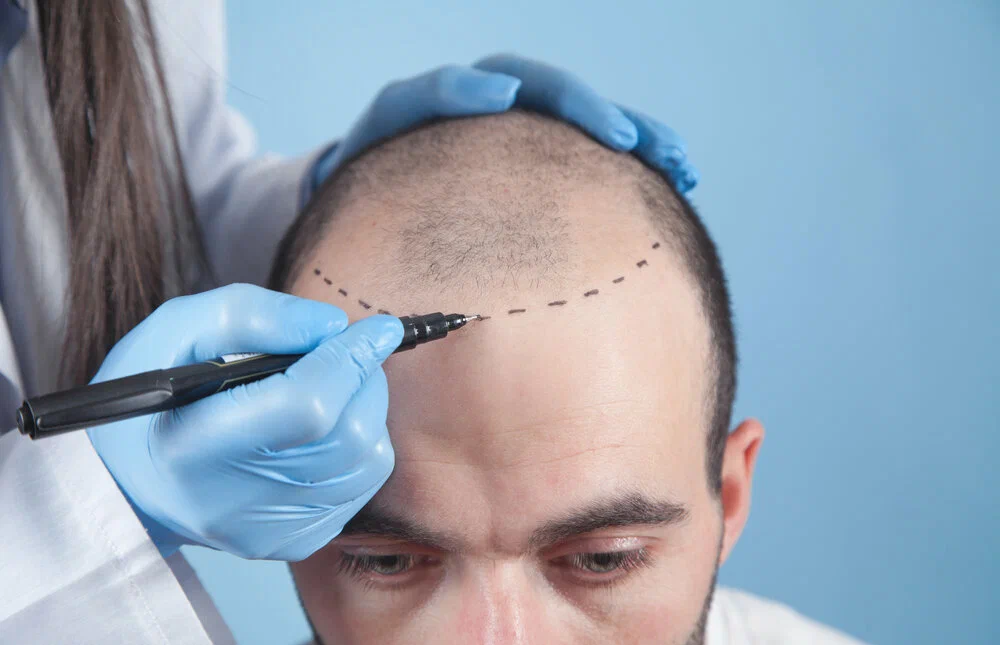
Hairline design is one of the most important aspects of a successful hair transplant. A hairline that is too straight, dense, or low may appear unnatural. Instead, restoration usually aims to imitate the irregularity and gradual transition found in natural hair.
The hairline may contain smaller follicular units toward the front, while larger grafts can sometimes be positioned farther behind to provide additional density. The angle and direction of transplanted hairs are also important.
An appropriate hairline should take into consideration the patient's age, existing hair-loss pattern, facial proportions, and potential future hair loss. A carefully planned design can help produce a balanced appearance rather than simply maximizing the number of transplanted grafts.
Who May Be a Candidate for FUT?
FUT may be considered by adults experiencing various forms of permanent hair loss, particularly pattern hair loss. However, candidacy must be evaluated individually.
A suitable candidate generally needs a sufficient supply of healthy donor hair. The donor follicles should also have characteristics that make them appropriate for transplantation.
People with extensive baldness may still be candidates in some circumstances, although expectations need to be realistic. Hair transplantation redistributes existing hair rather than creating new follicles.
Individuals experiencing temporary or unexplained hair shedding may require evaluation before considering surgery. Treating an underlying cause may be more appropriate than immediately proceeding with transplantation.
FUT Compared With Other Hair Transplant Methods
FUT is commonly compared with FUE, or Follicular Unit Extraction. Both techniques involve transplanting follicular units, but the harvesting process differs.
In FUT, a strip of donor tissue is removed and divided into grafts. In FUE, individual follicular units are extracted directly from the donor area using specialized instruments.
The primary distinction is therefore how the follicles are harvested. FUT produces a linear donor scar, while FUE produces multiple small extraction marks that may be less noticeable when healed.
Neither method is universally superior. The right technique depends on individual circumstances. Donor density, the number of required grafts, previous procedures, hairstyle preferences, scalp characteristics, and restoration goals can all influence the decision.
Recovery After FUT Hair Transplant
Recovery is an important part of the overall treatment process. Immediately after surgery, patients may experience mild swelling, redness, tightness, or tenderness around the treated areas.
The donor incision requires particular care because FUT involves removing a strip of tissue. Instructions regarding cleaning, sleeping position, physical activity, and scalp care should be followed carefully.
The transplanted follicles initially need time to establish themselves. Some transplanted hairs may shed during the early stages. This can be a normal part of the hair-growth cycle and does not necessarily mean that the transplant has failed.
New hair growth generally takes time. Hair follicles move through different growth phases, meaning visible improvement is gradual rather than immediate.
When Can Results Be Expected?
Hair transplantation is a long-term process. The early post-operative period is primarily focused on healing. During subsequent months, transplanted follicles gradually enter active growth phases.
Initial growth may be fine and relatively thin before becoming stronger with time. The final appearance can continue improving for many months.
It is important not to judge the outcome too early. Hair growth varies from person to person, and factors such as age, genetics, hair characteristics, general health, and adherence to aftercare instructions can influence the timeline.
Benefits of FUT Hair Transplantation
FUT offers several potential advantages for appropriately selected patients.
Potential benefits include:
-
Ability to harvest a substantial number of grafts in one session
-
Efficient use of a suitable donor area
-
Natural follicular-unit transplantation
-
Possibility of addressing larger areas of hair loss
-
Permanent relocation of genetically resistant follicles
-
Potential improvement in hair density and appearance
-
Restoration designed according to individual facial and scalp characteristics
However, every surgical procedure has limitations and potential risks. A proper consultation is essential before deciding on treatment.
Understanding the FUT Scar
One of the most important considerations with FUT is the linear donor scar. Although the incision is generally placed in an area that can be covered by surrounding hair, its visibility depends on individual healing, scar characteristics, hair density, and hairstyle.
People who prefer very short hairstyles may need to consider this factor carefully. The scar may become less noticeable over time, but it does not disappear completely.
Patients should discuss their preferred hairstyle and expectations during consultation so that the harvesting approach can be considered accordingly.
Aftercare and Lifestyle Considerations
Following post-procedure instructions can support proper healing. Patients may be advised to avoid strenuous physical activities for a certain period, protect the scalp from unnecessary irritation, and follow specific washing instructions.
Avoiding excessive pressure or scratching of the transplanted area is particularly important during the initial healing period.
The donor incision should also be monitored for unusual symptoms. If significant pain, excessive swelling, unusual discharge, or other concerning changes occur, professional medical advice should be sought.
Importance of Realistic Expectations
A hair transplant can improve the appearance of thinning or bald areas, but it cannot reproduce unlimited hair density. The amount of coverage achievable depends largely on available donor follicles.
People with advanced hair loss should understand that achieving complete coverage may not always be possible. A realistic treatment plan focuses on using available donor hair strategically.
The long-term pattern of natural hair loss should also be considered. Existing non-transplanted hair may continue thinning over time. In some cases, ongoing medical management may be discussed to help maintain native hair.
Choosing FUT Hair Transplant in Jeddah
When considering FUT Hair Transplant in Jeddah, patients should focus on the quality of the treatment plan rather than simply choosing a procedure based on popularity or price.
Important considerations include the assessment process, surgical technique, donor-area evaluation, graft-handling methods, hairline planning, aftercare, and realistic expectations.
Patients should ask detailed questions during consultation, including how many grafts may be required, what type of scar can be expected, how long recovery may take, and what results are realistically achievable.
Final Thoughts
FUT Hair Transplant in Jeddah can be an effective option for selected individuals experiencing permanent hair loss. By harvesting a strip of healthy donor tissue and carefully separating it into follicular units, the procedure allows existing hair follicles to be redistributed into areas affected by thinning or baldness.
Its ability to provide a significant number of grafts can make FUT particularly relevant for patients requiring extensive restoration. At the same time, the linear donor scar and surgical nature of the procedure are important considerations.
Successful hair restoration involves more than simply transplanting follicles. Proper assessment, thoughtful hairline design, careful graft handling, appropriate placement, and realistic expectations all contribute to the overall outcome. Anyone considering FUT should undergo a professional evaluation to determine whether the technique is appropriate for their specific hair-loss pattern and donor characteristics.
With proper planning and patience, hair transplantation can provide a long-term improvement in hair coverage and help individuals feel more comfortable with their appearance.

 English
 Arabic
 French
 Spanish
 Portuguese
 Deutsch
 Turkish
 Italiano
 Russian
 Romaian
 Portuguese (Brazil)
 Greek
Greek
 Bengali