


Scarless Hair Transplant in Jeddah: Achieving Natural-Looking Hair Restoration
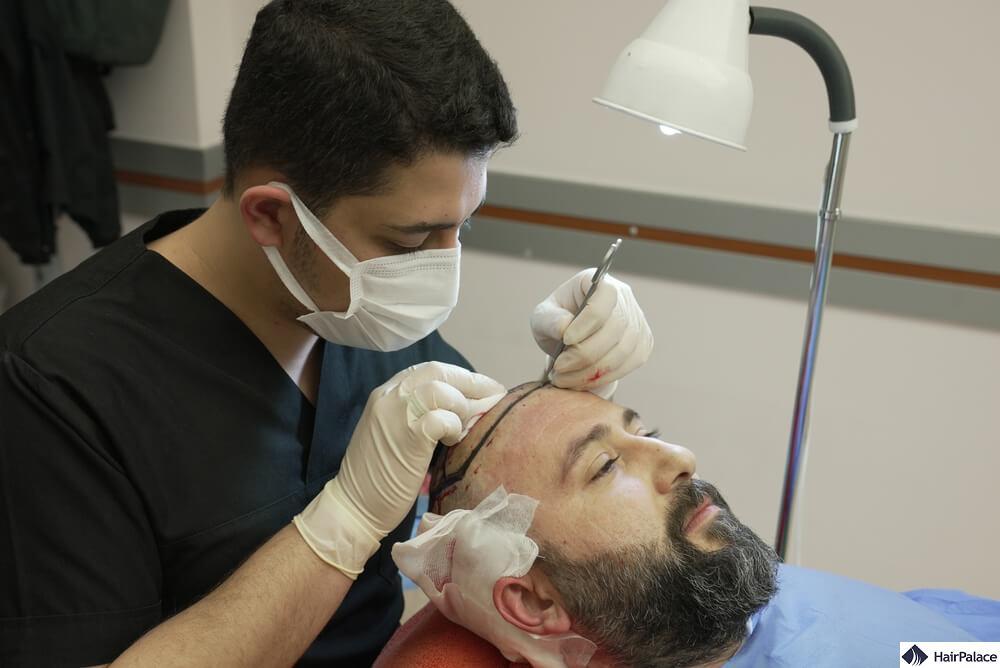
Scarless Hair Transplant in Jeddah: Achieving Natural-Looking Hair Restoration
Hair loss can influence the appearance of the entire face. A receding hairline may make the forehead appear larger, while thinning around the crown can make the scalp increasingly visible. For individuals looking for a long-term approach to hair restoration, minimally invasive transplantation techniques can provide an opportunity to redistribute existing hair follicles into areas where density has decreased. Scarless Hair Transplant in Jeddah is commonly used to describe techniques designed to minimize visible donor-area scarring, especially Follicular Unit Extraction (FUE).
Unlike traditional strip transplantation, FUE does not require removing a continuous strip of scalp. Individual follicular units are extracted from the donor area and transplanted into carefully prepared recipient sites. This approach can result in tiny extraction marks instead of a long linear scar.
Despite the common term “scarless,” patients should understand that no surgical hair transplant is guaranteed to leave absolutely no scars. The objective is generally to make scarring as limited and inconspicuous as possible.
What Is a Scarless Hair Transplant?
A scarless hair transplant generally refers to a hair restoration method that avoids a prominent linear donor scar.
In FUE, follicular units are removed individually using a small extraction instrument. The resulting openings are significantly smaller than the incision created during strip harvesting.
As these sites heal, they can become difficult to notice.
The final appearance depends on individual healing characteristics, extraction technique, number of grafts harvested, donor density, and hairstyle.
How FUE Differs From Strip Harvesting
The main distinction is how donor follicles are obtained.
Strip harvesting removes a section of scalp containing numerous follicular units. The resulting wound is closed and may leave a linear scar.
FUE separates and removes individual follicular units.
This eliminates the need for a continuous incision and can make the donor area more suitable for individuals who prefer shorter hairstyles.
Why Minimally Invasive Restoration Is Attractive
Many people are concerned about visible evidence that they have undergone a hair transplant.
FUE may address this concern by avoiding a long linear scar.
Other potential advantages include:
-
Individual graft extraction
-
Small extraction openings
-
No continuous donor incision
-
Flexible hairstyle options
-
Customized hairline design
-
Targeted treatment of thinning areas
-
Natural-looking graft distribution
The suitability and expected outcome vary between individuals.
Understanding the Cause of Hair Loss
Before considering transplantation, the pattern and potential cause of hair loss should be evaluated.
Different types of hair loss can require different approaches.
Pattern hair loss is one common indication for transplantation, but a transplant may not be suitable when the donor area is inadequate or the underlying hair-loss condition is unstable.
A proper assessment helps determine whether transplantation is appropriate.
Why Hair-Loss Stability Matters
Hair transplantation moves existing follicles but does not necessarily stop natural hair loss.
If untreated hair continues to thin, the relationship between transplanted and natural hair can change.
A long-term treatment strategy should therefore account for possible progression.
Planning conservatively can help maintain a natural appearance over time.
Assessing the Donor Area
The donor area is an important determinant of the potential result.
Hair from the back and sides of the scalp is often evaluated because these follicles may be more resistant to certain forms of pattern hair loss.
The assessment may include:
-
Donor density
-
Hair thickness
-
Follicular quality
-
Number of available grafts
-
Previous extraction
-
Donor-area appearance
-
Long-term follicular availability
A limited donor supply may restrict the amount of restoration possible.
Preserving the Donor Area
The donor area should be treated as a limited resource.
Extracting excessive numbers of follicles can make the area appear sparse.
It may also reduce the possibility of future transplantation.
A carefully planned extraction pattern can help maintain donor density and create a more uniform appearance.
Creating a Natural Hairline
The hairline is one of the most visible parts of a transplant.
An overly straight or dense hairline can appear unnatural.
Natural hairlines usually contain subtle irregularities and gradual changes in density.
Hairline design may take into consideration facial proportions, age, existing hair, donor availability, and anticipated future hair loss.
Choosing the Right Grafts
Follicular units vary in size.
Some contain a single hair, while others contain multiple hairs.
Single-hair grafts are often useful at the leading edge of the hairline because they can create a soft transition.
Larger grafts can be used behind the frontal edge to contribute density.
Temple Hair Restoration
Temple recession can change the overall shape of the face.
Adding hair to this region may help restore a more balanced appearance when adequate donor follicles are available.
The natural direction and angle of temple hair should be considered during implantation.
Incorrectly oriented grafts can appear unnatural.
Crown Restoration
The crown has a characteristic growth pattern that differs from the frontal region.
Hair commonly forms a whorl around the crown.
Recipient sites should therefore follow this natural pattern.
The amount of coverage depends on the size of the thinning area and available donor hair.
Preparing for FUE
The procedure begins with careful planning.
The donor and recipient areas are assessed, and the desired hairline and density are discussed.
The donor area is then prepared for extraction.
The exact preparation process can vary depending on the treatment plan.
Individual Follicle Extraction
FUE involves extracting follicular units one by one.
A specialized instrument is used to create a small opening around each follicular unit.
The unit is then carefully removed.
Precision is important because excessive trauma can damage the follicle.
The extraction sites should also be distributed appropriately to avoid creating visible areas of donor thinning.
Preparing the Harvested Grafts
Once extracted, the follicles are carefully prepared for implantation.
Grafts can be separated according to their characteristics and intended location.
Single-hair units may be reserved for the frontal edge, while larger units can help create density behind it.
Careful graft handling is important throughout this stage.
Creating Recipient Sites
The recipient area is prepared by creating small sites for the harvested grafts.
These sites influence the direction and angle of the transplanted hair.
Because natural hair grows differently across the scalp, the sites should be customized according to the region being treated.
Implanting the Grafts
The prepared grafts are placed individually into the recipient sites.
The distribution should follow the planned design.
A gradual transition between areas of different density can help the result blend with existing hair.
Efficient placement also helps conserve donor follicles.
Importance of Hair Direction
Natural hair growth patterns are not identical throughout the scalp.
Hair at the frontal region generally grows at a relatively shallow angle.
Temple hair follows another directional pattern, while crown hair typically grows around a whorl.
Matching these patterns can help the transplanted hair look more natural.
Recovery After the Procedure
The scalp may show temporary changes following FUE.
Possible effects include:
-
Redness
-
Mild swelling
-
Small crusts
-
Sensitivity
-
Minor discomfort
-
Tiny extraction marks
These effects generally improve during the healing process.
Individual recovery times vary.
Protecting the Transplanted Area
The newly treated scalp should be handled carefully.
Patients may receive instructions regarding washing, sleeping, exercise, sun exposure, and hair products.
Avoiding unnecessary touching, rubbing, and scratching can help protect healing areas.
Aftercare instructions should always be followed carefully.
Temporary Hair Shedding
Some transplanted hairs may temporarily shed after treatment.
This occurs because the visible hair shaft can fall while the follicle remains in place.
The follicle can subsequently enter another growth phase.
New hair growth may occur afterward.
This temporary phase should be considered when evaluating early results.
How Long Does Hair Growth Take?
Hair transplantation is a gradual process.
The scalp first undergoes healing.
The transplanted follicles then progress through their natural growth cycle.
New hairs may gradually emerge over subsequent months.
Initially, the hairs can be fine before becoming thicker as they mature.
Understanding Scarring After FUE
FUE minimizes the size of donor-area wounds but does not eliminate scarring completely.
Each extracted follicle leaves a small opening.
Once healed, the resulting marks may be difficult to notice.
However, some individuals may have more visible marks than others.
What Influences Scar Visibility?
Scar visibility can depend on several factors.
These include:
-
Individual healing
-
Skin characteristics
-
Extraction technique
-
Number of grafts
-
Donor density
-
Extraction distribution
-
Hair length
Patients should therefore avoid assuming that every FUE procedure will produce exactly the same donor-area appearance.
Benefits for Short Hairstyles
FUE can be attractive to people who like shorter hairstyles because it avoids the long linear scar associated with strip harvesting.
However, very short hair can expose individual extraction points.
The preferred hairstyle should therefore be considered during treatment planning.
Can FUE Restore Severe Baldness?
The answer depends on donor availability.
Extensive baldness may require more grafts than the donor area can safely provide.
In these circumstances, restoration may focus on the hairline, frontal region, or other areas that create the greatest visual improvement.
A realistic plan is more important than simply maximizing the number of grafts.
The Influence of Hair Characteristics
Hair thickness can affect visual density.
Thicker hair shafts may provide greater coverage, while fine hair can require more strategic placement.
Hair texture also affects how dense the restored area appears.
Curly and wavy hair can sometimes provide different visual coverage compared with straight hair.
Hair Transplantation for Women
Women may also be considered for transplantation when the pattern and cause of hair loss make it appropriate.
Female hair loss can involve diffuse thinning, which makes donor assessment especially important.
A detailed evaluation can help determine whether sufficient donor follicles are available.
Possibility of Future Transplants
Some individuals may eventually require or consider additional transplantation.
The possibility depends on remaining donor follicles, the progression of hair loss, previous procedures, and scalp condition.
Preserving donor follicles during the initial procedure can therefore be important.
Maintaining Long-Term Results
Transplanted follicles may continue growing, but surrounding natural hair can still become thinner.
Long-term monitoring can help identify changes in density.
A comprehensive hair-management strategy may be useful for maintaining a balanced appearance as time passes.
Setting Realistic Expectations
A hair transplant redistributes existing follicles rather than creating new ones.
The donor supply therefore places a natural limit on the amount of restoration possible.
Patients should understand that complete restoration of their original youthful density may not be realistic.
The objective is generally to create meaningful, natural-looking improvement using the available donor follicles.
Final Thoughts
Scarless Hair Transplant in Jeddah commonly refers to minimally invasive FUE hair restoration, where individual follicular units are extracted rather than removing a strip of scalp. This approach can avoid a long linear donor scar and may be particularly suitable for people who prefer shorter hairstyles.
The procedure involves evaluating the cause and pattern of hair loss, assessing donor density, designing the hairline, extracting individual follicles, preparing grafts, creating recipient sites, and implanting the follicles according to natural growth patterns.
Although FUE is often called “scarless,” tiny extraction scars can still occur. Their visibility depends on healing, extraction technique, donor density, graft numbers, and hair length.
Results also take time to develop. Temporary redness, crusting, and shedding can occur before new growth becomes visible and matures.
With careful planning, responsible donor management, precise graft placement, proper aftercare, and realistic expectations, minimally invasive hair transplantation can provide a practical approach to improving hair density while keeping visible signs of treatment as limited as possible.
:::

 English
 Arabic
 Spanish
 Portuguese
 Deutsch
 Turkish
 Dutch
Dutch
 Italiano
 Russian
 Romaian
 Portuguese (Brazil)
 Greek
Greek
 Bengali