


How the EPCG Scheme Supports Machinery Investment and Export Growth
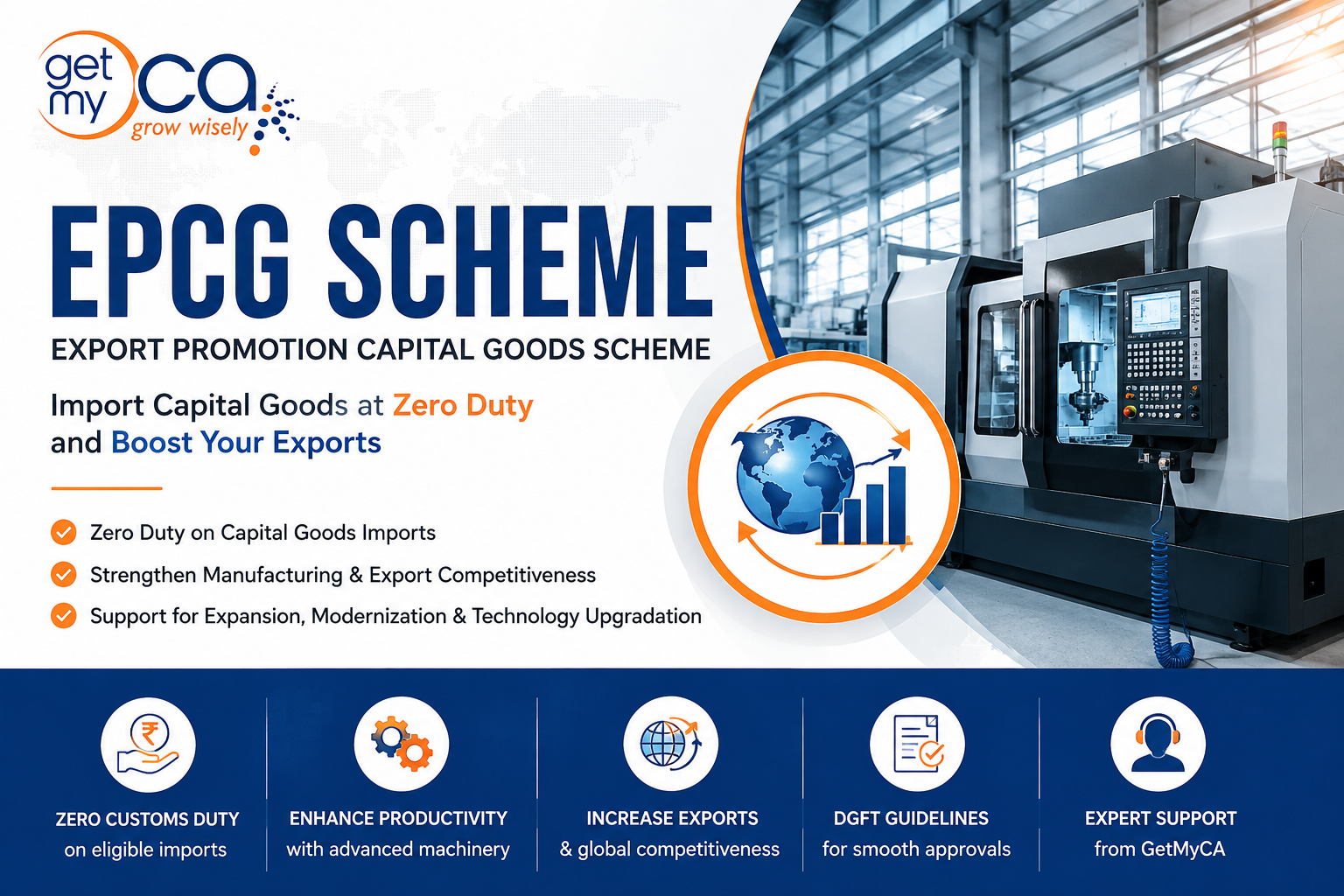
For manufacturing and export-oriented businesses, investment in modern machinery is often necessary to improve productivity, product quality, and global competitiveness. However, importing advanced capital goods can involve significant customs duty costs. India’s Export Promotion Capital Goods framework is designed to support eligible exporters by reducing this initial cost burden while linking the benefit with future export performance.
The EPCG Scheme allows eligible businesses to import specified capital goods at concessional or zero customs duty, subject to the conditions prescribed under India’s Foreign Trade Policy and applicable DGFT procedures. The scheme can be relevant for manufacturers that are planning capacity expansion, modernization, technology upgrades, or the installation of new production lines.
Why Is EPCG Relevant for Machinery Purchases?
Machinery is one of the largest capital investments for many manufacturing businesses. Imported equipment may offer better automation, production efficiency, precision, or technology that is not easily available through existing production infrastructure.
Under EPCG, eligible capital goods can generally be imported with customs duty benefits against an export obligation. This can reduce the immediate cost of acquiring machinery and allow businesses to allocate more working capital toward production, raw materials, workforce development, and market expansion.
However, the decision should not be based only on the customs duty saving. Businesses should also evaluate their future export capability, applicable export obligation, product classification, machinery requirements, and compliance responsibilities.
EPCG and Domestic Machinery Procurement
EPCG is commonly associated with imported machinery, but certain mechanisms may also be relevant where capital goods are sourced from domestic manufacturers in accordance with applicable DGFT provisions.
Businesses considering domestic procurement should understand the relevant authorization process, documentation requirements, supplier involvement, and the appropriate procedural route before finalizing the machinery purchase.
Incorrect planning before issuing the purchase order or completing the transaction can create unnecessary compliance complications later.
Importance of Pre-Purchase Planning
One of the most important aspects of EPCG is timing. Businesses should ideally evaluate the scheme before making the machinery purchase.
Important points to review may include:
- Whether the proposed machinery qualifies as eligible capital goods
- Expected customs duty benefit
- Export obligation implications
- Existing and projected export turnover
- Machinery supplier details
- Import or domestic procurement structure
- DGFT documentation requirements
- Installation and authorization-related compliance
- Record maintenance for future export obligation discharge
For businesses dealing with high-value machinery transactions, working with an experienced EPCG Machinery Consultant can help them understand the procedural and documentation requirements before committing to the transaction.
Export Obligation Should Be Evaluated Carefully
The benefit available under EPCG comes with corresponding export obligations. Therefore, businesses should assess whether their projected exports can realistically support the required commitment.
Manufacturers should consider factors such as historical exports, expected capacity after machinery installation, international demand, production timelines, and business expansion plans.
A company should not evaluate EPCG solely on the basis of immediate duty savings. The long-term compliance responsibility is equally important.
Documentation and Compliance
EPCG transactions generally involve multiple documents connected with authorization, machinery procurement, installation, exports, and fulfillment of the prescribed obligations.
Maintaining accurate records from the beginning can make future compliance easier. Businesses should ensure that information appearing in purchase documents, shipping records, authorization documents, installation-related records, and export documentation remains consistent wherever required.
Any significant change in machinery procurement plans should also be reviewed from the EPCG compliance perspective before implementation.
How EPCG Can Support Manufacturing Growth
When used after proper eligibility assessment and planning, EPCG can support manufacturers that are investing in advanced production infrastructure.
The scheme may help businesses:
- Reduce the initial customs duty burden on eligible capital goods
- Upgrade manufacturing technology
- Improve production capacity
- Enhance product quality
- Increase export competitiveness
- Support long-term expansion plans
The actual benefit, however, depends on the individual transaction, machinery, export profile, and compliance with applicable DGFT rules.
Conclusion
The EPCG framework can be an important consideration for manufacturers and exporters planning significant machinery investments. It connects capital investment incentives with export growth, making proper planning essential.
Before purchasing or importing machinery, businesses should evaluate eligibility, duty implications, export obligations, documentation, and the appropriate procurement route. A structured assessment at the planning stage can help businesses use the scheme more efficiently while avoiding compliance issues later.

 English
 Arabic
 French
 Spanish
 Portuguese
 Deutsch
 Turkish
 Dutch
Dutch
 Italiano
 Russian
 Romaian
 Greek
Greek
 Bengali