


How Existing Pharma Units Can Prepare a Claim-Ready RPTUAS Project
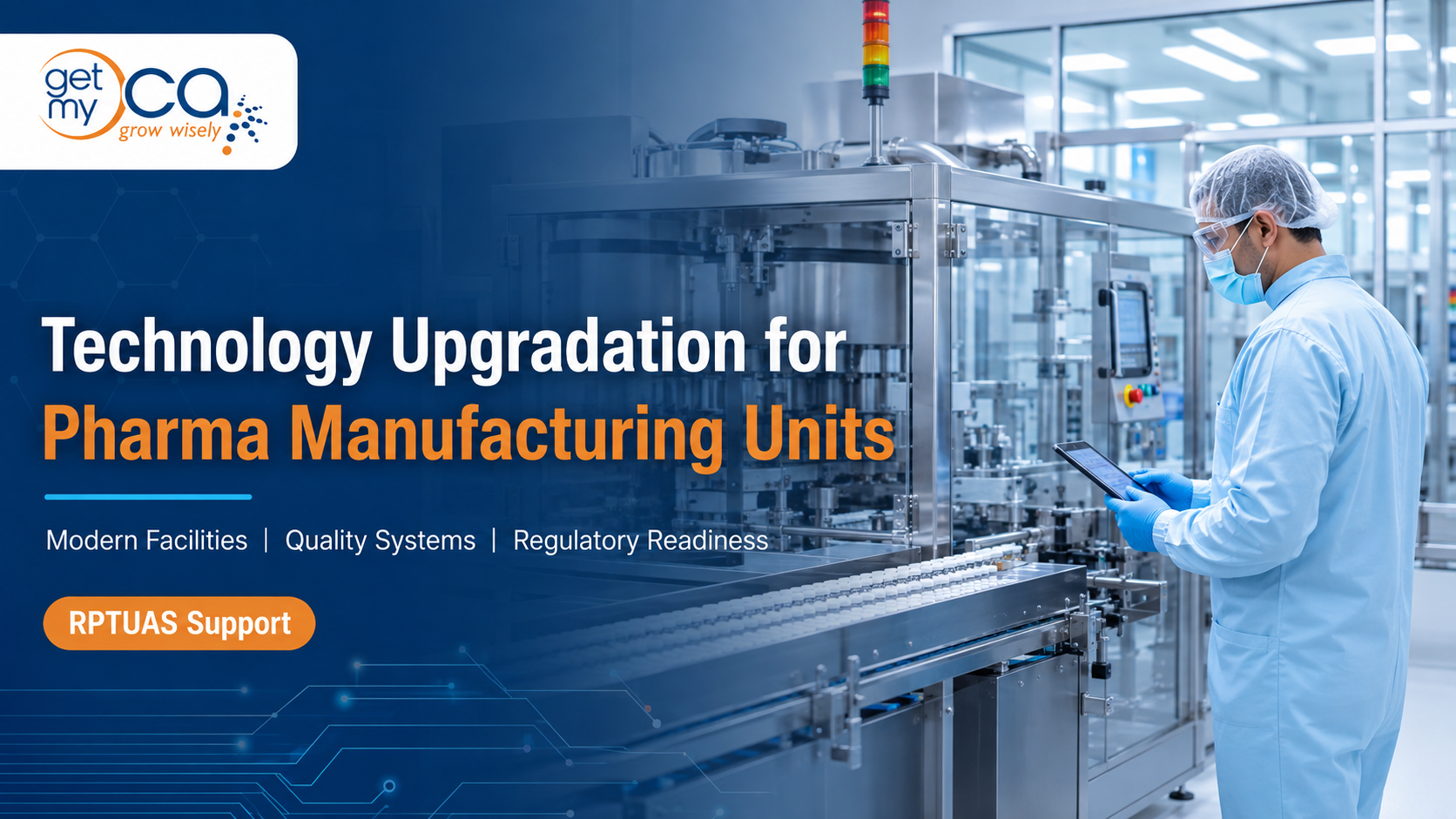
Technology upgradation in pharmaceutical manufacturing is not simply a machinery-purchase exercise. A project may involve production equipment, utilities, clean rooms, laboratories, environmental systems, testing arrangements and professional certification expenses.
Under the RPTUAS Scheme, eligible existing pharmaceutical manufacturing units may receive financial assistance for approved technology-upgradation activities. However, a technically useful investment will not automatically become claim-ready. The manufacturer must establish eligibility, identify covered expenses and maintain a clear connection between the facility gap, proposed improvement, invoice and payment.
A claim-ready project is one in which the business can explain what is being upgraded, why the investment is required, how much expenditure may qualify and which documents support every stage of implementation.
What Does a Claim-Ready RPTUAS Project Mean?
A claim-ready project contains a clear and verifiable trail from the initial facility assessment to the final expenditure.
The project file should answer the following questions:
-
Is the applicant an eligible pharmaceutical manufacturer?
-
Is the unit existing and operational?
-
Does the business hold a valid manufacturing licence?
-
Which manufacturing or compliance gaps have been identified?
-
How will the proposed equipment or facility improvement address those gaps?
-
Which expenses may qualify under the scheme?
-
Were the relevant expenses incurred within the applicable investment period?
-
Can every payment be supported through banking and accounting records?
-
Are the project figures consistent across all submitted documents?
Manufacturers should review the available pharma unit modernisation funding route before placing major orders or making substantial payments.
Which Applicants Should Complete an Eligibility Check First?
The RPTUAS Scheme is aimed at existing drug-manufacturing units undertaking eligible upgradation activities. An initial eligibility check should be completed before detailed project documentation begins.
The applicant should generally verify that:
-
The pharmaceutical unit is already operational
-
The unit manufactures formulations, APIs or eligible raw materials
-
Average turnover for the previous three years is below ₹500 crore
-
A valid manufacturing licence is available
-
Proposed improvements relate to Revised Schedule M or WHO-GMP requirements
-
Investment falls within the applicable period
-
The same expenditure has not already received a similar subsidy
An applicant operating only as a trader should not assume eligibility merely because it purchases or sells pharmaceutical products. The manufacturing activity and licence should support the proposed project.
How Should the Upgradation Project Be Divided?
Instead of preparing one broad machinery list, the manufacturer should divide the project into clear activity groups. This makes it easier to explain the purpose and cost of every proposed item.
A practical project structure may contain:
Production Improvement
This section may cover machinery, tools and equipment required to improve the pharmaceutical manufacturing process. Each machine should be linked with a production requirement, existing limitation or compliance gap.
Facility and Clean-Room Improvement
This section may include clean-room facilities, air-filtration systems, controlled entry arrangements and pressure-control systems.
Utility Improvement
Utilities may include HVAC, purified-water systems, steam generation and other supporting systems required for pharmaceutical production.
Laboratory and Testing Improvement
Quality-control equipment, stability chambers and related testing arrangements may be included when they support approved testing and quality requirements.
Environmental Improvement
Effluent-treatment plants and waste-management systems may form part of the project where they meet the scheme conditions.
Consultation and Certification
Eligible professional, audit or certification-related expenses should be separately identified instead of being mixed with machinery expenditure.
How Should the RPTUAS Budget Be Prepared?
Financial assistance under RPTUAS depends on the applicant’s average turnover during the previous three years and approved eligible investment.
The turnover-linked structure stated on the GetMyCA service page is:
-
₹1 crore to less than ₹50 crore: 20% of eligible investment
-
₹50 crore to less than ₹250 crore: 15% of eligible investment
-
₹250 crore to less than ₹500 crore: 10% of eligible investment
The maximum limit is subject to ₹2 crore per eligible manufacturing unit.
The manufacturer should not apply the relevant percentage to the complete project cost without reviewing individual expenditure. A project may include items that are operationally necessary but not covered under the scheme.
A proper budget should separately show:
-
Total modernisation-project cost
-
Potentially eligible expenditure
-
Clearly excluded expenditure
-
Assistance percentage based on average turnover
-
Estimated assistance subject to the prescribed ceiling
-
Amount to be funded by the business or through a loan
This approach provides a more realistic estimate and reduces the risk of presenting ineligible costs as part of the claim.
Which Expenses Should Be Kept Separate?
The scheme information available on the GetMyCA service page identifies several items that are generally not covered. These include:
-
Land or building
-
Vehicles
-
Old or used machinery
-
Working capital
-
Salaries
-
General training expenditure
Such costs may still form part of the manufacturer’s wider business plan, but they should not be mixed with potentially eligible RPTUAS expenditure.
The business should create separate accounting codes or cost sheets for eligible and excluded activities. This becomes especially important when a single project contains building work, machinery installation, production equipment and operating expenses.
What Should a Supplier Quotation Contain?
Supplier quotations are important because they establish the proposed machinery, specifications and cost before the purchase is completed.
A suitable quotation should clearly mention:
-
Supplier’s legal name and address
-
Machinery or equipment name
-
Model and technical specifications
-
Quantity
-
Production or testing capacity
-
Basic price
-
Applicable taxes
-
Freight charges
-
Installation terms
-
Payment schedule
-
Delivery period
-
Quotation validity
The equipment description should remain consistent in the quotation, purchase order, invoice, project report and fixed-asset register. Avoid using different or overly broad names for the same machinery.
If the project includes multiple suppliers, a consolidated quotation register can help the manufacturer track equipment, cost, date, validity and approval status.
How Should the Financial Trail Be Maintained?
A clear financial trail allows the expenditure to be matched with the approved activity.
The manufacturer should maintain:
-
Purchase order
-
Supplier invoice
-
Bank-payment evidence
-
Bank statement
-
Delivery document
-
Installation record
-
Fixed-asset entry
-
CA-certified expenditure details
-
Machinery or facility photographs
-
Commissioning evidence, where applicable
Payments should preferably be made from the appropriate business bank account and clearly linked with the supplier invoice. If payments are made in instalments, each payment should be mapped to the relevant purchase order and invoice.
The business may use its own funds, a bank loan or a combination of both because a bank loan is not stated as compulsory under the current scheme structure. Regardless of the funding source, the transaction trail must remain clear.
Which Core Documents Should Be Prepared?
A claim-ready RPTUAS project generally requires legal, technical and financial records.
Business and Legal Records
-
Partnership deed, incorporation documents, MOA or AOA
-
Valid pharmaceutical manufacturing licence
-
PAN
-
GST registration
-
Udyam registration, where applicable
Technical Records
-
Gap analysis report
-
Detailed project report
-
Equipment quotations
-
Technical specifications
-
Existing and updated unit photographs
-
Implementation schedule
-
Installation or commissioning evidence
Financial Records
-
Audited financial statements for the previous three years
-
Bank statements
-
Supplier invoices
-
Payment proofs
-
Fixed-asset register
-
Investment evidence
-
CA-certified expenditure details
Manufacturers can also refer to this pharmaceutical manufacturing assistance overview for information about eligible activities and turnover-linked assistance.
Why Should Disbursement Readiness Be Planned Early?
Assistance is described as being released in two instalments linked with compliance milestones. The first instalment is associated with Revised Schedule M compliance, while the remaining instalment is linked with WHO-GMP certification, subject to scheme conditions and verification.
Therefore, the manufacturer should not stop documentation after receiving approval. Compliance certificates, expenditure statements, installation records and supporting evidence should remain ready for the disbursement stage.
Approval, implementation and fund release are separate stages. A strong application file should remain complete throughout all three.
Conclusion
A claim-ready RPTUAS Scheme project requires more than a list of machinery and estimated costs. It should establish the applicant’s eligibility, identify genuine technology or compliance gaps and connect each proposed expense with appropriate technical and financial records.
Existing pharmaceutical manufacturers should begin with an eligibility review and gap analysis. The project should then be divided into production, facility, utility, laboratory, environmental and certification activities.
Separating covered and excluded expenditure, obtaining detailed quotations and maintaining a complete banking trail can make the project easier to understand and verify. Planning should also continue after approval because assistance release is linked with compliance milestones and supporting evidence.

 Arabic
 French
 Spanish
 Portuguese
 Deutsch
 Turkish
 Dutch
Dutch
 Italiano
 Russian
 Romaian
 Portuguese (Brazil)
 Greek
Greek
 Bengali