


How Do Tokenized Real Estate Securities Change the Property Investment Lifecycle?
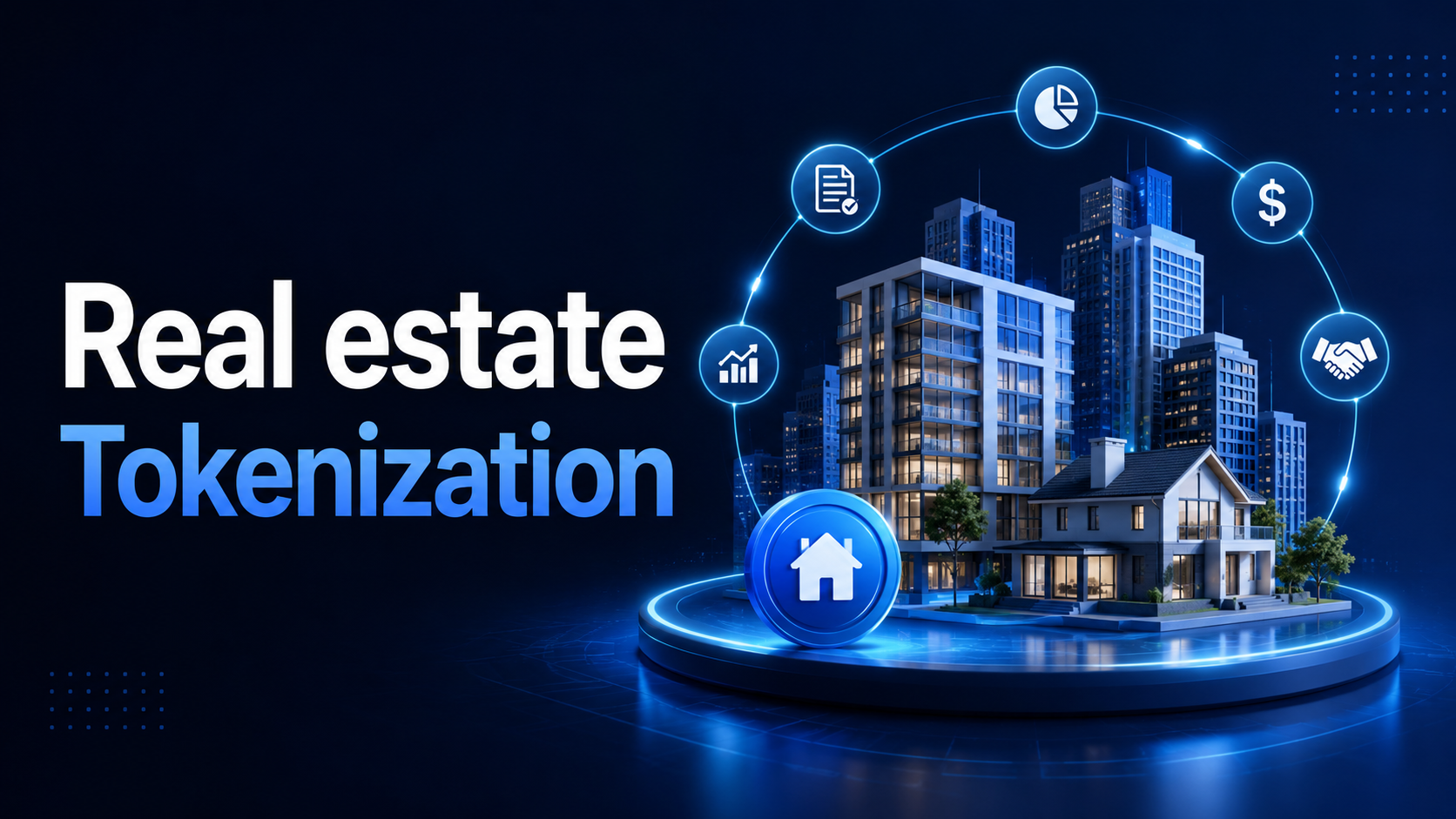
Real estate has traditionally been a high-value, paperwork-heavy investment class. From property acquisition and legal structuring to investor onboarding, income distribution, reporting, and eventual exit, each stage can involve multiple intermediaries and lengthy administrative processes.
Tokenized real estate securities introduce a blockchain-based layer to this lifecycle by representing securities or economic interests in real estate through digital tokens. Importantly, tokenization does not automatically change the legal nature of the underlying investment. In many structures, the token represents an interest in a property-holding entity, fund, debt instrument, or another legally defined security.
The result can be a more digitally connected investment lifecycle in which issuance, ownership records, compliance rules, distributions, and eligible transfers can be managed through programmable infrastructure.
What Are Tokenized Real Estate Securities?
Tokenized real estate securities are digital representations of securities linked to real estate assets. Depending on the structure, a token may represent an equity interest, debt claim, fund interest, rental-income entitlement, or another economic right associated with a property.
For example, a property may be placed inside a special-purpose vehicle (SPV), with investors receiving tokens representing interests in that vehicle. The property itself remains governed by conventional property law, while the blockchain can provide infrastructure for recording ownership, transfers, and certain automated processes.
How Traditional Property Investment Works
A conventional real estate tokenization investment lifecycle often involves several separate stages:
-
Property sourcing and due diligence
-
Valuation and financial analysis
-
Legal and ownership structuring
-
Capital raising
-
Investor onboarding
-
Property acquisition
-
Asset management
-
Income collection and distribution
-
Investor reporting
-
Transfer or exit
These processes can involve brokers, lawyers, administrators, banks, custodians, fund managers, registrars, property managers, and other intermediaries. Tokenization does not necessarily remove these participants. Instead, it can connect some of their processes through shared digital infrastructure and programmable workflows. KPMG's analysis of tokenized securities describes a lifecycle spanning deal structuring, digitization, primary distribution, post-tokenization management, and secondary trading.
How Tokenization Changes the Property Investment Lifecycle
1. Property Selection Becomes Investment-Product Structuring
The lifecycle begins with identifying a suitable property or real estate portfolio. In a traditional transaction, the focus is primarily on whether the property is financially and legally viable. With tokenization, sponsors must also determine how the asset will be converted into an investable digital security.
This may require decisions around:
-
Ownership structure
-
SPV or fund structure
-
Investor rights
-
Revenue-sharing mechanisms
-
Token supply
-
Investor eligibility
-
Transfer restrictions
-
Jurisdiction
-
Regulatory requirements
-
Redemption or exit mechanisms
Therefore, tokenization introduces a new layer of investment-product design before the offering reaches investors.
2. Due Diligence Becomes More Data-Driven
Property due diligence remains essential.
Investors and issuers may examine:
-
Property title
-
Existing debt
-
Rental agreements
-
Occupancy
-
Property valuation
-
Operating expenses
-
Tax obligations
-
Insurance
-
Historical cash flows
-
Development risks
-
Legal restrictions
Tokenization can complement this process by connecting verified property and financial information with a digital investment platform. However, putting information on a blockchain does not automatically make that information accurate. Off-chain data still needs to be verified before it becomes part of the investment structure.
3. Ownership Interests Can Be Digitized
Once the legal structure is established, the relevant investment interest can be represented through tokens. Traditionally, ownership and investor records may be maintained through agreements, certificates, spreadsheets, registrars, custodians, and other systems. With tokenized securities, blockchain infrastructure can provide a digital record of token ownership and eligible transfers.
Smart contracts can also encode certain rules governing the security.
For example, a token could incorporate rules relating to:
-
Investor eligibility
-
Transfer restrictions
-
Distribution calculations
-
Holding limits
-
Voting rights
-
Corporate actions
-
Compliance checks
This creates a more programmable ownership layer.
4. Capital Raising Can Become More Fractionalized
One of the most visible changes is the potential to divide a large investment opportunity into smaller digital units. Instead of requiring one investor or a small investment group to provide substantial capital, an issuer may structure an offering into fractional interests, subject to applicable securities laws and offering requirements.
For example, a commercial property could be placed into an investment vehicle and represented through thousands of digital securities. Eligible investors could purchase portions of the offering rather than acquiring the entire property exposure. Deloitte identifies fractional ownership, expanded investor participation, and new product structures among the potential benefits of real estate tokenization.
5. Investor Onboarding Can Become More Integrated
Traditional investor onboarding can involve separate processes for:
-
Identity verification
-
Accreditation or eligibility checks
-
Subscription documents
-
Payment
-
Ownership registration
-
Compliance reviews
A tokenized platform can connect these workflows into a single digital environment.
For eligible offerings, investors could complete onboarding, satisfy compliance requirements, subscribe to an offering, and receive digital securities through an integrated process. This does not mean compliance disappears. Instead, compliance requirements can potentially become embedded into the transaction workflow.
6. Settlement Can Become More Efficient
Traditional real estate investment transactions may require multiple parties to coordinate before ownership and payment are finalized. Tokenized securities can enable digital settlement mechanisms in which eligible transfers and corresponding payment processes are coordinated through programmable infrastructure. The potential benefit is reduced reconciliation between disconnected records.
A blockchain-based system can maintain a shared transaction history while smart contracts enforce predefined rules. This can help reduce operational friction, although the actual settlement model depends on the platform, jurisdiction, asset structure, payment infrastructure, and regulatory framework.
7. Rental Income Distribution Can Become Programmable
For income-producing properties, investors may be entitled to a portion of rental income. Traditional distributions can require property managers, accountants, administrators, banks, and fund managers to calculate and process payments.
Tokenization can introduce automated distribution workflows.
For example:
Rental income → Property account → Net distributable income → Tokenholder calculation → Eligible investor distribution
Smart contracts can help calculate distribution amounts based on token ownership and execute predefined processes. KPMG notes that corporate actions such as dividend distributions can potentially be automated through smart contracts and managed throughout the life of a tokenized security.
8. Investor Reporting Can Become More Continuous
Traditional investors often receive periodic statements and reports.
Tokenized systems can potentially provide more frequent visibility into:
-
Token holdings
-
Transactions
-
Distribution history
-
Ownership changes
-
Asset performance
-
Corporate actions
-
Investment balances
This does not guarantee that every property metric becomes available in real time. Off-chain information still has to be collected, verified, and uploaded. Nevertheless, tokenization can create a more connected reporting environment.
9. Corporate Actions Can Become Programmable
Real estate investments may involve numerous corporate actions during their lifecycle.
These can include:
-
Investor voting
-
Capital calls
-
Refinancing
-
Distributions
-
Changes to investment terms
-
Asset sales
-
Redemptions
Tokenized securities can encode some of these processes into smart contracts. For example, voting rights can potentially be linked to token holdings, while predefined rules can determine how distributions are calculated. This can reduce manual administration and improve consistency across investor records.
10. Secondary Trading Can Introduce a New Exit Layer
Liquidity has historically been one of the biggest challenges in private real estate. A property itself cannot normally be sold as easily as a publicly traded stock. Selling a real estate investment may involve negotiations, legal documentation, due diligence, financing, and lengthy settlement processes.
Tokenization can create a separate layer: secondary trading of the investment security. Instead of selling the entire property, an eligible investor may potentially transfer their tokenized interest to another eligible investor through an approved secondary market.
KPMG identifies secondary trading as the stage where tokenization can potentially provide significant liquidity benefits. However, tokenized does not mean automatically liquid. Secondary liquidity depends on investor demand, market infrastructure, applicable transfer restrictions, regulatory permissions, and the availability of buyers.
Traditional vs. Tokenized Property Investment Lifecycle
| Lifecycle Stage | Traditional Model | Tokenized Model |
|---|---|---|
| Property Structuring | Legal and financial structuring | Legal, financial, and token structuring |
| Ownership Records | Documents and centralized systems | Blockchain-based digital records plus legal records |
| Capital Raising | Institutional or private investor networks | Digital distribution to eligible investors |
| Fractionalization | Often complex | Digital units can facilitate fractional interests |
| Investor Onboarding | Multiple administrative processes | Potentially integrated digital workflows |
| Income Distribution | Manual or semi-automated | Potential smart-contract automation |
| Reporting | Periodic statements | Potentially more continuous digital records |
| Corporate Actions | Manual coordination | Programmable workflows |
| Transfers | Documentation and intermediaries | Digitally recorded eligible transfers |
| Secondary Market | Limited in many private assets | Potential additional trading infrastructure |
| Exit | Property sale or redemption | Token transfer, redemption, or property sale |
What Changes for Property Investors?
For investors, the biggest change is not simply that an asset becomes a token. The more important change is the investment experience surrounding the asset.
Investors may gain:
Greater Fractional Access
Tokenized structures can divide investment interests into smaller units, potentially lowering the capital required to participate in certain offerings.
Digital Ownership Records
Blockchain-based records can provide a transparent transaction history for token ownership and eligible transfers.
Potentially Faster Transfers
Where permitted and supported by market infrastructure, digital securities can potentially move between eligible investors more efficiently than traditional private-market processes.
Automated Income Processes
Smart contracts may automate parts of the calculation and distribution process for rental income or other investment proceeds.
Broader Product Choice
Tokenization can enable issuers to create different investment products around real estate, including equity, debt, funds, and income-linked structures.
Deloitte notes that tokenization could enable real estate organizations to develop new products and expand their investor base.
What Changes for Property Owners and Developers?
Property owners can also benefit from a more flexible capital formation model.
Instead of relying exclusively on conventional financing or institutional investors, an owner may explore tokenized securities to structure access to capital.
Potential benefits include:
-
Fractional capital raising
-
Digital investor management
-
Automated distributions
-
Reduced administrative duplication
-
More efficient ownership tracking
-
Potential secondary-market infrastructure
-
Greater flexibility in investment-product design
For developers, tokenization may also support new funding models for development projects, provided the legal and regulatory framework permits them.
What Happens at the End of the Investment?
The lifecycle does not end with secondary trading.
A tokenized real estate investment may eventually reach:
-
Property sale
-
Fund maturity
-
Investor redemption
-
Refinancing
-
Asset liquidation
-
Token buyback
-
Distribution of sale proceeds
Suppose an SPV owns a commercial property and eventually sells it.
The sale proceeds can be allocated according to the legal rights attached to the securities. The tokenized ownership record can then be used to identify eligible investors and support the distribution process.
The final stage therefore connects the blockchain record back to the underlying legal and financial structure.
What Are the Main Challenges?
Tokenization can improve parts of the investment lifecycle, but it does not eliminate real estate risks.
Regulatory Compliance
Tokenized real estate securities can still be securities and therefore may remain subject to applicable securities regulations. The SEC's current investor guidance specifically states that tokenized securities remain subject to federal securities laws and investor protections in the United States.
Legal Enforceability
The token must be properly connected to enforceable rights in the underlying investment structure.
Secondary-Market Liquidity
Creating tokens does not automatically create buyers. A functioning secondary market requires demand, appropriate infrastructure, and regulatory permission.
Data Accuracy
Blockchain records can be tamper-resistant, but they cannot independently verify whether an uploaded property valuation, rent figure, or legal document is accurate.
Cybersecurity
Smart contracts, wallets, custody systems, and platforms introduce technology-related risks that need appropriate security controls.
Investor Protection
Issuers must clearly explain what investors actually own, what rights they receive, how income is generated, what happens during default, and how the investment can be exited.
The Future of the Property Investment Lifecycle
Tokenized real estate securities are moving the industry toward a more digitally integrated investment lifecycle.
Instead of treating acquisition, ownership, administration, distributions, reporting, and transfers as disconnected processes, tokenization can connect them through programmable digital infrastructure.
The long-term opportunity is therefore broader than fractional ownership.
The real transformation lies in creating programmable real estate securities that can carry investment rules throughout their lifecycle.
As Deloitte highlights, tokenization could support new real estate products, improve operational efficiency, and expand participation in real estate markets.
Conclusion
Tokenized real estate securities change the property investment lifecycle by digitizing and connecting key stages from issuance and investor onboarding to ownership management, distributions, reporting, and potential secondary trading. The underlying property remains a real-world asset governed by established legal and financial structures. What changes is the infrastructure used to represent and manage investment interests.
For property owners, tokenization can create new approaches to capital formation and investor management. For investors, it can provide fractional access, programmable rights, digital ownership records, and potentially improved transferability.
However, successful tokenization requires more than blockchain technology. Legal structuring, regulatory compliance, investor protection, asset due diligence, cybersecurity, custody, and genuine secondary-market demand remain essential.

 Arabic
 French
 Spanish
 Portuguese
 Deutsch
 Turkish
 Dutch
Dutch
 Italiano
 Russian
 Romaian
 Portuguese (Brazil)
 Greek
Greek
 Bengali