


Retrofitting Contractors for Structural Strengthening
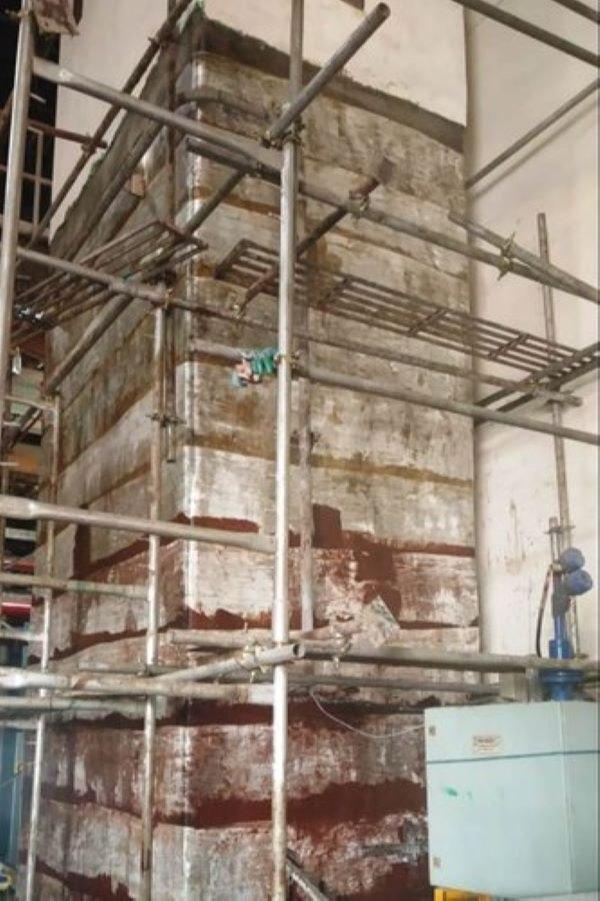
Retrofitting is becoming an important solution for owners who want to improve the safety, strength, and service life of existing buildings without immediately choosing demolition and reconstruction. Ageing concrete, corrosion, changing loads, construction deficiencies, seismic requirements, and alterations in building use can reduce structural performance. A carefully planned retrofitting approach evaluates these concerns and introduces suitable strengthening measures based on the actual condition and engineering requirements. The need for retrofitting services is often noticed when a building begins showing cracks, exposed reinforcement, concrete spalling, excessive deflection, leakage-related deterioration, or other signs of distress. However, visible damage is not the only reason to investigate. A structure may require strengthening even when deterioration is limited, particularly when its usage changes or additional loads are introduced. Early technical assessment helps identify weaknesses before they become expensive structural problems.
How Do Retrofitting Services Strengthen Existing Structures?
One of the biggest advantages of structural retrofitting is that strengthening can be targeted at specific members rather than replacing an entire structure. Columns, beams, slabs, foundations, walls, and connections may each require different interventions. Depending on the assessment, engineers can consider jacketing, fibre-reinforced systems, steel strengthening, concrete restoration, grouting, or other compatible methods. The objective is to restore or improve performance while keeping the existing structure practical to use.
Structural strengthening solutions are particularly relevant for older buildings that must accommodate present-day requirements. Increased occupancy, heavier equipment, additional floors, changes in internal layouts, or new operational loads can alter the demands placed on structural members. Instead of assuming that the original design remains adequate, an engineering review can compare existing capacity with current requirements. This provides a rational basis for deciding whether strengthening, repair, modification, or another intervention is appropriate.
Before choosing any retrofitting method, a structural inspection should be completed. Engineers may review drawings and available records, inspect concrete and reinforcement, map cracks, assess corrosion, examine distress patterns, and investigate material properties. Depending on the project, testing can include rebound hammer testing, ultrasonic pulse velocity testing, core testing, reinforcement scanning, or diagnostic procedures. These findings help establish the causes of damage rather than treating symptoms alone.
Common Problems That Lead to Retrofitting
Corrosion is one of the common reasons existing reinforced concrete structures require intervention. Moisture, carbonation, chloride exposure, poor concrete quality, and inadequate protection can contribute to reinforcement corrosion. As steel expands during corrosion, surrounding concrete may crack, delaminate, and spall, gradually reducing durability and structural performance. A rehabilitation strategy therefore needs to address both damaged concrete and the underlying deterioration mechanism, followed by suitable strengthening and protective measures where required.
Cracks should also be interpreted carefully because not every crack indicates the same structural problem. Shrinkage cracks, thermal movement, settlement-related cracks, corrosion-induced cracking, and load-related cracks have different causes and implications. Their width, direction, location, progression, and relationship with structural members should be examined before repair begins. Treating every crack with the same material can conceal the actual problem and may result in repairs that do not provide lasting performance.
For columns with inadequate capacity or significant deterioration, column jacketing can be considered as a strengthening approach. Reinforced concrete or steel jacketing can increase the effective capacity and stiffness of selected members when designed correctly. The work normally involves preparing the existing member, addressing damaged concrete and reinforcement, providing the designed strengthening system, and ensuring proper bonding. Execution quality is critical because strengthening must work together with the existing structure.
Carbon fibre reinforced polymer systems offer another option where a high-strength, lightweight strengthening solution is appropriate. CFRP wrapping can be used for selected beams, columns, and other structural elements after engineering assessment. Its low added weight can be useful where increasing dead load is undesirable. However, fibre wrapping is not a universal replacement for every strengthening technique, and its suitability depends on member condition, loading, detailing, substrate quality, and design requirements.
RCC Column Retrofitting and Structural Strengthening
RCC column retrofitting may become necessary when an existing column has reduced capacity, inadequate reinforcement, deterioration, or increased loading requirements. The selected method should consider axial load, bending, shear, confinement, geometry, access, and compatibility with the existing concrete. Depending on these factors, solutions may include reinforced concrete jacketing, steel jacketing, FRP systems, or other engineered interventions. A qualified structural professional should determine the appropriate arrangement and execution sequence.
Beams and slabs can also require strengthening when loads increase or existing performance becomes inadequate. Changes in machinery, storage arrangements, occupancy, partitions, or service installations can affect the loads carried by structural members. Strengthening may involve additional reinforcement, steel sections, fibre-reinforced systems, concrete overlays, or other designed measures. The chosen method should account for existing cracks, deflection, reinforcement condition, anchorage, fire considerations, durability, and practical limitations of working around occupied spaces.
Foundation strengthening is another important part of retrofitting when an existing foundation cannot safely support revised structural demands or when settlement affects performance. Engineers first investigate soil conditions, foundation geometry, existing loads, settlement patterns, and structural connections. Depending on the findings, underpinning, enlargement, additional supports, micro-piles, or other solutions may be considered. Foundation work requires careful sequencing because temporary instability can occur if excavation or load transfer is poorly controlled.
Seismic Retrofitting for Existing Buildings
Seismic retrofitting is considered when buildings need improved resistance to earthquake-related demands. Older structures may have been designed using earlier standards or may contain detailing that lacks adequate ductility and load paths for current expectations. A seismic assessment can identify weaknesses in columns, beams, joints, walls, diaphragms, or connections. Strengthening is designed to improve the building's ability to resist lateral forces while maintaining compatibility with the structural system.
Industrial facilities often have particularly demanding retrofitting requirements because structural work must coexist with machinery, production schedules, vibration, chemical exposure, restricted access, and operational safety. Retrofitting contractors working in such environments need to plan shutdowns, work zones, temporary supports, material movement, and protection of nearby equipment. Phased execution can sometimes reduce operational disruption, but the sequence should always follow the approved engineering methodology and the site's safety requirements.
Commercial and residential buildings present different practical challenges. Occupied buildings may require controlled work areas, restricted working hours, dust management, temporary access arrangements, and protection of residents or employees. Housing societies may also need clear communication about affected areas and expected project stages. A good retrofitting plan therefore considers not only structural calculations but also accessibility, safety, housekeeping, material storage, sequencing, and coordination with the people using the building.
How to Choose the Right Retrofitting Contractors
Choosing reliable retrofitting contractors should involve more than comparing quotations. Owners should examine project experience, technical capabilities, inspection procedures, quality controls, safety, engineering coordination, and the ability to execute work under site constraints. It is also useful to understand whether the contractor can coordinate with structural consultants and provide method statements, material documentation, testing records, and completion records. These factors can strongly influence the long-term result of strengthening work.
Concrete rehabilitation expertise becomes especially valuable when the structure has multiple interacting problems rather than one isolated defect. For example, corrosion may be accompanied by cracking, concrete delamination, water ingress, and reduced bond around reinforcement. In such situations, simply adding a strengthening layer may not solve the underlying deterioration. The damaged substrate may need appropriate repair, reinforcement treatment, protection, and strengthening in a planned sequence to achieve a durable outcome.
The cost of retrofitting services varies from project to project because there is no universal rate for structural strengthening. Building size, damage severity, member geometry, access conditions, testing requirements, strengthening technique, material quantities, labour, temporary works, and operational restrictions can all influence the budget. A site assessment and engineering proposal provide a much more useful cost basis than a generic per-square-foot estimate, especially for complex industrial or infrastructure structures.
Is Retrofitting Better Than Rebuilding?
Retrofitting can also support sustainability by extending the useful life of an existing asset instead of automatically replacing it. Demolition and reconstruction can involve material consumption, waste generation, transportation, and operational disruption. When assessment confirms that an existing structure can be safely strengthened, rehabilitation may preserve much of the original construction while upgrading its performance. The environmental benefit should always be considered alongside structural suitability, durability, safety, and lifecycle requirements.
A successful project does not end when strengthening materials are installed. Inspection of completed work, testing where specified, documentation, protective treatments, and maintenance planning are important for long-term performance. Owners should understand which areas were repaired or strengthened and what future inspections may be required. Periodic monitoring can also identify renewed cracking, moisture ingress, corrosion, or other changes early, allowing maintenance to be planned before deterioration becomes a larger structural concern.
When Should You Consider Retrofitting Services?
If a building shows recurring cracks, corrosion, spalling concrete, unusual deflection, settlement, or changes in loading, the next step should be a structural assessment rather than an immediate repair decision. Retrofitting contractors can coordinate investigation and execution around engineer's recommendations. For organisations seeking an experienced partner for structural repairs, rehabilitation, and strengthening, Gubbi Civil Engineers Limited can be considered after considering the technical scope, site requirements, and methodology.
retrofitting is a practical engineering strategy for improving the performance of existing structures when repair alone may not be enough and rebuilding may be unnecessary. The right outcome depends on accurate diagnosis, suitable design, compatible materials, controlled execution, and ongoing maintenance. Whether the requirement involves columns, beams, slabs, foundations, seismic upgrades, or deteriorated concrete, informed decisions can improve safety, durability, capacity, and useful life of an existing asset.

 Arabic
 French
 Spanish
 Portuguese
 Deutsch
 Turkish
 Dutch
Dutch
 Italiano
 Russian
 Romaian
 Portuguese (Brazil)
 Greek
Greek
 Bengali