


Cocaine Measurement Explained - Why Accurate Weight Matters
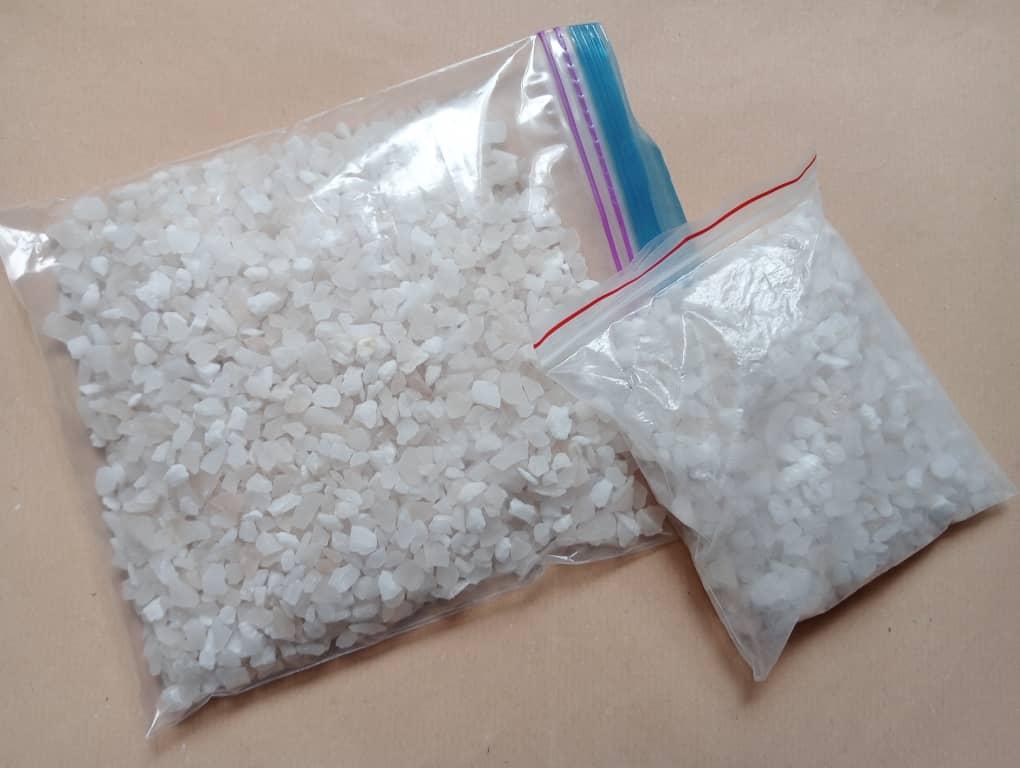
Did you know that a single United States dollar bill weighs exactly one gram, regardless of its denomination? This tiny unit of measurement is the foundation of a global underground economy where precision determines both profit and personal safety. When you deal with concentrated substances, the difference between a fair exchange and a dangerous mistake often comes down to the sensitivity of a digital scale.
You might wonder why a specific vocabulary exists for these transactions. In high stakes environments, clear communication prevents conflict. Weight is the only universal language that ensures everyone involved understands the value of the material changing hands. If you are a researcher studying forensic toxicology or someone interested in the logistics of illicit markets, understanding these increments is essential for clarity.
Understanding Mass & Volume in Street Measurements
Substances in powder form are deceptive to the eye - You cannot judge how much a pile of white powder weighs simply - looking at its size. Different processing methods result in varying densities - some powders are fluffy and light, while others are dense, rocky or compressed - this physical variation is why digital scales are the only reliable tool for verification.
In many regions, the metric system is the primary standard for small amounts, while the imperial system takes over for larger quantities - this overlap creates a confusing area for the uninitiated. To navigate this, you must recognize that mass remains constant even if the volume looks different from one batch to the next. Accurate weighing ensures that no one is misled by the visual "bulk" of a product that might actually be mostly air or light cutting agents.
Common units you will encounter include
- Point 0.1 grams (one-tenth of a gram).
- Half-gram 0.5 grams.
- Gram 1.0 gram.
- Eight-ball 3.5 grams.
The Gram Standard & Small Scale Transactions
The gram is the most frequent unit of exchange for individual users. It is small enough to be affordable but large enough to last for a short duration. Because the gram is such a small unit, even a tiny error on a scale can represent a significant percentage of the total weight. If a scale is off by just 0.2 grams, the buyer loses twenty percent of their purchase.
Precision scales used in the environments usually measure to the hundredth (0.01) or thousandth (0.001) of a gram. You will find that "street grams" are notoriously inconsistent. Many sellers provide "short grams" that weigh closer to 0.7 or 0.8 grams - this practice is a common way to increase profit margins without raising the visible price, which is why savvy participants always insist on seeing the numbers on a calibrated device.
When you look at a detailed overview of cocaine measurement terms, it becomes clear that the gram is the building block for everything else. Without a firm grasp of this single unit, it is impossible to calculate the value of larger amounts. Accuracy at this level builds the foundation of trust between two parties.
The Eight Ball - Math Behind the Many Common Unit
The "eight-ball" is perhaps the most famous term in the industry. It refers to an eighth of an ounce. While a mathematical eighth of an ounce is technically 3.543 grams, the market rounds this down to 3.5 grams for simplicity - this unit is popular because it offers a bulk discount compared to buying three individual grams separately.
Understanding the math is vital for anyone tracking inventory or expenses. Because an ounce is 28.35 grams, you can see how the rounding adds up over time. In a professional setting, those decimals matter. In a casual setting, the half gram "rounding tax" is generally accepted as the cost of doing business. If an eight ball weighs less than 3.5 grams, it is a sign of either a broken scale or a dishonest transaction.
People often ask about the relationship between these mid level weights and larger quantities. For a deeper look at the numbers, checking a breakdown of eight balls in an ounce reveals that there are exactly eight of these units in a standard 28-gram ounce - this symmetry makes it easy for sellers to divide their stock quickly and efficiently.
Bulk Weight and the Transition to Ounces
Once transactions move beyond a few grams, the terminology shifts toward the ounce. In the United States, the "dealer's ounce" is often calculated at 28 grams flat, rather than the true 28.35 grams - this small difference might seem trivial but in high volume settings, the fractions of a gram represent thousands of dollars in lost or gained revenue.
Larger quantities are often weighed in "bricks" or kilograms. A kilogram consists of 1 000 grams, which is roughly 2.2 pounds. At this level, the equipment used for weighing must be much more robust. Industrial scales replace pocket scales but the requirement for accuracy remains just as high. Errors at the kilogram level can lead to massive financial discrepancies and dangerous territorial disputes.
The transition from metric to imperial can be summarized as follows
- 28 grams make one ounce.
- 125 grams make a "quarter-key" (one-fourth of a kilogram).
- 500 grams make a "half-key"
- 1 000 grams make one kilogram.
The Risks of Inaccurate Weight & Adulteration
Why does accuracy matter so much? Beyond the financial aspect, there is a significant safety component. When weight is misrepresented, it often indicates that the substance has been "cut" or diluted with other chemicals. Sellers add powders like lidocaine, caffeine or even laundry detergent to increase the mass of the product - this allows them to sell 0.5 grams of the actual substance as a full 1.0 gram "unit"
You face higher health risks when you consume unknown fillers. If you believe you are consuming a specific weight of a pure substance but the weight is actually made up of harmful additives, your body reacts differently. The lack of a scale leads to "eyeballing" doses, which is the leading cause of accidental overdose. Precision isn't just about money - it is about knowing exactly what is entering your system.
Reliable information is your best tool for staying safe - Using a trusted source for substance data helps you understand purity levels and common additives. When you know the weight and you know the purity, you can make informed decisions. Without those two pieces of data, you are essentially gambling with your health.
FAQ
How many grams are in a standard ounce?
In the scientific world, an ounce is 28.35 grams - However, in most trade scenarios, an ounce is rounded to 28 grams flat to make division easier.
What does the term "point" mean?
A "point" refers to 0.1 grams - It is the smallest common unit of measurement, often used for very potent substances where a small amount has a large effect.
Why is an eight ball called by that name?
The name comes from the fact that it is one eighth of an ounce. Since an ounce is 28 grams, one eighth of that is 3.5 grams.
Can I trust a visual measurement?
No. Different textures and "rocks" have different densities. Two piles of powder that look identical in size can have significantly different weights on a scale.
What is a "heavy" gram?
A "heavy" gram is a term used when a seller provides slightly more than 1.0 gram (such as 1.1 or 1.2) to build loyalty or ensure the customer feels they received a good deal.

 Arabic
 French
 Spanish
 Portuguese
 Deutsch
 Turkish
 Dutch
Dutch
 Italiano
 Russian
 Romaian
 Portuguese (Brazil)
 Greek
Greek
 Bengali