


Bar Bending Machine for Quality Steel Reinforcement Work
Steel reinforcement is one of the most important elements in reinforced concrete construction. It provides the required strength, stability, and structural support to buildings, bridges, roads, industrial facilities, and infrastructure projects. However, before reinforcement bars can be installed, they often need to be bent into specific shapes and angles according to structural drawings.
Traditional manual bending methods can be time-consuming and physically demanding, particularly when large quantities of steel bars are required. A Bar Bending Machine offers a modern and efficient way to prepare reinforcement bars while maintaining consistent quality. By using controlled mechanical bending, construction companies can improve productivity, accuracy, and overall reinforcement work.
Importance of Quality Steel Reinforcement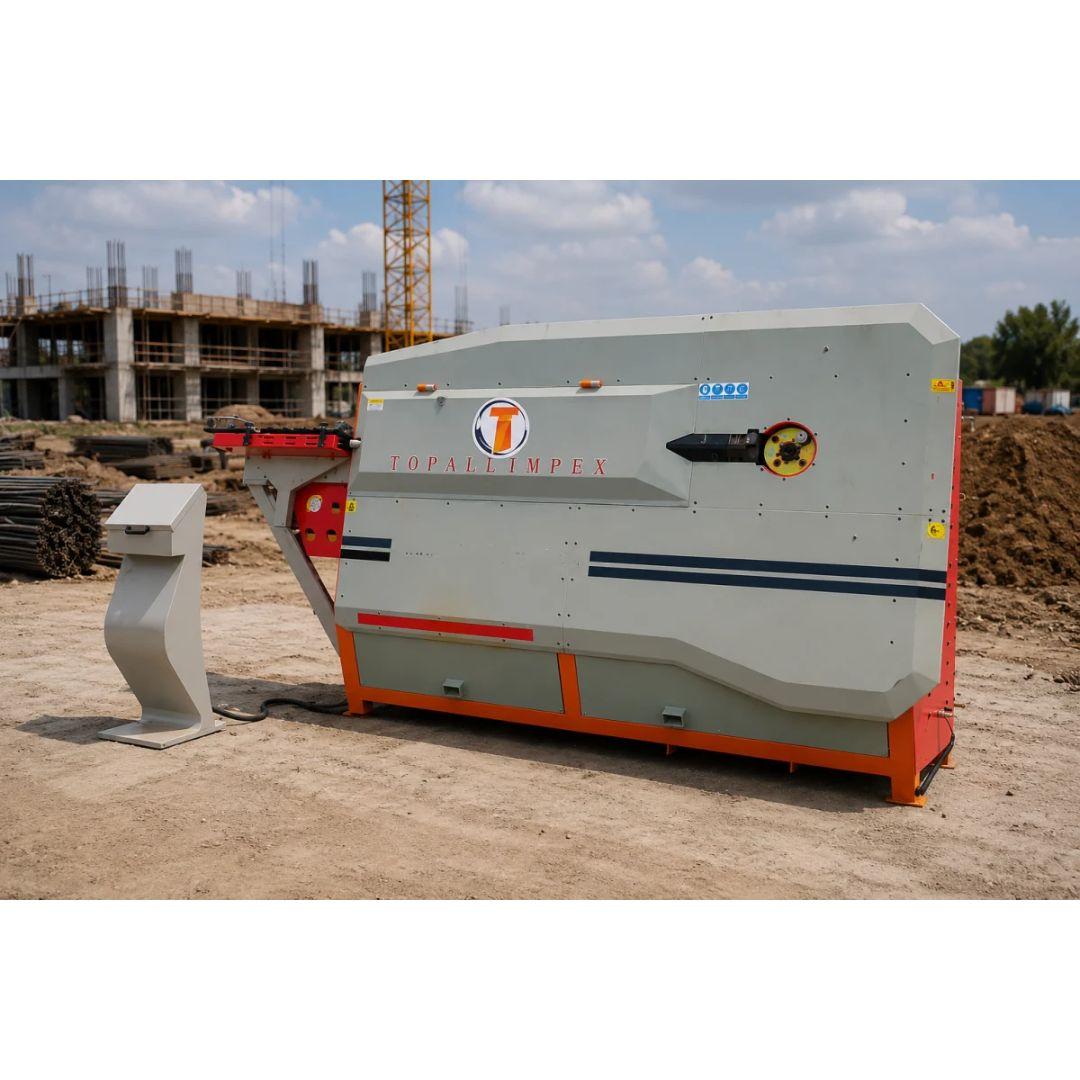
The quality of reinforcement preparation directly affects the efficiency of construction work. Steel bars may need to form hooks, stirrups, rings, U-bends, L-bends, and other shapes depending on the structural requirements.
Incorrect bending can make installation difficult and may result in additional cutting, adjustment, or reworking. Accurate bending ensures that reinforcement components fit properly within the designed structural arrangement.
A Bar Bending Machine helps simplify this process by providing controlled bending operations and repeatable results.
Improved Bending Accuracy
One of the most important benefits of using a Bar Bending Machine is improved accuracy. Reinforcement bars often need to meet specific angles and dimensions. Achieving the same results manually for hundreds of bars can be challenging.
Machine-assisted bending provides better control over the bending process. Once the required specifications are established, operators can produce multiple bars with similar angles and dimensions.
Consistent bending helps reinforcement workers assemble and position steel more efficiently while reducing the possibility of errors and rework.
Consistent Reinforcement Quality
Quality construction requires consistency throughout the reinforcement process. Variations in manually bent bars can create difficulties during assembly and installation.
A properly operated Bar Bending Machine can produce uniform components across different batches. Consistent hooks, stirrups, rings, and bends make it easier for workers to organize reinforcement and follow project specifications.
Uniformity can also simplify quality inspections because supervisors can check finished components against established requirements more effectively.
Faster Reinforcement Preparation
Construction projects often operate under strict deadlines. Delays in reinforcement preparation can affect subsequent activities such as tying, placing, formwork, and concreting.
A Bar Bending Machine can process reinforcement bars faster than many manual methods. This increased production speed allows contractors to prepare larger quantities of steel within shorter periods.
Faster bending can help maintain a continuous workflow and ensure that reinforcement components are available when required.
Reduces Manual Effort
Steel reinforcement bars can be heavy and difficult to bend manually. Repetitive bending operations require considerable physical effort and can lead to worker fatigue.
A Bar Bending Machine performs the primary bending operation mechanically. Operators can concentrate on positioning the bars, controlling the machine, monitoring production, and inspecting finished components.
Reducing repetitive manual work allows construction companies to use their workforce more effectively and can improve overall operational efficiency.
Minimizes Material Waste
Steel is an important construction material, and unnecessary waste can increase project costs. Manual bending errors may lead to incorrectly shaped bars or additional rework.
Machine-controlled bending can help reduce such errors by providing greater consistency and dimensional control. Accurate processing means fewer bars may need to be corrected or replaced.
Better steel utilization can help contractors control material costs and improve the efficiency of reinforcement preparation.
Suitable for Different Construction Projects
Bar Bending Machines can be used for a wide range of construction applications. They are suitable for residential buildings, commercial complexes, warehouses, factories, bridges, highways, tunnels, foundations, and other reinforced concrete structures.
Small and medium projects can use machines suited to moderate workloads, while large infrastructure projects may require heavy-duty or automatic models capable of processing substantial quantities of reinforcement steel.
Selecting the appropriate machine capacity is important for achieving reliable performance.
Supports High-Volume Reinforcement Work
Large projects may require thousands of bent reinforcement bars. Processing such quantities manually can consume considerable time and labor.
A Bar Bending Machine can support high-volume production by performing repetitive bending operations efficiently. This makes it particularly useful for large construction sites and reinforcement fabrication facilities.
By creating a steady production process, contractors can prepare reinforcement components according to project schedules and reduce delays.
Choosing a Machine for Quality Work
Selecting the right Bar Bending Machine is important for maintaining quality. Contractors should consider the diameter and type of reinforcement bars they regularly use, required bending angles, production volume, machine capacity, operating system, and durability.
Other factors such as power requirements, safety features, maintenance needs, spare-part availability, and technical support should also be considered.
A machine should be capable of handling the expected workload without being operated beyond its recommended capacity.
Maintenance and Operator Training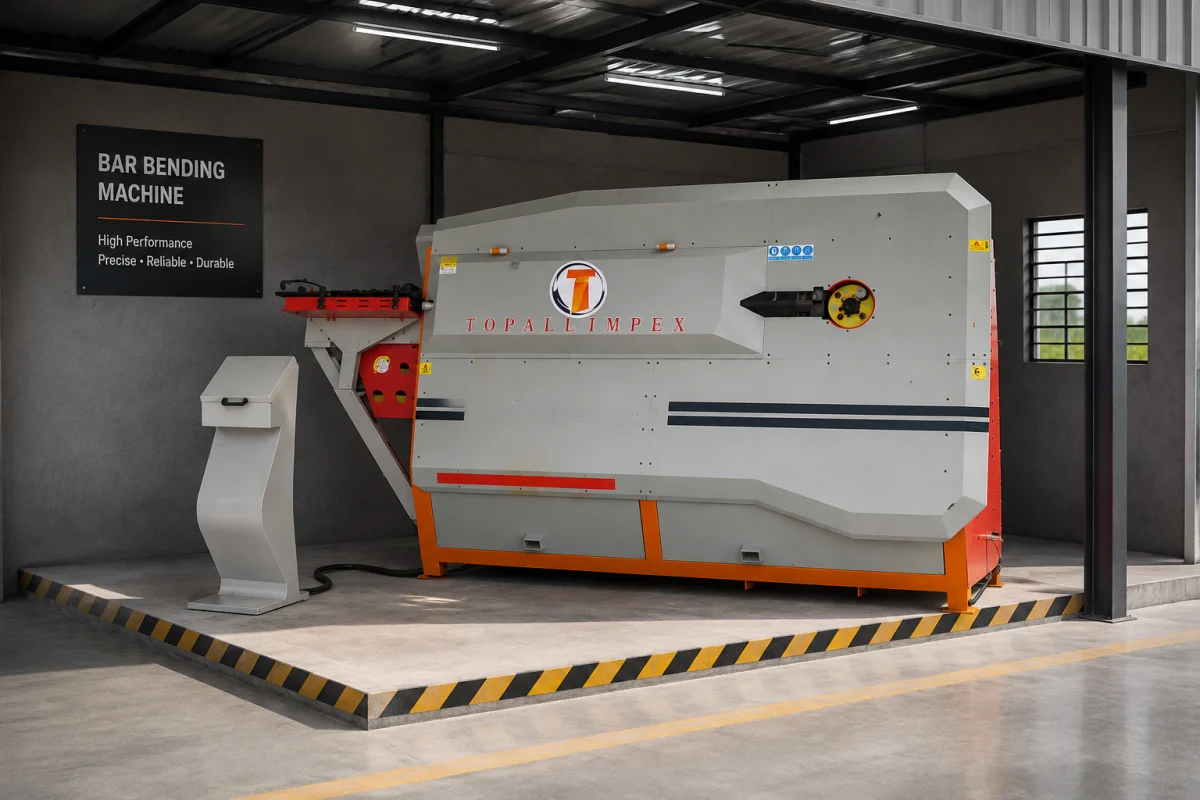
Regular maintenance is essential for reliable bending performance. Mechanical components, bending tools, electrical systems, and other critical parts should be inspected according to the manufacturer's recommendations.
Proper cleaning and lubrication should be performed where required. Worn components should be repaired or replaced promptly to avoid affecting bending accuracy.
Operator training is equally important. Workers should understand the machine's controls, capacity, safety procedures, and recommended operating methods. Proper operation helps maintain consistent quality and protects both equipment and workers.
Conclusion
A Bar Bending Machine for quality steel reinforcement work provides an efficient solution for modern construction requirements. It improves bending accuracy, increases production speed, reduces manual effort, minimizes material waste, and helps maintain consistent reinforcement quality.
Whether used for residential construction, commercial buildings, industrial projects, or large infrastructure developments, the right machine can make reinforcement preparation more organized and productive. By selecting suitable equipment, training operators, and following a regular maintenance schedule, contractors can achieve reliable steel bending performance and contribute to stronger, more efficient construction projects.
| Get in Touch |
| 919716467843 |
| www.topall.in |
| nitesh@topallimpex.in |
| 783/784, Aggarwal Cyber Plaza-II, Netaji Subhash Place Pitampura, Delhi - 110034, India |

 Arabic
 French
 Spanish
 Portuguese
 Deutsch
 Turkish
 Dutch
Dutch
 Italiano
 Russian
 Romaian
 Portuguese (Brazil)
 Greek
Greek
 Bengali