


Global Aircraft Tires Market: Industry Growth & Outlook 2032
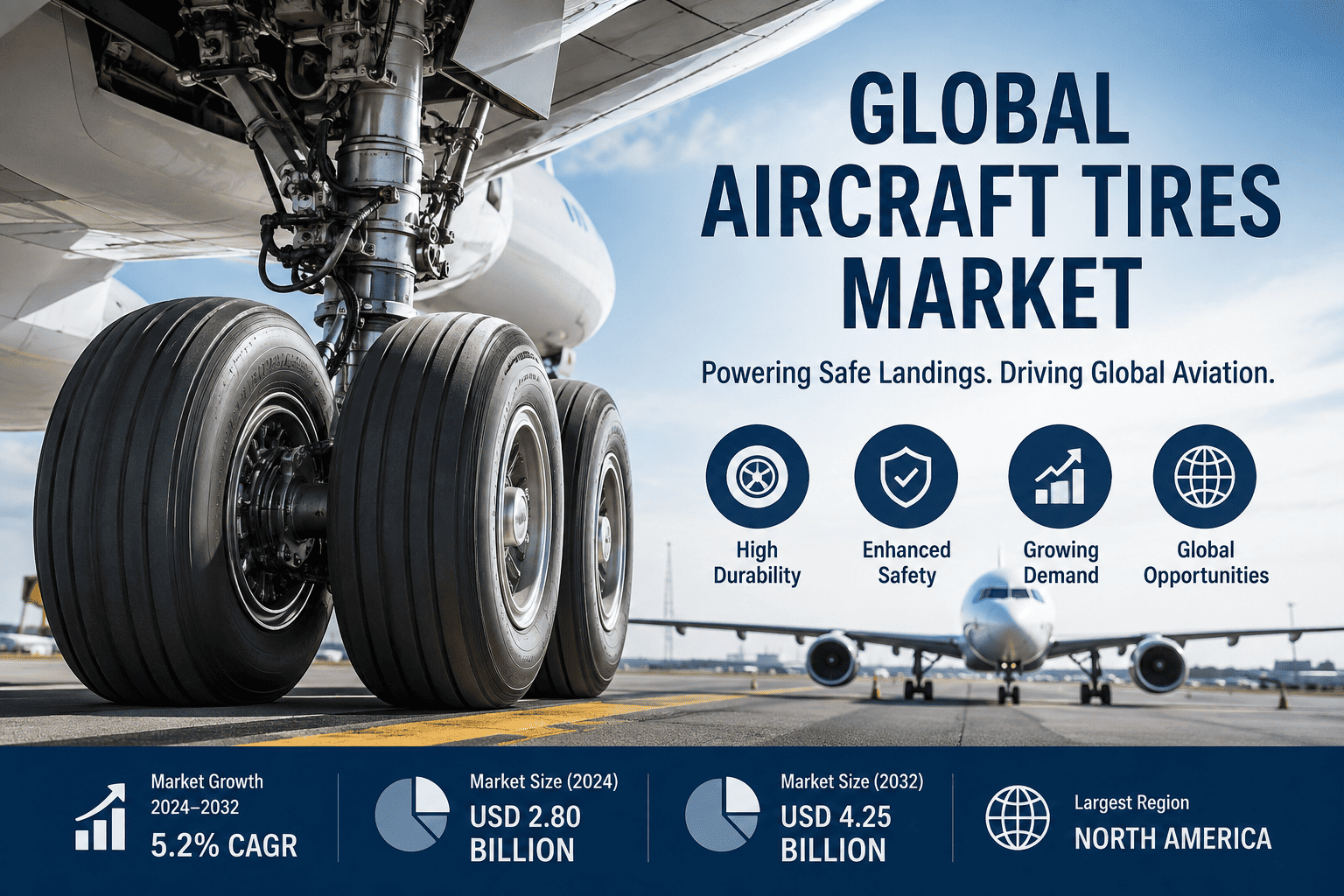
The Global aircraft tires market is gaining momentum as expanding air traffic, fleet modernization, and increasing aircraft utilization strengthen demand for reliable aviation components. According to 6Wresearch, the market was valued at USD 1.6 billion in 2025 and is projected to reach USD 2.3 billion by 2032, expanding at a CAGR of 5.10% during 2026–2032. North America remains the largest regional market, while Asia is projected to be the fastest-growing region.
Aircraft tires perform under exceptionally demanding conditions. They must handle heavy aircraft loads, high landing speeds, repeated takeoff and landing cycles, temperature changes, and varying runway conditions. As airlines and aircraft operators increasingly prioritize safety, operational efficiency, and lifecycle cost management, the importance of high-performance tires is rising throughout the aviation supply chain.
The market's development is also closely connected with aircraft manufacturing and maintenance activity. Growing airline fleets create OEM opportunities, while aging aircraft and intensive utilization support recurring aftermarket replacement demand. This combination provides the industry with a relatively broad foundation for long-term growth.
Advantages of Investing in Global Aircraft Tires Market Opportunities
Investment opportunities are becoming increasingly attractive because aircraft tire demand is supported by both new aircraft deliveries and replacement requirements. Commercial aircraft currently represent the largest aircraft segment, accounting for nearly 65% of the market in 2025, while military aircraft tires are expected to record strong growth during the forecast period.
The aftermarket offers another compelling opportunity. As aircraft fleets become older and operators attempt to extend the useful life of existing aircraft, replacement cycles become increasingly important. The aftermarket segment is projected to grow at a CAGR of 6.5% between 2026 and 2032, creating opportunities for manufacturers, distributors, MRO providers, and specialized suppliers.
For investors, this creates a market where demand is not dependent solely on aircraft production. Even when new aircraft deliveries fluctuate, operating fleets continue to require maintenance and replacement tires. This recurring requirement can provide a more resilient demand base and support investments focused on long-term aviation infrastructure.
Why Buyers Prefer Aircraft Tires for Future Growth
Aircraft operators increasingly prefer tire solutions that combine safety, durability, performance, and cost efficiency. The economic pressure on airlines has made lifecycle costs particularly important, encouraging buyers to consider how tire durability and maintenance requirements affect overall operating expenses.
Radial tires currently lead the market, with approximately 60% of market share in 2025, due to their efficiency and performance characteristics. At the same time, bias tires are projected to be the fastest-growing construction segment, with a forecast CAGR of 7.5% from 2026 to 2032.
Product preferences are also shifting toward tubeless designs. Tubeless tires accounted for approximately 70% of the market in 2025 and are forecast to grow at a CAGR of 6.2% through 2032. Their reduced weight and safety advantages align with the aviation industry's continuing emphasis on operational efficiency and reliability.
Search Visibility Through Aircraft Tire Innovation
Innovation is becoming a major factor in the global aircraft tires market. Manufacturers are increasingly exploring smart tire technologies capable of monitoring tire condition, pressure, and wear. Such technologies can give maintenance teams more visibility and support more proactive maintenance decisions.
The move toward digitalized maintenance is particularly significant because airlines are looking for ways to minimize unnecessary downtime. Real-time tire information could help operators identify potential maintenance requirements earlier, improve scheduling, and integrate tire data into broader aircraft maintenance systems.
Sustainability is another important innovation pathway. Manufacturers are exploring eco-friendly materials and production approaches that can reduce environmental impact without compromising the stringent performance requirements of aviation. The combination of smart technology and sustainable materials is expected to influence future product development significantly.
Demand and Benefits Across Aircraft Tire Segments
Demand within the global aircraft tires market differs according to construction, product type, aircraft category, platform, end user, and tire position. This segmentation creates opportunities for companies to develop specialized products for distinct aviation applications.
Fixed-wing aircraft dominate the platform segment, representing around 75% of the market in 2025. However, rotary-wing aircraft are projected to expand faster, supported by demand for military helicopters and commercial helicopter applications.
The OEM market remains important because new aircraft require tires during production and delivery. However, aftermarket demand is gaining momentum because tires must be replaced throughout an aircraft's operational life. This creates a continuous connection between fleet utilization and tire consumption.
Main tires account for the largest share by position, representing around 80% of the market in 2025. Nose and tail tires, although smaller segments, are projected to experience faster growth, highlighting the increasing demand for versatile tire solutions across different aircraft configurations.
Enhance User Experience with Better Aircraft Tire Performance
Aircraft tires are primarily an industrial component, but their performance can indirectly influence the passenger experience. Reliable tires contribute to safe landings, efficient ground operations, and smoother aircraft turnaround processes. For airlines, better tire performance can support operational consistency and help reduce maintenance-related interruptions.
The increasing adoption of advanced tire technologies can further enhance operational visibility. When maintenance teams have better information about tire condition, they can plan servicing more effectively and potentially reduce unexpected replacement requirements.
This shift toward predictive maintenance is particularly relevant as airlines seek greater fleet utilization. Instead of treating tire replacement as an isolated maintenance task, operators can increasingly incorporate tire condition into broader asset-management strategies. This creates additional value for manufacturers capable of supplying technologically advanced solutions.
Lifestyle Benefits from Expanding Aviation Demand
The expansion of air travel is one of the fundamental forces supporting the global aircraft tires market. As more people travel by air for business, tourism, education, and other purposes, aircraft utilization increases. Higher utilization ultimately generates greater demand for maintenance and replacement components, including aircraft tires.
Growing middle-class populations and the expansion of low-cost carriers are supporting air travel demand in developing markets. These trends encourage airlines to expand their fleets and increase flight frequencies, creating additional opportunities throughout the aviation supply chain.
Asia is particularly important to this outlook. The region is projected to grow at approximately 7.0% CAGR between 2026 and 2032, supported by expanding aviation activity and infrastructure investments in major markets such as China and India. This rapid expansion creates significant opportunities for aircraft tire manufacturers and aftermarket suppliers.
Infrastructure Development Strengthens Market Potential
Infrastructure development is another important pillar of future aircraft tire demand. Airport expansion, runway modernization, MRO facility development, airline fleet investments, and broader aviation infrastructure improvements can increase aircraft movements and utilization.
North America currently holds the largest regional position, supported by a mature aviation ecosystem and strong infrastructure. Its established airline, airport, and MRO networks provide a substantial foundation for aircraft tire demand. Meanwhile, Asia's faster growth rate demonstrates how infrastructure expansion can create new opportunities in developing aviation markets.
MRO infrastructure is especially important for the aftermarket. As maintenance providers become more sophisticated, aircraft operators can benefit from improved inspection, replacement planning, and inventory management. This creates opportunities for companies that can supply not only tires but also technology, maintenance services, and data-driven solutions.
Sustainability and Technology Shape Future Growth
The future of the global aircraft tires market will increasingly depend on the industry's ability to balance performance with sustainability. Aviation companies face pressure to reduce environmental impacts while maintaining extremely high safety and reliability standards.
Smart tire technologies could become increasingly important because real-time monitoring can support tire-health assessment and maintenance forecasting. At the same time, sustainable materials may help manufacturers address environmental expectations and changing regulatory requirements.
Raw-material costs and regulatory compliance remain challenges. The industry must deal with material price fluctuations and stringent aviation safety requirements, which can increase manufacturing and compliance costs. However, these pressures can also encourage innovation and reward companies that improve manufacturing efficiency and product durability.
Wrapping Up
The global aircraft tires market is moving toward a promising growth phase supported by rising air travel, expanding aircraft fleets, increasing MRO activity, replacement demand, and continued investment in aviation infrastructure. With the market projected to grow from USD 1.6 billion in 2025 to USD 2.3 billion by 2032, the industry presents meaningful opportunities for manufacturers, suppliers, investors, and aviation service providers.
North America's established aviation ecosystem provides a strong current demand base, while Asia offers substantial future expansion potential. At the product level, radial and tubeless tires remain important market segments, while faster-growing categories such as bias, rotary-wing, military, and aftermarket applications can create additional opportunities.
For businesses considering procurement or investment, acting early can provide an advantage as aviation operators increasingly seek durable, efficient, sustainable, and digitally enabled tire solutions. The combination of recurring replacement demand and long-term aviation expansion makes the global aircraft tires market an attractive area to watch—and a strategic market in which buying and positioning now could support future growth.
FAQs
1. What is the current size of the global aircraft tires market?
The global aircraft tires market was valued at approximately USD 1.6 billion in 2025 and is projected to reach USD 2.3 billion by 2032. The market is expected to expand at a CAGR of 5.10% during 2026–2032, supported by aviation expansion, fleet modernization, and replacement demand.
2. What factors are driving the global aircraft tires market?
The global aircraft tires market is driven by increasing air traffic, expanding commercial fleets, aircraft modernization, rising aircraft utilization, and growing aftermarket requirements. Demand for durable, lightweight, safe, and technologically advanced tires is also encouraging manufacturers to develop higher-performance products.
3. Which region will experience the fastest aircraft tire growth?
Asia is expected to be the fastest-growing region in the global aircraft tires market, with an estimated CAGR of 7.0% from 2026 to 2032. Expanding air travel and aviation infrastructure investments in China, India, and other Asian markets are major contributors.
4. Why are tubeless tires important in the aircraft tires market?
Tubeless tires are increasingly important because they offer advantages including lower weight and enhanced safety characteristics. They represented approximately 70% of the global aircraft tires market in 2025 and are forecast to grow at a CAGR of 6.2% through 2032.
5. Which aircraft segment has the highest aircraft tire demand?
Commercial aircraft represent the largest segment of the global aircraft tires market, accounting for nearly 65% of market share in 2025. High aircraft utilization, passenger traffic, and recurring maintenance requirements contribute significantly to commercial aircraft tire demand.
6. How important is the aftermarket to aircraft tire growth?
The aftermarket is becoming increasingly important because aircraft tires require replacement throughout their operational lifecycle. Aging fleets and intensive aircraft utilization are supporting replacement demand, with the aftermarket segment projected to grow at a CAGR of 6.5% during 2026–2032.
7. How is technology changing the global aircraft tires market?
Technology is encouraging the development of smart aircraft tires that can monitor conditions such as pressure and wear. These capabilities can improve maintenance planning, support predictive servicing, and help airlines increase operational visibility while reducing avoidable maintenance disruptions.
8. What challenges could limit aircraft tire market growth?
The global aircraft tires market faces challenges from raw-material price fluctuations, stringent safety regulations, environmental requirements, and manufacturing costs. Companies must continually balance product performance and regulatory compliance with competitive pricing and increasing expectations for sustainability.
9. Why is sustainability becoming important for aircraft tires?
Sustainability is becoming increasingly important as aviation companies seek to reduce environmental impacts across their operations and supply chains. Aircraft tire manufacturers are exploring sustainable materials and improved production processes while maintaining the safety and performance standards required by aviation.
10. Is now a good time to invest in the aircraft tires market?
The aircraft tires market offers promising long-term investment potential because demand is supported by fleet expansion, air travel growth, MRO activity, and recurring replacement requirements. Investments focused on advanced, durable, sustainable, and smart tire solutions may benefit from these structural industry trends through 2032.
Read more..

 English
 Arabic
 French
 Spanish
 Portuguese
 Deutsch
 Turkish
 Italiano
 Russian
 Romaian
 Portuguese (Brazil)
 Greek
Greek
 Bengali