


Best Wire for House Wiring in India: Top Brands, Types & Buying Tips
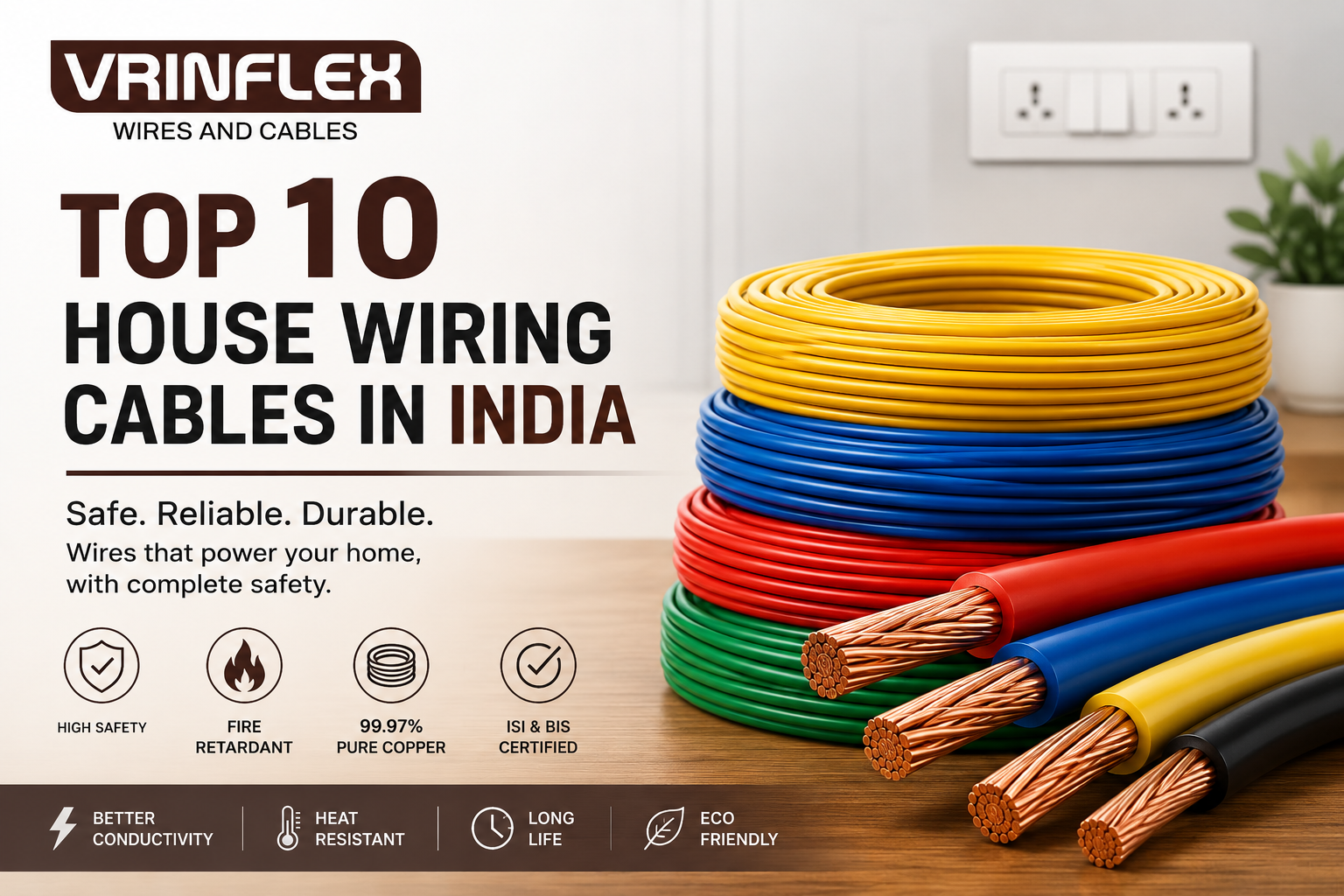
Choosing the best wire for house wiring in India isn’t simply about picking a popular brand or the thickest cable available. The right wire affects electrical safety, energy efficiency, appliance performance, and the long-term reliability of your home.
Whether you’re wiring a new house, renovating an apartment, or replacing old electrical cables, you’ll want wires that can handle everyday loads without overheating. Copper conductors, good-quality insulation, the correct wire size, and proper certification all matter.
What Is the Best Wire for House Wiring in India?
For most residential installations, high-quality copper wires with suitable PVC or flame-retardant insulation are a practical choice. Copper offers good electrical conductivity and is widely used for residential circuit and point wiring.
The “best” wire, however, depends on the circuit. Lighting, sockets, air conditioners, geysers, kitchen appliances, and heavy-load equipment don’t necessarily require the same conductor size.
According to the Central Public Works Department (CPWD) electrical specifications, copper-conductor cables are used for submain, circuit, and point wiring, with PVC insulation conforming to BIS specifications. CPWD also specifies minimum wiring sizes of 1.5 sq. mm for light wiring and 4 sq. mm for power wiring in its referenced specifications.
So, instead of asking only “Which wire is best?”, ask: Which wire is best for this particular circuit and load?
Why Copper Wire Is Commonly Preferred for Home Wiring
Copper is a popular choice for residential wiring because it combines conductivity, flexibility, and durability.
1. Excellent Conductivity
Copper carries electrical current efficiently and generally offers low electrical resistance. This makes it suitable for circuits supplying lights, fans, sockets, and household appliances.
2. Better Flexibility
Modern house wiring often involves bends around conduits, switchboards, and junction boxes. Flexible stranded copper wires are easier to handle during installation than rigid conductors.
3. Reliable Connections
Copper works well with commonly used electrical terminals and accessories when the connections are correctly installed and tightened.
4. Long-Term Performance
A good-quality copper wire with appropriate insulation can provide reliable service for years when it’s correctly sized, installed, and protected.
Wire Size Matters More Than Many Homeowners Realize
One of the biggest mistakes during electrical installation is choosing wire size based only on price.
The conductor size should be selected according to the expected electrical load, installation method, circuit length, voltage drop, and applicable electrical requirements.
Common residential sizes may include:
-
1.0–1.5 sq. mm: Lighting and light-duty circuits, depending on design
-
2.5 sq. mm: General socket circuits in many residential applications
-
4 sq. mm: Higher-load circuits
-
6 sq. mm or above: Heavy-load applications where the electrical design requires it
These are general examples, not a substitute for load calculations by a qualified electrician. A high-power air conditioner or electric water heater may need a dedicated circuit and appropriately sized cable.
PVC, FR and HFFR: Which Insulation Should You Choose?
The conductor is only part of the story. Insulation protects the conductor and helps reduce electrical and fire-related risks.
PVC Insulated Wires
PVC-insulated wires are widely used in residential electrical installations. They’re practical, economical, and available in different sizes.
BIS lists IS 694:2010 for PVC-insulated unsheathed and sheathed cables/cords with rigid and flexible conductors.
Flame-Retardant Wires
Flame-retardant insulation is designed to reduce the propagation of flame along cables. For a modern home, especially where wiring is installed inside concealed conduits, choosing a reputable flame-retardant product can be a sensible upgrade.
HFFR Cables
For projects where smoke and halogen-related considerations are important, HFFR cables are another option. BIS describes IS 17048:2018 as covering halogen-free flame-retardant cables for working voltages up to and including 1100 V.
In reality, you don’t need the most expensive cable for every circuit. You need the right certified cable for the application.
How to Choose the Best Wire for Home Wiring in India
Before buying electrical wires, check these factors:
Check the Conductor Material
Look for quality copper conductors from a reliable manufacturer. Avoid suspiciously cheap products where conductor quality or copper content is unclear.
Check BIS Compliance
Standards and certification provide an important quality benchmark. Look for appropriate BIS marking and verify the relevant standard for the product.
Select the Correct Size
Don’t automatically use a thicker wire everywhere. Proper sizing should be based on load calculations and installation conditions.
Consider Insulation Quality
Look for durable insulation that suits the installation environment. Kitchens, utility areas, concealed wiring, and high-load circuits may require different considerations.
Buy From a Reliable Manufacturer
A reputable manufacturer is more likely to maintain consistent conductor dimensions, insulation quality, testing, and manufacturing controls.
Practical Example: Wiring a Typical Home
Imagine a three-bedroom house with LED lighting, fans, televisions, refrigerators, washing machines, an air conditioner, and a geyser.
Using the same wire size throughout the entire house wouldn’t be the smartest approach.
A better electrical design separates circuits according to load. Lighting circuits can use appropriately sized smaller conductors, while socket and high-power appliance circuits may require larger conductors and dedicated protection.
This approach improves safety and makes troubleshooting easier later.
FAQs About the Best Wire for House Wiring in India
Which wire is best for home wiring in India?
High-quality copper wire with suitable insulation and the correct conductor size is commonly preferred for residential wiring. The exact specification depends on the circuit load and installation requirements.
Is copper wire better than aluminium for house wiring?
Copper is widely preferred for residential point and circuit wiring because of its conductivity and flexibility. However, the appropriate conductor depends on the specific application and electrical design.
What wire size is commonly used for house wiring?
Common residential wiring sizes include 1.5 sq. mm, 2.5 sq. mm, 4 sq. mm and larger sizes for higher loads. The correct size should be determined by load and installation calculations.
Is flame-retardant wire better for home wiring?
Flame-retardant products can provide additional fire-performance characteristics. However, certification, conductor quality, correct sizing, and professional installation remain equally important.
How can I identify a good-quality electrical wire?
Check the conductor material, insulation quality, manufacturer information, applicable BIS standard, certification/marking, and product specifications. Avoid unverified products with unusually low prices.
Conclusion
Finding the best wire for house wiring in India is ultimately about making the right technical choice rather than simply buying the most expensive cable. Quality copper conductors, appropriate insulation, correct sizing, recognized standards, and professional installation all work together to create a safer electrical system.
For most homes, start by calculating the expected load and dividing the installation into suitable circuits. Then choose certified wires from a trustworthy manufacturer.

 Arabic
 French
 Spanish
 Portuguese
 Deutsch
 Turkish
 Dutch
Dutch
 Italiano
 Russian
 Romaian
 Portuguese (Brazil)
 Greek
Greek
 Bengali