


How Do High-Grade Bed and Bath Textiles Improve Sleep Quality and Daily Hygiene?
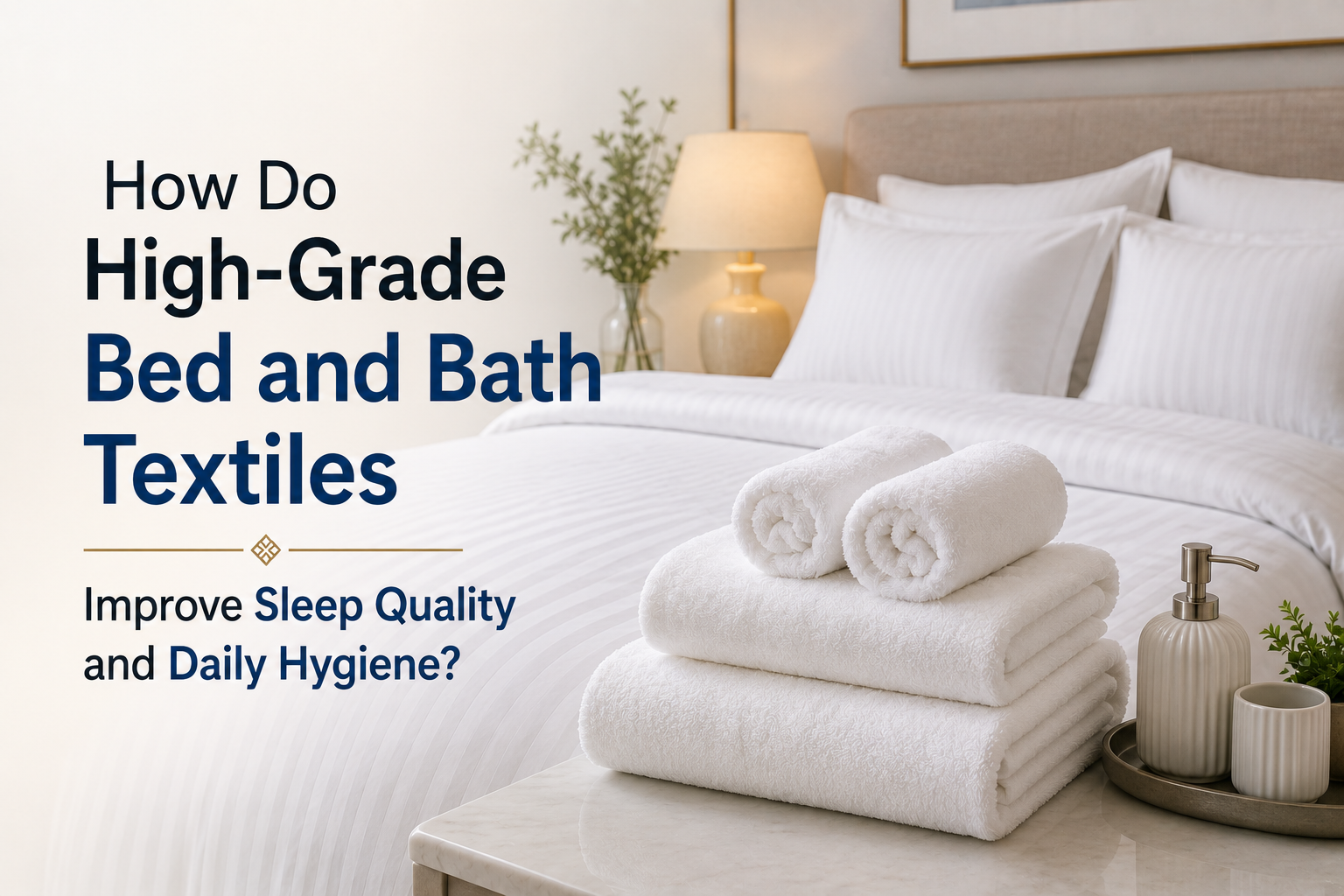
Creating a peaceful, restorative living space requires looking past temporary interior design trends to focus on the tangible quality of daily household fabrics. Because the human body spends roughly one-third of its life in direct contact with bed sheets and relies on bath towels multiple times a day, textile quality directly influences physical recovery, thermal balance, and personal hygiene. In regions with warm climates and heavy air-conditioning usage, choosing breathable bed linen crafted from premium natural fibers is essential for consistent sleep regulation.
Understanding how fiber characteristics, weaving structures, yarn engineering, and density specifications function allows homeowners, interior designers, and procurement managers to choose long-lasting household textiles with absolute confidence.
What Role Do Breathable Bed Sheets Play in Nighttime Temperature Regulation?
Quality sleep requires a gradual drop in core body temperature. Synthetic bedding materials often trap radiated heat and skin moisture, creating a warm microclimate under the covers that causes nighttime awakening and restless body movement.
1. Cotton Fiber Staple Length and Surface Integrity
The structural foundation of any high-performing bed sheet is the raw cotton fiber length:
· Long-Staple and Extra-Long Staple (ELS) Cotton: Yields ultra-smooth, continuous yarns with far fewer exposed fiber ends. This fine spinning capability creates a naturally soft, friction-free surface that resists pilling, holds high tensile strength, and softens with every wash.
· Short-Staple Cotton: Uses shorter raw fibers that require continuous twisting during spinning to create thread. These fragile splices break during routine laundry cycles, causing rough surface textures, fuzzing, and premature fabric thinning.
2. Weave Architecture: Crisp Percale vs. Luminous Sateen
The structural arrangement of warp and weft yarns on the loom dictates tactile feel, weight, and airflow:
· Percale Weave (One-Over, One-Under Pattern): Delivers a matte, cool-to-the-touch surface with a crisp hand feel. Its plain grid structure permits continuous air circulation, making it ideal for hot sleepers and warm climates.
· Sateen Weave (Three-or-Four-Over, One-Under Pattern): Exposes more vertical surface thread area, resulting in a gentle sheen, silky drape, and soft touch. It offers cozy insulation in heavily air-conditioned spaces.
3. Thread Count Accuracy vs. Single-Ply Construction
Thread count measures the total individual threads woven per square inch of fabric. While marketing narratives often equate extreme thread counts (800+) with higher luxury, these items frequently rely on multi-ply threads made by twisting short-staple fibers together. This construction yields thick, stiff bedding that blocks air movement. Single-ply fabrics constructed between 300 and 600 thread count deliver optimal breathability, softness, and long-term durability.
What Essential Components Form a Functionally Complete Bedding Setup?
A well-designed sleep environment uses specialized layer components that work together to maintain hygiene, enhance body support, and safeguard your mattress investment.
· Fitted and Flat Sheets: Deep corner pockets paired with wide elastic bands keep fitted sheets securely attached over thick mattresses and toppers. Smooth flat sheets act as a lightweight, easy-to-wash barrier between your body and top blankets.
· Duvets and Duvet Covers: Pairing a lightweight, temperature-regulating duvet insert with a removable cotton cover keeps your sleeping area clean and allows for simple wash routines.
· Pillows and Protective Covers: Supportive pillows align the neck and spine according to your sleeping style. Encasing them in smooth cotton pillowcases protects hair and skin from friction while keeping fillers clean.
· Mattress Toppers and Protectors: High-density toppers add soft cushioning to firm mattresses, while breathable waterproof protective layers block sweat, spills, and dust mites from reaching the mattress core.
How Does Towel Weight and Loop Construction Impact Daily Bathing Hygiene?
Bath towels experience frequent moisture exposure, body friction, and rigorous washing cycles. Selecting top-tier bathroom linen requires evaluating GSM specifications, loop formation methods, and edge seams.
Evaluating Grams per Square Meter (GSM)
GSM serves as the international benchmark for measuring fabric density, weight, and water absorption rate:
|
GSM Range |
Classification |
Common Usage Scenario |
Performance Characteristics |
|
300 – 400 GSM |
Lightweight |
Gym, travel, & pool towels |
Dries very fast, packs compactly |
|
450 – 550 GSM |
Medium Weight |
Standard residential bath towels |
Ideal balance of softness & drying time |
|
600 – 800 GSM |
Heavyweight |
Luxury home & spa bath towels |
Exceptionally plush, thick, & highly absorbent |
Yarn Spinning Techniques and Edge Construction
· Zero-Twist Cotton Loops: Un-twisted cotton yarns expose maximum surface area to water drops, allowing towels to absorb moisture quickly while staying light and soft.
· Double-Lock Hemming: Reinforced double-stitched border hems stop unraveling and fraying along the edges during frequent laundering.
What Fabric Standards Are Required for Commercial and Institutional Use?
Commercial entities require specialized fabrics built to withstand heavy industrial laundering, aggressive stain treatments, and daily high-heat press ironing while maintaining clean presentation standards.
Healthcare and Clinical Linen Demands
High-grade hospital linen items must endure high-temperature sanitization cycles (60°C to 90°C) and disinfectant chemicals without shrinking, tearing, or losing structural shape.
Food Service and Event Dining Needs
Stain-releasing collections for dining venues feature dense weave structures that release liquid spills easily during washing while staying flat under high-heat ironing.
Commercial Aviation Interior Textiles
Engineered aviation textiles focus on fire-retardant safety fibers, compact folding dimensions, and strong tear resistance to meet industry safety rules and busy flight schedules.
How Can You Extend the Life and Softness of Natural Cottons?
Following correct laundering habits preserves fiber strength, fabric absorbency, and tactile softness over years of use:
1. Choose Mild Liquid Detergents: Liquid soaps dissolve fully in water, preventing powdery chemical buildup from settling inside cotton fibers and causing stiffness.
2. Skip Fabric Softeners on Towels: Chemical softeners coat cotton loops in a thin silicone layer, which severely reduces water absorbency over time.
3. Wash at Moderate Water Temperatures: Washing sheets and towels between 40°C and 60°C removes skin oils and dust mites while maintaining natural fiber elasticity.
4. Use Vinegar for Monthly Buildup Removal: Adding half a cup of distilled white vinegar to the rinse cycle once a month strips leftover detergent residue, naturally softening towel loops.
Frequently Asked Questions
Why do some new cotton sheets feel stiff or develop pilling?
Stiffness in new sheets often comes from harmless finishing starches used during weaving, which wash out quickly. Surface pilling occurs when short cotton fibers break and tangle into tiny balls. Selecting long-staple cotton sheets prevents pilling because continuous fibers resist snapping.
How often should home bed sheets and bath towels be laundered?
Bed sheets should be washed every 7 to 10 days to remove skin cells, dust, and sweat. Bath towels should be laundered after every 3 to 4 uses and hung completely flat in a ventilated space to air dry.
Why is natural cotton preferable over synthetic microfiber for bedding?
Natural cotton is porous, breathable, and moisture-wicking, helping regulate body temperature during sleep. Synthetic microfiber traps body heat and moisture against the skin, making it uncomfortable in warm environments.
Final Thought
Investing in well-crafted home textiles transforms daily sleep and bathing routines into reliable, comfortable experiences. By prioritizing long-staple cotton fibers, single-ply thread counts, and appropriate GSM density ratings, you build a bathroom linen and bedding collection that maintains its softness, strength, and visual appeal wash after wash.

 English
 Arabic
 Spanish
 Portuguese
 Deutsch
 Turkish
 Dutch
Dutch
 Italiano
 Russian
 Romaian
 Portuguese (Brazil)
 Greek
Greek
 Bengali