


Why Athlete Travel Schedules Are Becoming a Performance Challenge
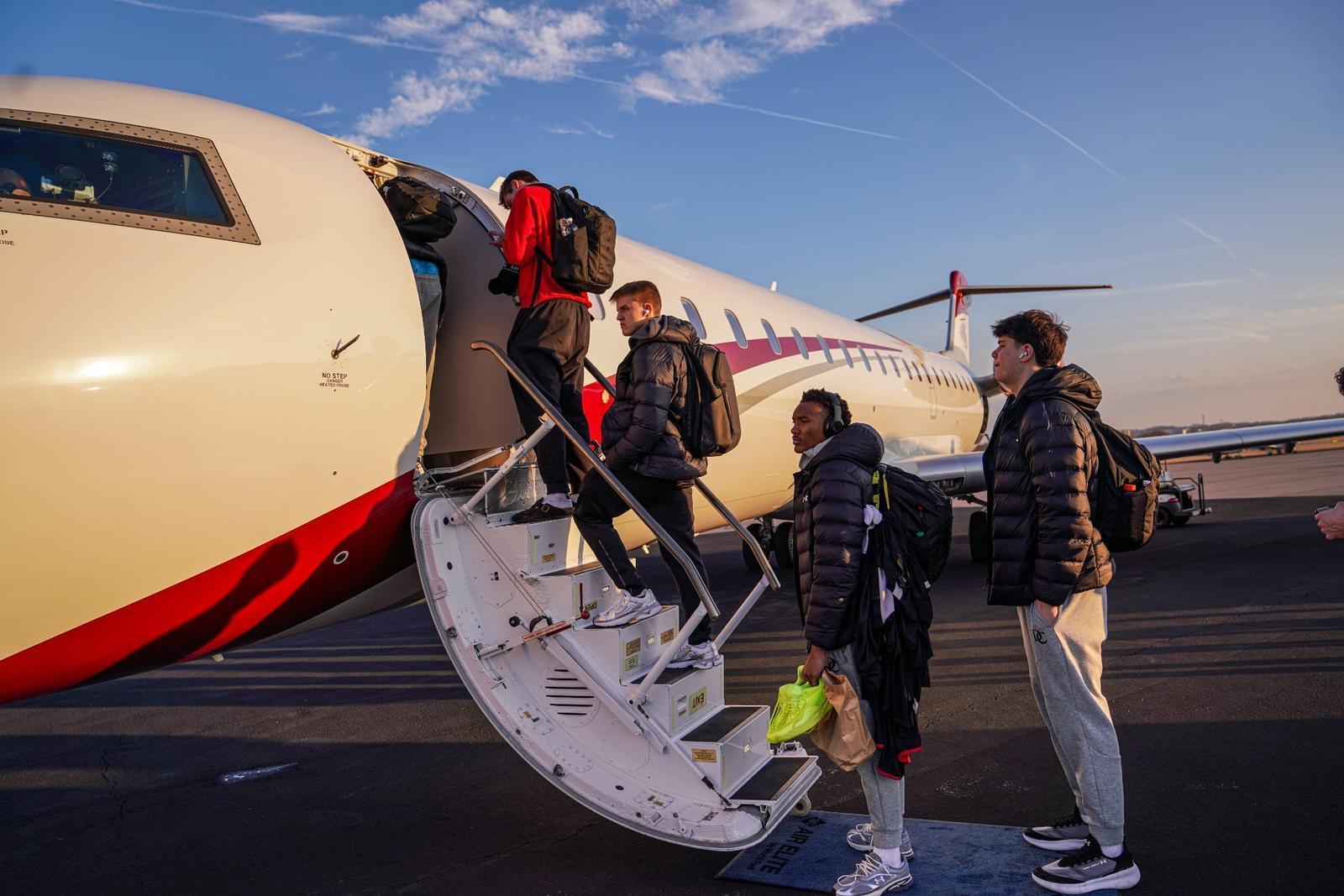
For a professional athlete, the competition does not always begin when they walk onto the field, court, track, or pool. Sometimes it begins several days earlier, inside an airport terminal, on a long-haul flight, or in a hotel room where the athlete is trying to sleep while their body clock still thinks it is daytime.
Modern sport has become increasingly international. Athletes may compete in different cities every few days, cross multiple time zones during a season, and move directly from one tournament to another. The result is a growing challenge that is easy to underestimate: travel itself can affect preparation, recovery, sleep, and ultimately performance.
Research supports this concern. A study examining athletes after 21 hours of travel across eight time zones found that eastward travel produced greater jet lag, fatigue and sleep disruption, with sprint and intermittent running performance particularly affected during the first 72 hours after arrival.
For Indian athletes, this issue can become especially relevant when domestic competitions are followed by international events in Europe, Asia, Australia or the Americas. The challenge is not simply covering the distance. It is arriving physically and mentally ready to perform.
Why Athlete Travel Is Becoming a Bigger Performance Issue
The Hidden Cost of Constant Movement
A travel schedule can look manageable on paper.
An athlete might have a competition on Sunday, fly on Monday, train on Tuesday, attend media commitments on Wednesday and compete again on Thursday. There may be no obvious problem with the schedule until recovery time is examined more closely.
Airports, security checks, transfers, delays, uncomfortable seating, changes in meal timing and disrupted sleep all add stress. Even when an athlete spends several hours sitting rather than physically exercising, the body still has to deal with a major change in routine.
The first problem is sleep disruption.
Sleep is central to physical recovery, reaction time, concentration and emotional regulation. Long-haul eastward travel has been shown to reduce sleep duration and quality in elite athletes, with one study of national-level track cyclists finding particularly noticeable disruption during the first 48 hours after travel.
Jet lag makes the situation more complicated because the athlete's internal body clock does not immediately adjust to local time.
Imagine an Indian athlete flying to Europe for a competition. At the destination, the team may schedule dinner at 8 p.m., but the athlete's biological system may still be operating according to the timing of home. The athlete is technically following the local schedule while their body is following another one.
This mismatch can affect sleep, alertness and training quality.
Travel direction also matters. Research involving team-sport athletes has found that eastward travel can create greater disruption than westward travel, particularly when several time zones are crossed.
However, jet lag is not the only issue.
Travel fatigue can occur even without major time-zone changes.
A domestic athlete travelling from Delhi to Mumbai may not experience jet lag, but a late flight, reduced sleep, traffic, airport waiting time and an early training session the next morning can still reduce recovery.
This distinction matters because teams sometimes focus heavily on time zones while overlooking the basic fatigue created by frequent movement.
Another problem is competition density.
Athletes increasingly compete in leagues, tours, qualification events and international championships that leave limited gaps between appearances. When travel is placed between these events, the athlete may have very little time to recover before the next performance.
Recent research on the WNBA illustrates why this matters. A 2026 analysis of 3,489 regular-season games from 2007 to 2024 found that greater recent travel distance was associated with worse away-team performance, while the authors also highlighted the importance of circadian disruption as schedules become more congested.
The effect is not necessarily dramatic in every athlete or every competition. That is important.
Travel does not automatically mean poor performance. Individual sleep patterns, fitness, travel direction, competition timing and recovery strategies all influence the outcome.
For example, research on German junior rowers travelling westward across five time zones found that jet-lag symptoms were strongest after arrival but did not appear to prevent successful competition performance. Eleven of 13 top-three placings were achieved during the championships studied.
That tells us something useful: travel is a performance risk, not a guaranteed performance failure.

The challenge is therefore to manage the risk intelligently.
This is becoming increasingly important for athletes and fans following international sporting calendars through digital platforms. Someone checking gold365 bonus for sports-related information may see only the final fixture and result, but behind that short match entry can be thousands of kilometres of travel, disrupted routines and carefully planned recovery.
How Athletes and Teams Can Reduce Travel-Related Performance Loss
The solution is not simply to tell athletes to “sleep more.” Travel management needs to be treated as part of performance planning.
The first step is planning around the competition rather than simply around the flight.
A team should work backward from the event.
If an athlete is competing on Saturday evening, staff should consider:
- When the athlete should arrive
- How many time zones will be crossed
- Whether the journey is eastward or westward
- When training should take place
- When meals should be scheduled
- How much sleep is realistically available
- Whether the athlete needs a lighter first training session
- How much recovery time exists after arrival
This approach turns travel from an administrative task into a performance variable.
Sleep preparation can begin before departure.
For eastward travel, gradually shifting the sleep schedule earlier before the journey can help the body begin adjusting to the destination. Research involving elite mountain bikers found that advancing the sleep-wake schedule before a seven-hour eastward flight helped preserve sleep and physical performance after arrival.
Light exposure can also be useful when carefully timed.
A study examining eastward travel across eight time zones found that a combined light-exposure and sleep-hygiene intervention improved several measures of team-sport performance during the days following travel.
However, these strategies should be individualized. An athlete should not randomly use bright light, supplements or sleep aids without professional guidance.
Training should also be adjusted.
One of the common mistakes is expecting athletes to land in a new country and immediately complete a normal high-intensity session.
A better approach may be to reduce training intensity initially and gradually return to normal workloads as the athlete adapts.
Monitoring tools can help here. Teams can track sleep duration, perceived fatigue, resting measures, training load and athlete feedback. The objective is not to collect data simply because technology is available. The objective is to identify when an athlete is not recovering normally.
Nutrition is another important part of travel management.
Long journeys can disrupt normal meal patterns. Athletes may also rely on airport food or convenience meals that do not match their nutritional requirements.
Teams can reduce this problem by preparing meals and snacks in advance, maintaining hydration and avoiding unnecessary changes to normal nutrition routines.
For athletes who regularly follow sports information through services such as gold365 online the contrast is interesting: fans often see a simple fixture time, while athletes and performance staff have to work around the biological demands behind that fixture.
Travel logistics matter too.
A delayed flight can create a chain reaction.
A two-hour delay can mean a missed transfer. That can lead to a late hotel arrival, reduced sleep, a changed meal schedule and a shortened recovery window.
Professional teams therefore increasingly need contingency plans.
A practical travel-performance checklist can include:
- Review the competition time before booking travel.
- Calculate the number and direction of time zones crossed.
- Establish the target sleep schedule before departure.
- Plan hydration and meals for the journey.
- Avoid unnecessary training immediately after long-haul travel.
- Monitor sleep and fatigue after arrival.
- Adjust training according to recovery rather than the calendar alone.
- Build backup plans for flight delays and equipment problems.
- Give athletes enough quiet time after arrival.
- Review what worked after every major trip.
This last step is particularly valuable.
Every athlete responds differently. One person may adjust quickly to a new time zone, while another may need several days. Chronotype, previous sleep debt, travel direction and individual recovery capacity can all influence the response.
Data can help teams identify those patterns over an entire season.
For example, if an athlete consistently records poor sleep after eastward travel but performs normally after westward travel, the support team can adapt future preparation around that pattern.
The same principle can be applied to 365 win-style digital sports environments where users follow schedules across different competitions, but the important distinction remains that sporting performance decisions should rely on verified medical, scientific and coaching information rather than entertainment platforms.
Common myths about athlete travel
There are several misconceptions worth correcting.
- Myth: Every athlete needs the same number of recovery days.
Reality: Recovery varies according to the athlete, journey, direction, competition and previous workload. - Myth: Jet lag is the only travel problem.
Reality: Travel fatigue can occur even when few or no time zones are crossed. - Myth: Athletes should train normally immediately after landing.
Reality: Training intensity may need temporary adjustment after demanding journeys. - Myth: More supplements automatically solve travel fatigue.
Reality: Sleep, timing, light exposure, nutrition and sensible scheduling are fundamental. - Myth: Travel affects every sport in exactly the same way.
Reality: The performance consequences depend on the physical and technical demands of the sport.
A final issue is scheduling fairness.
When competitions are organized close together across distant locations, some athletes may face much heavier travel burdens than their opponents. This can create a competitive imbalance even when both sides technically have the same number of matches.
That is why scheduling decisions should increasingly consider recovery windows, travel distance and time-zone changes alongside television requirements and venue availability.
Frequently Asked Questions
Why does travel affect athlete performance?
Travel can disrupt sleep, recovery, nutrition, hydration and normal training routines. Long-distance travel across time zones can additionally cause jet lag and circadian disruption.
How long does jet lag affect athletes?
There is no universal recovery period. Studies have reported meaningful sleep and performance disruption for several days after long-haul travel, particularly following eastward journeys. One study of elite soccer athletes found sleep remained negatively affected for up to five days after seven-time-zone eastward travel.
Is eastward travel worse than westward travel for athletes?
Research generally suggests eastward travel can create stronger circadian disruption because the body must adjust to an earlier schedule. However, the effect varies between individuals and sports.
Can athletes prevent jet lag completely?
Probably not in every situation. However, careful sleep scheduling, appropriately timed light exposure, sensible training adjustments and good travel routines can reduce its impact. A recent review of 89 studies found that sleep disruption, fatigue and physical-performance changes were among the most commonly reported travel effects.
Should athletes use sleeping pills or melatonin when travelling?
Athletes should not self-prescribe sleep medication or supplements. Any sleep-related intervention should be discussed with an appropriately qualified sports physician or medical professional, particularly because athletes may be subject to anti-doping rules and medication restrictions.
Can frequent travel affect Indian athletes differently?
It can, depending on the competition route. An athlete travelling between Indian cities may primarily face travel fatigue, while journeys from India to Europe, North America or Australia can involve substantial time-zone changes. The direction, duration and timing of each trip should therefore be considered individually.
How can sports teams manage travel better?
The strongest approach is to integrate travel planning with training, sleep, nutrition and competition scheduling. Teams should monitor individual responses and use previous travel data to improve future plans.
For fans using platforms such as gold365 vip to keep track of sporting events, the visible schedule is only one part of the story. Behind every fixture is a recovery plan that can influence how prepared an athlete is when competition begins.
Key takeaways:
- Travel is now an important part of sports-performance management.
- Long-haul eastward travel can significantly disturb sleep and circadian rhythms.
- Travel fatigue can occur even without crossing multiple time zones.
- Competition density can make recovery more difficult.
- Sleep planning should begin before major international journeys.
- Training and nutrition may need temporary adjustments after travel.
- Individual athlete responses should be monitored rather than assuming one solution works for everyone.
- Competition organizers should consider travel burden when building schedules.
Conclusion
The modern athlete is expected to perform across increasingly demanding schedules, often while moving between cities and countries with very little recovery time. That makes travel management more than a logistical concern. It is now part of preparation itself.
The strongest teams recognize that performance begins before the athlete reaches the venue. They plan sleep, training, nutrition, transport and recovery together, while using individual data to understand how each athlete responds.
As international competition continues to grow, smarter travel planning could become one of the simplest ways to protect athlete health and performance. The goal is not to eliminate travel. It is to make sure that when athletes finally arrive at the starting line, their bodies are ready to compete.

 Arabic
 French
 Spanish
 Portuguese
 Deutsch
 Turkish
 Dutch
Dutch
 Italiano
 Russian
 Romaian
 Portuguese (Brazil)
 Greek
Greek
 Bengali