


Do You Really Need a Science Tutor in Dubai? Here's How to Tell
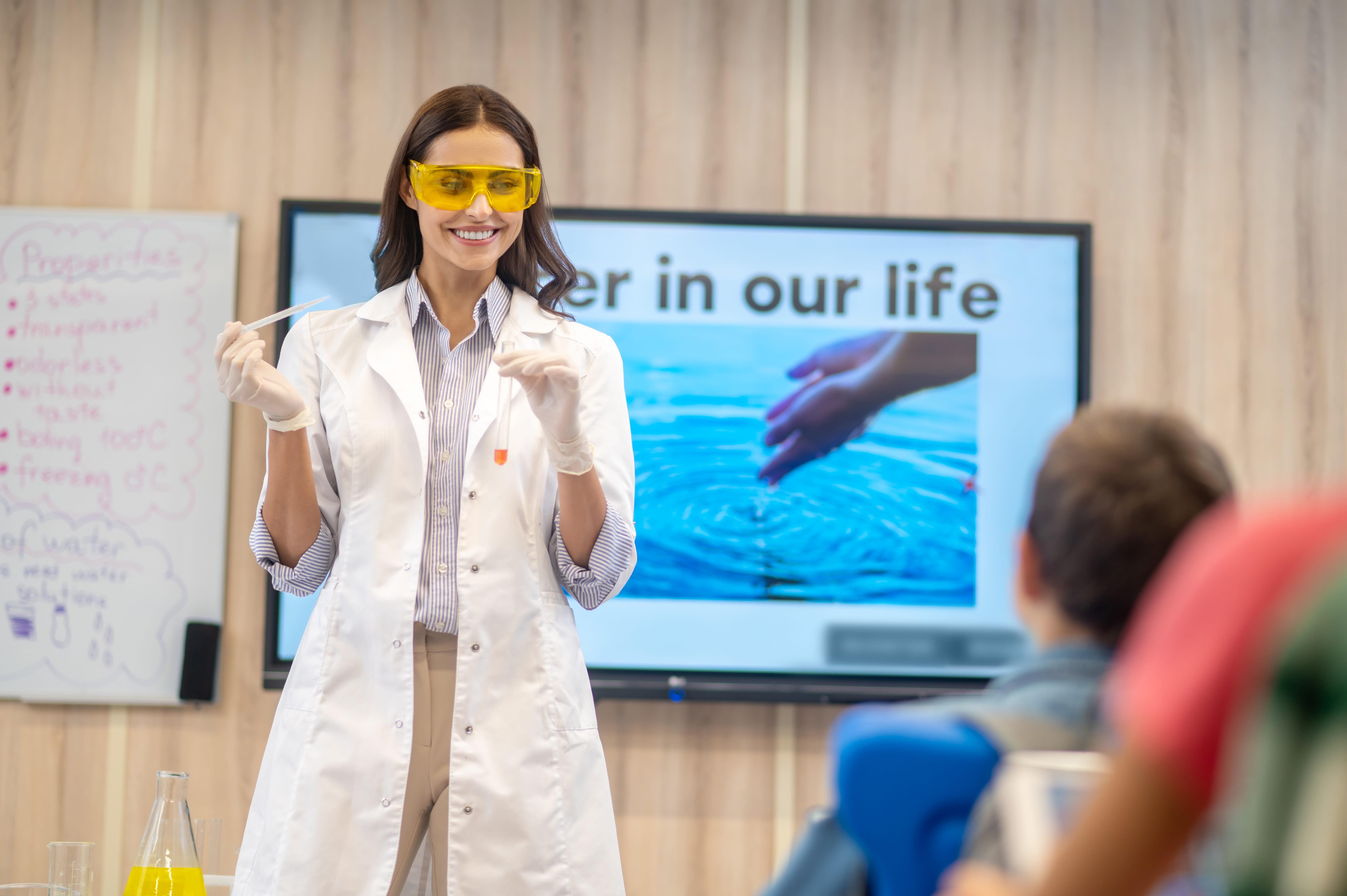
Science subjects rarely fail students because of a lack of effort. More often, it's a gap in foundational understanding that snowballs, until a topic like moles in Chemistry or forces in Physics feels impossible to untangle. If you've been asking whether a science tutor in Dubai is worth it for your child, or for yourself as an adult learner returning to studies, the answer usually comes down to three questions: is the gap structural, is the curriculum a mismatch with the teaching style at school, and is exam pressure building faster than confidence. Lexora Institute works with students across Dubai who are navigating exactly these situations, and the patterns are worth understanding before you commit to any tutoring arrangement.
Why Do Students in Dubai Struggle With Science Specifically?
Dubai's classrooms are unusually diverse. A single school might follow the British curriculum, the American system, IB, or a CBSE framework, and students frequently transfer between them mid-way through their education. Each curriculum sequences science topics differently and uses different terminology, so a student who was strong in Physics under one system can suddenly feel lost after switching schools. Add to this the fact that science builds cumulatively, weak algebra skills undermine Physics, unclear atomic structure undermines Chemistry, and gaps rarely announce themselves until an exam does it for you.
Large class sizes compound the problem. Even excellent schools in Dubai often have 25 to 30 students per science class, which leaves little room for a teacher to address one student's specific misunderstanding of, say, electron configuration. A science tutor in Dubai fills that gap by working at the pace of the individual student rather than the pace of the syllabus.
What Should a Good Science Tutor Actually Do?
A tutor's job isn't to redo the homework with the student watching. It's to diagnose exactly where understanding breaks down and rebuild from there. At Lexora Institute, this starts with an assessment of the student's current level against their specific curriculum, whether that's IGCSE, A-Level, AP, or IB, before any tutoring begins. This matters because a generic science tutor without curriculum awareness can waste weeks teaching concepts the wrong way for the exam board the student is actually sitting.
Good tutoring also means tracking measurable progress. Parents in Dubai are increasingly asking tutoring centres for evidence, not just reassurance, so a credible science tutor should be able to show test scores, topic mastery checklists, or mock exam results over time rather than vague claims of improvement.
Physics, Chemistry, or Biology: Does the Subject Change What to Look For?
Yes, and this is where many families choose the wrong support. Physics tutoring leans heavily on mathematical fluency, so a tutor needs to be comfortable moving between conceptual explanation and problem-solving mechanics. Chemistry tutoring depends on strong visualisation of molecular structure and reaction logic, which benefits from tutors who can use diagrams and models rather than pure lecture. Biology tutoring is often more content-heavy, and students benefit from tutors who teach structured recall techniques alongside the material itself, not just repetition.
Lexora Institute assigns tutors by subject specialism rather than treating "science" as one interchangeable category, because a Physics-strong tutor placed on a Biology-heavy syllabus rarely gets the same results.
Is One-on-One Tutoring Better Than Group Sessions?
Both have a place, and the right choice depends on the goal. One-on-one sessions are the fastest way to fix a specific, identified weakness, such as struggling only with stoichiometry within an otherwise strong Chemistry grade. Small group sessions work well for general exam preparation, where students benefit from hearing how classmates approach the same past papers and from the discipline of a fixed schedule. Lexora Institute offers both formats across its Dubai locations, and tutors typically recommend a format only after the initial assessment, not before.
How Do You Know a Science Tutor Is Actually Working?
Improvement should be visible within four to six weeks in the form of higher confidence tackling unfamiliar problems, not just higher marks on topics already covered in class. If a student is still relying entirely on memorised answers rather than applying concepts to new questions, that's a signal the tutoring approach needs to change, not necessarily the tutor.
Finding the Right Fit in Dubai
With so many curricula and exam boards represented across the city, the most reliable science tutor in Dubai is one who asks about your child's specific school syllabus before promising results. Lexora Institute's approach starts there, matching students with subject specialists who understand the exact exam board they're preparing for, and building a plan around measurable milestones rather than open-ended sessions.
If science has become a source of stress rather than curiosity in your household, a structured, curriculum-aware tutor can usually turn that around within a term. Lexora Institute works with students across Dubai on exactly this kind of turnaround, one subject and one topic gap at a time.

 Arabic
 French
 Spanish
 Portuguese
 Deutsch
 Turkish
 Dutch
Dutch
 Italiano
 Russian
 Romaian
 Portuguese (Brazil)
 Greek
Greek
 Bengali