


Cast Iron Barrel Pump Manufacturers: A Complete Buyer’s Guide
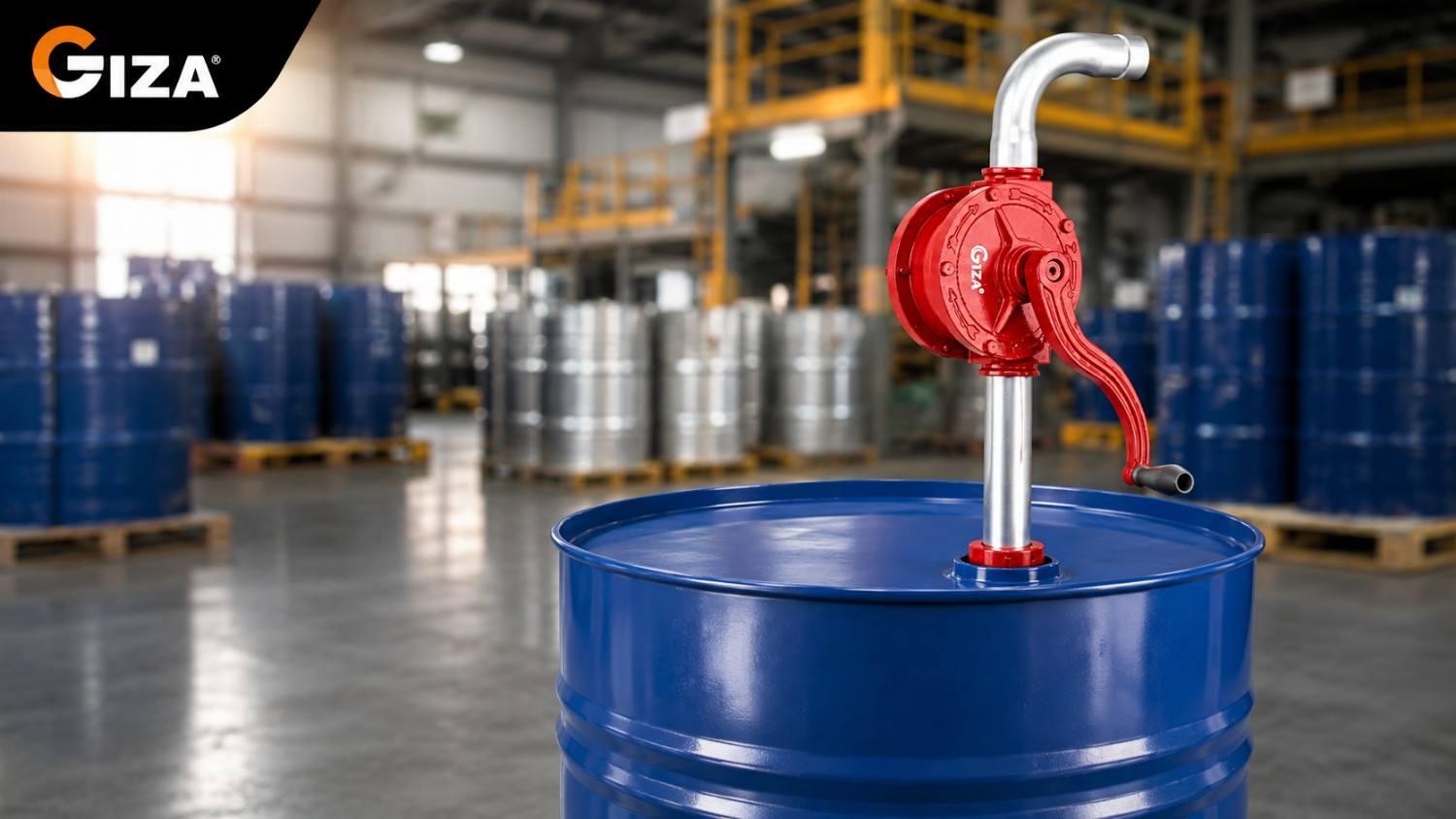
A pump can look fine on a quotation and still fail the first real test: the liquid, the drum, and the daily workload. A Cast Iron Barrel Pump is generally chosen for oils, diesel, kerosene, lubricants, coolants, and other non-corrosive industrial liquids; Giza lists 10 common application areas, from automotive service stations to manufacturing plants. Buying only on price is bad procurement.
Cast Iron Barrel Pump Specifications Buyers Should Confirm
Before issuing a PO, match the pump to the fluid first. Giza lists three common mechanisms—rotary, lever and piston-operated—along with manual or motor-assisted operation, steel internal components, adjustable suction tubes and drum-compatible threaded adaptors. Its technical guide describes low-to-medium viscosity handling and standard industrial drum compatibility.
The Spec Detail Most Buyers Skip
Seal material and fluid compatibility matter more than the body casting alone. Giza lists rubber seals such as Buna-N or equivalent, while its product page positions cast iron mainly for oils, diesel, kerosene, lubricants and non-corrosive media.
A buyer who sends only “need 50 barrel pumps” is inviting a mismatch.
Five Checks Before You Approve a Manufacturer
Giza’s supplier guidance identifies five basic checks around experience, reviews, product range, after-sales support and pricing.
-
Fluid compatibility: Good answer: written confirmation against your actual liquid. Bad answer: “cast iron handles everything.”
-
Pump mechanism: Good answer: rotary, lever or piston selected around viscosity and transfer frequency. Bad answer: one model pushed for every job.
-
Testing: Good answer: leak, flow and mechanical checks. Bad answer: “we inspect visually.”
-
Spare support: Good answer: clear availability of seals, tubes and wear parts. Bad answer: “call us if it fails.”
-
Commercial terms: Good answer: written quantity, packing, dispatch and warranty terms. Bad answer: a low price with missing conditions.
Nobody tells you how hard defect resolution becomes after a bulk shipment lands. A vague warranty is not protection; it is an argument waiting to happen.
Benefits That Protect Margin, Not Just Pump Performance
A suitable Cast Iron Barrel Pump reduces risk in six practical ways: durable construction handles rough workshop use; manual designs avoid motor dependency; replaceable parts can reduce replacement cost; stable mounting helps limit spills; the correct mechanism saves operator time; and proper fluid matching reduces premature material attack.
Giza’s cast-iron guide lists 12 product features, including wear resistance, consistent flow control, easier maintenance and heavy-duty construction.
Cheap pumps that save a few rupees but leak oil onto the floor are not cheap.
Availability From Cast Iron Barrel Pump Suppliers in India
For buyers comparing Cast Iron Barrel Pump Suppliers in India, location affects more than freight. Giza operates from Shapar, Rajkot, Gujarat, PIN 360024, and states nationwide supply for its cast-iron pumps. Western-India buyers may have a shorter logistics path from Gujarat, while dealers elsewhere should verify dispatch lead time before promising customers a date.
Giza’s website reports more than 90% repeat orders, but current stock and dispatch commitments still need confirmation on each PO.
About Giza Pumps
We operate under Swastik Enterprise and were established in 1999. Our website lists a 25+ member team and more than 90% repeat orders. We work from Sub-Plot 3/1, Plot No. 3, Dholera Main Road, Shapar, Rajkot, and our cast-iron range focuses on industrial oil, fuel and lubricant transfer rather than pretending one material suits every liquid.
We inspect pumps for flow consistency, leakage protection, mechanical strength and pressure stability before supply. We know that on bulk orders, one repeated seal problem can turn into a returns issue across an entire batch, so consistency matters as much as the first sample.
At Giza Pumps, we recommend sending the fluid name, approximate viscosity, drum size, expected daily transfer volume, required pump quantity and delivery PIN code. Our website states a customer enquiry response time of less than 48 hours.
We have not published a fixed MOQ on the reviewed product pages, so we prefer to confirm the minimum quantity against the selected model and order type rather than invent a number. Send us those six details and request the model, price, packing, dispatch and warranty terms in writing.
Conclusion
A Cast Iron Barrel Pump is a sensible purchase only when its material, mechanism and seals match the liquid and workload. Giza documents three common cast-iron mechanisms: rotary, lever and piston. Buyers who document specifications before comparing prices avoid expensive sourcing mistakes. The next PO should start with fluid data, not a unit-price target.
FAQs
1. Which liquids are suitable for a Cast Iron Barrel Pump?
Giza lists oils, diesel, kerosene, lubricants, coolants and other non-corrosive liquids. Caveat: aggressive chemicals may require SS, PP or PVDF instead of cast iron.
2. What should I ask Cast Iron Barrel Pump Manufacturers before buying?
Ask for compatibility, operating mechanism, seal material, testing, spares, warranty and dispatch terms. Cast Iron Barrel Pump Manufacturers should answer those points in writing, not just quote a rate.
3. How should I compare Cast Iron Barrel Pump Dealers?
Compare model authenticity, technical guidance, stock position and after-sales support. Cast Iron Barrel Pump Dealers that cannot confirm the exact pump configuration are a procurement risk.
4. Do Cast Iron Barrel Pump Wholesalers offer bulk pricing?
Many Cast Iron Barrel Pump Wholesalers quote according to quantity, model and packing. Giza supports bulk supply, but a fixed public wholesale price slab is not listed, so request a current quotation.
5. Are Cast Iron Barrel Pump Suppliers in India suitable for nationwide orders?
Giza states that it has a nationwide supply network. Cast Iron Barrel Pump Suppliers in India should still confirm dispatch time to your PIN code before you commit a delivery date to your own customer.
6. Is a rotary pump always better than a lever pump?
No. Rotary designs suit smooth continuous transfer, while lever or piston types may make more sense for controlled or thicker-fluid duties. Giza’s guide identifies three main operating mechanisms, so selection should follow viscosity and usage frequency rather than habit.
7. How often should a cast-iron barrel pump be maintained?
Giza recommends cleaning after use and periodically checking seals and fittings. There is no honest universal service interval; duty cycle, fluid, storage conditions and operator handling change the requirement.

 English
 Arabic
 French
 Spanish
 Portuguese
 Deutsch
 Dutch
Dutch
 Italiano
 Russian
 Romaian
 Portuguese (Brazil)
 Greek
Greek
 Bengali