


How Is AI Good for Marketing? Key Benefits of AI
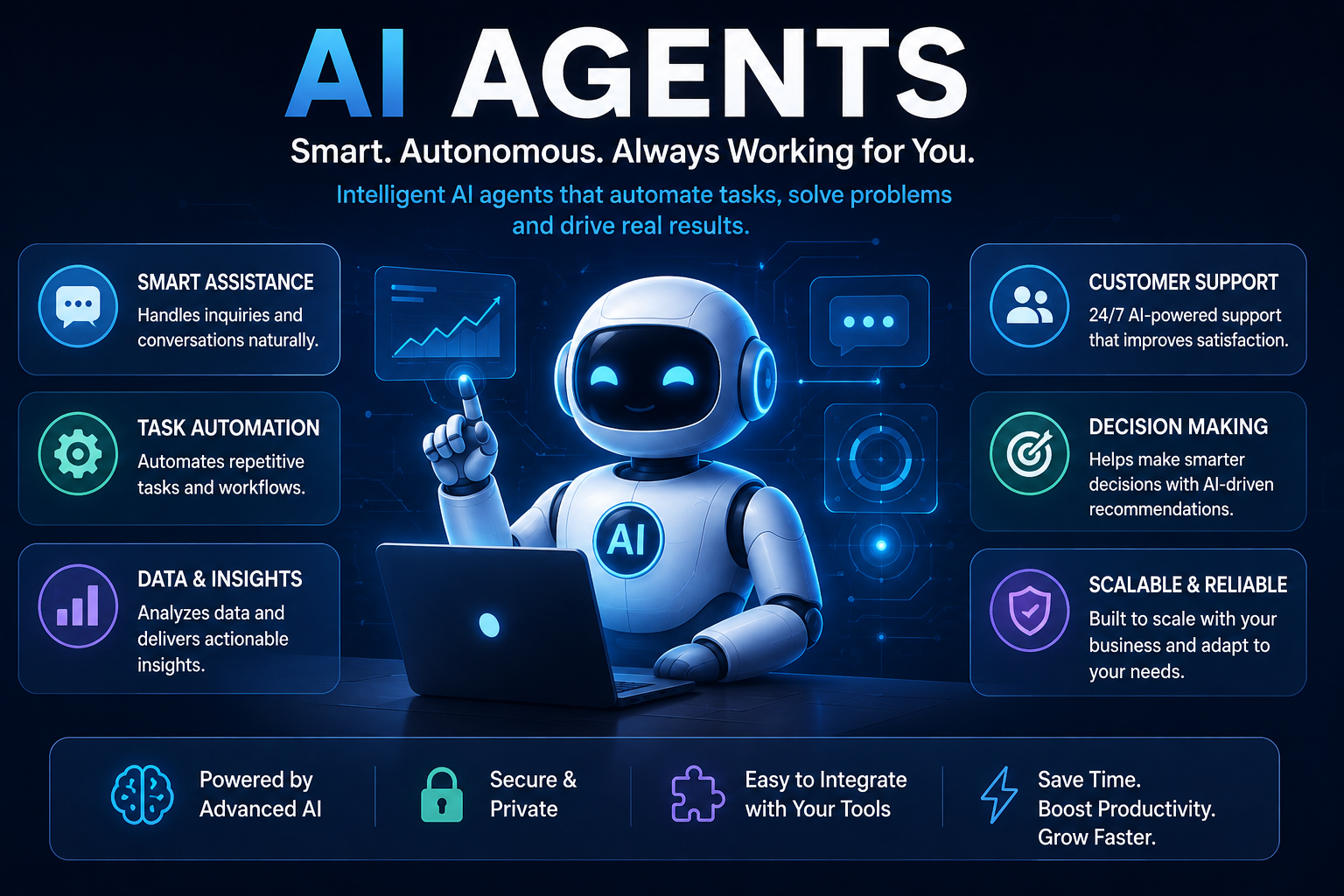
Artificial intelligence (AI) has changed the way businesses connect with customers. From personalized recommendations to automated customer support, AI is helping marketers work faster, understand audiences better, and create more effective campaigns. But how exactly is AI good for marketing?
Think of AI as a smart assistant that can analyze huge amounts of information, spot patterns, and help marketers make better decisions. It does not simply replace human creativity; instead, it can give marketing teams more time to focus on strategy, ideas, and customer relationships.
1. What Is AI in Marketing?
AI in marketing means using artificial intelligence technologies to support activities such as customer research, advertising, content creation, SEO, email marketing, and data analysis.
Instead of marketers manually reviewing every piece of information, AI can process large datasets in a short time. This allows businesses to identify trends and make informed decisions more efficiently.
The goal is not to make marketing completely automatic. The goal is to make marketing smarter, faster, and more relevant.
2. How AI Helps Marketers Understand Customers
Knowing what customers want is one of the most important parts of marketing. AI can analyze customer behavior, purchase history, website activity, search patterns, and interactions.
For example, a business may discover that customers who purchase one product often show interest in another product. Marketers can use this insight to create targeted offers.
Better customer understanding can lead to better marketing campaigns.
3. AI Makes Marketing More Personalized
Have you ever visited an online store and received product recommendations that seemed perfect for you? AI is often working behind the scenes.
AI can help businesses personalize emails, product recommendations, advertisements, website experiences, and offers based on customer behavior.
Instead of sending the same message to everyone, marketers can create experiences that feel more relevant to individual users. This can improve engagement and potentially increase conversions.
4. Faster Content Creation With AI
Creating marketing content can take considerable time. Blog posts, social media captions, product descriptions, email campaigns, advertisements, and other materials all require planning and writing.
AI tools can help marketers generate ideas, create initial drafts, summarize information, and develop different variations of marketing messages.
However, human review remains important. AI should be treated like a creative assistant, not the final decision-maker. Human marketers can add personality, experience, accuracy, and brand voice.
5. Better Marketing Decisions With Data
Marketing generates enormous amounts of data. Website traffic, clicks, conversions, engagement rates, customer behavior, and advertising results can be difficult to analyze manually.
AI can quickly identify patterns within this information and help marketers understand what is working and what needs improvement.
It is similar to having a very fast researcher who can examine thousands of reports and highlight the most important information for you.
6. AI Improves Customer Experience
Customer expectations are higher than ever. People want quick answers and convenient experiences.
AI-powered chatbots and virtual assistants can respond to common customer questions, provide basic information, and guide visitors through websites.
This does not mean human customer service is no longer necessary. Instead, AI can handle repetitive questions while employees focus on more complex customer problems.
Faster support can create a smoother customer experience.
7. Automating Repetitive Marketing Tasks
Marketing teams often spend time on repetitive activities such as scheduling posts, organizing customer data, segmenting audiences, sending routine emails, and generating reports.
AI and marketing automation tools can reduce the manual effort involved in these tasks.
This gives marketers more time for activities that require human thinking, such as developing campaigns, understanding customers, building partnerships, and creating new ideas.
8. AI Can Improve Advertising Performance
Digital advertising requires continuous testing and optimization. Businesses need to determine which audiences, messages, images, keywords, and offers perform best.
AI can help analyze campaign performance and identify opportunities for optimization. It can also assist with audience targeting and advertising variations.
When used correctly, AI can help businesses spend their advertising budgets more efficiently by focusing attention on strategies that are more likely to produce results.
9. How AI Helps With SEO
SEO involves understanding search behavior, creating useful content, analyzing competitors, finding keywords, and monitoring performance.
AI can assist with many of these activities. It can help identify content topics, organize keyword ideas, analyze search intent, and find potential content gaps.
Still, successful SEO requires more than producing large amounts of AI-generated content. Useful, original, trustworthy content remains essential.
10. AI and Social Media Marketing
Social media marketers need to constantly create fresh content and monitor audience engagement.
AI can help generate content ideas, suggest captions, identify trends, analyze engagement, and support content planning.
Businesses can also use AI to understand which types of posts attract attention from their target audience.
The result can be a more organized social media strategy without requiring marketers to spend every hour manually analyzing performance.
11. Saving Time and Marketing Costs
One of the biggest advantages of AI is efficiency.
When AI handles repetitive research and administrative tasks, marketing teams can potentially accomplish more without increasing their workload.
For small businesses, this can be especially valuable. A small team can use AI-powered tools to support activities that might otherwise require several additional employees or significant amounts of time.
Saving time does not automatically guarantee better marketing, but it creates more opportunities to focus on what matters.
12. Choosing the Best AI Marketing Agency
Businesses that want to adopt AI may consider working with an experienced agency. But how do you choose the best ai marketing agency?
Look for an agency that understands both technology and marketing fundamentals. It should be able to explain how AI will support your specific goals rather than simply promising that AI will solve everything.
Consider its experience, services, strategy, reporting process, communication, and ability to combine AI with human expertise.
A good agency should focus on business outcomes rather than AI hype.
13. The Future of AI in Marketing
AI is likely to become an even bigger part of marketing. Businesses will increasingly use it for personalization, customer analysis, content assistance, advertising optimization, automation, and forecasting.
However, human creativity will remain important. Customers still value authenticity, empathy, storytelling, and genuine connections.
The strongest marketing strategies will likely combine the speed of AI with the judgment and creativity of people.
14. Conclusion
So, how is AI good for marketing? It helps businesses understand customers, personalize experiences, automate repetitive tasks, analyze data, improve advertising, support SEO, and save valuable time.
AI is not a magic solution. It works best when combined with a clear strategy and human expertise. Businesses that learn how to use AI responsibly can turn it into a powerful marketing advantage.
15. Frequently Asked Questions
1. How is AI good for marketing?
AI helps marketers analyze customer data, personalize campaigns, automate repetitive tasks, create content, improve advertising, and make faster data-driven decisions.
2. Can AI replace human marketers?
AI can automate many marketing tasks, but it cannot fully replace human creativity, strategic judgment, emotional understanding, and brand storytelling. The best approach is to combine AI with human expertise.
3. How does AI improve digital advertising?
AI can analyze advertising data, identify audience patterns, support campaign optimization, and help marketers test different messages and targeting strategies.
4. Is AI useful for small businesses?
Yes. Small businesses can use AI for content creation, customer support, social media planning, data analysis, email marketing, and other activities that can save time and resources.
5. What should I look for in the best ai marketing agency?
Look for an agency with proven marketing experience, practical AI expertise, transparent reporting, clear communication, and a strategy focused on measurable business goals rather than AI trends alone.

 Arabic
 French
 Spanish
 Portuguese
 Deutsch
 Turkish
 Dutch
Dutch
 Italiano
 Russian
 Romaian
 Portuguese (Brazil)
 Greek
Greek
 Bengali