


Why Transporters Need Full Truckload Management Software in 2026
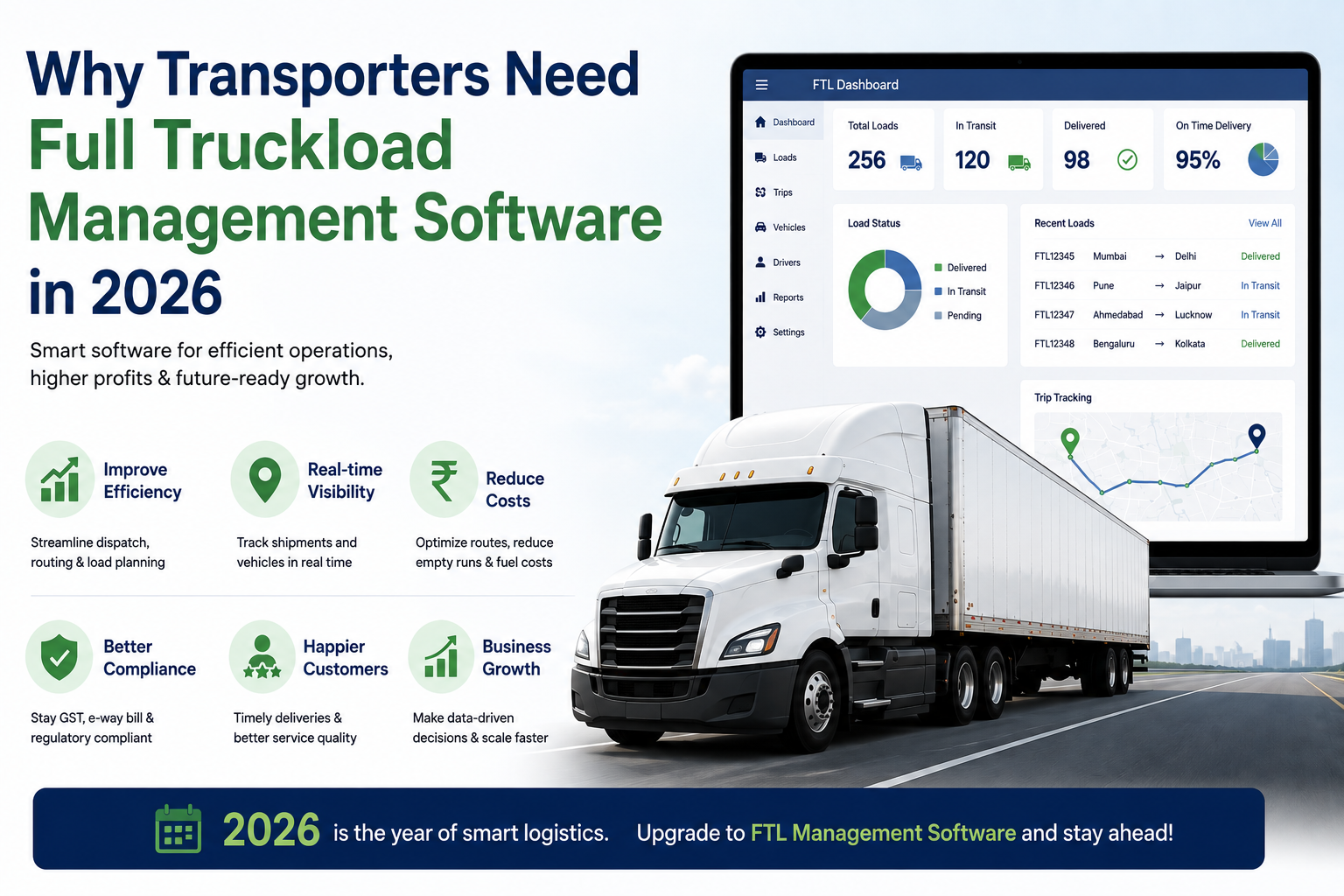
Full truckload transportation is an important part of India's logistics industry. Transporters handling bulk shipments, long-distance trips, manufacturing loads, FMCG distribution, and industrial goods need to manage vehicles, drivers, routes, fuel, documents, and deliveries efficiently.
As transportation operations grow, managing everything through spreadsheets, phone calls, WhatsApp messages, and manual paperwork becomes increasingly difficult. A small delay in vehicle assignment or a missed delivery update can affect the entire trip.
In 2026, transporters are under increasing pressure to reduce costs, improve delivery visibility, and provide better customer service. This is why Full Truckload Management Software is becoming an important technology for businesses handling FTL operations.
A digital system can help transporters manage trips from vehicle assignment and dispatch to real-time tracking, proof of delivery, billing, and reporting.
What is Full Truckload Management Software?
Full Truckload Management Software is a digital solution designed to help transport businesses plan, execute, monitor, and manage full truckload transportation operations.
Unlike manual transportation management, the software brings important activities into one centralized platform.
Transporters can use it to manage:
-
Load and trip planning
-
Vehicle assignment
-
Driver management
-
Dispatch operations
-
Real-time GPS tracking
-
Route optimization
-
Fuel monitoring
-
Digital POD
-
Billing and invoicing
-
GST and E-Way Bill management
-
Reports and analytics
The main purpose is to give transporters better control and visibility across every stage of an FTL trip.
Why FTL Operations Are Becoming More Complex
FTL transportation may look straightforward because one truck is generally dedicated to one shipment. However, managing multiple trucks and trips at the same time creates significant operational complexity.
A transporter may need to coordinate dozens or hundreds of vehicles operating across different cities and states.
At the same time, customers expect:
-
Faster deliveries
-
Real-time shipment updates
-
Accurate ETAs
-
Digital documentation
-
Quick issue resolution
-
Transparent billing
Managing these expectations manually can put pressure on operations teams.
Technology helps transporters handle this complexity without relying entirely on additional manpower.
1. Manual Trip Planning Takes Too Much Time
One of the biggest challenges for transporters is manually planning and assigning trips.
Operations teams may need to check vehicle availability, driver availability, load requirements, destination, and delivery schedule before assigning a truck.
When this information is maintained across different spreadsheets or communication channels, mistakes can easily happen.
FTL management software provides a centralized view of available vehicles, drivers, and active trips. This helps dispatch teams assign vehicles faster and organize transportation operations more efficiently.
2. Real-Time Vehicle Visibility Has Become Essential
Long-distance FTL trips can involve multiple routes, states, and delivery locations.
Without real-time tracking, transporters may depend on drivers to provide vehicle updates. This makes it difficult to know whether a vehicle is following the planned route or facing an unexpected delay.
With GPS-enabled software, managers can monitor vehicle movement in real time.
They can identify:
-
Current vehicle location
-
Trip progress
-
Route deviations
-
Unplanned stoppages
-
Delivery delays
-
Vehicle idle time
This visibility allows transporters to respond to problems before they become bigger operational issues.
3. Fuel Costs Need Better Control
Fuel is one of the largest operating expenses for transportation businesses.
Inefficient routes, excessive idling, unauthorized vehicle movement, and fuel misuse can significantly increase the cost of an FTL trip.
A digital transportation system helps businesses monitor vehicle movement and identify unusual transportation patterns.
When route data and fuel information are analyzed together, transporters can identify areas where fuel costs can be reduced.
Better route planning and vehicle utilization can contribute to lower transportation expenses and improved profitability.
4. Route Deviations Can Affect Profitability
A vehicle taking an unnecessary route may increase fuel consumption, travel time, and delivery costs.
In manual operations, identifying route deviations quickly can be difficult.
Real-time GPS tracking combined with route monitoring helps transporters compare actual vehicle movement with the planned route.
If a vehicle moves away from its assigned route, the operations team can investigate the reason and take corrective action.
This helps improve route adherence and maintain better control over transportation costs.
5. Faster Billing Improves Cash Flow
Completing a delivery is only one part of an FTL operation. Transporters also need to complete documentation and billing before the trip can be financially closed.
Manual POD collection can delay invoice generation. If delivery documents are sitting with drivers or are being shared through different communication channels, accounts teams may have to wait before processing invoices.
Digital POD systems allow drivers to submit delivery confirmation electronically.
Once the required delivery information is available, billing teams can process invoices faster.
This can help reduce administrative delays and improve payment cycles.
6. E-Way Bill and Compliance Management Is Easier
Indian transporters need to manage various transportation documents and compliance requirements during interstate and intrastate movement.
Manually managing GST documents and E-Way Bills can increase paperwork and the possibility of errors.
An integrated transportation system can help businesses organize compliance-related information within their transportation workflow.
This reduces repetitive administrative work and makes important transportation documents easier to manage.
7. Driver Management Becomes More Organized
Drivers are at the center of every FTL operation. However, managing drivers across multiple routes and locations can become difficult as the fleet grows.
Transporters need to know which driver is assigned to which vehicle and trip, whether the trip is active, and whether the driver is following the assigned route.
A centralized system provides better visibility into driver assignments and trip activity.
Businesses can also analyze driver performance and identify areas that require improvement.
8. Customers Expect Real-Time Shipment Visibility
Customer expectations have changed significantly.
Customers no longer want to wait for a transporter to call back with a shipment update. They expect accurate information about where their shipment is and when it is likely to arrive.
Real-time tracking allows transporters to provide better shipment visibility and more accurate delivery updates.
This can reduce customer support calls and improve trust between transporters and their customers.
9. Transportation Data Helps Make Better Decisions
One major advantage of digital FTL management is access to transportation data.
Instead of relying on assumptions, transporters can analyze operational information such as:
-
Vehicle utilization
-
Trip completion time
-
Fuel consumption
-
Route performance
-
Delivery delays
-
Driver performance
-
Billing status
-
Transportation costs
This information helps managers identify inefficiencies and make better decisions about fleet planning and transportation operations.
Key Benefits of Full Truckload Management Software
A well-designed FTL software solution can provide several benefits to transport businesses.
Better Fleet Visibility
Managers can monitor vehicles and active trips from a centralized dashboard.
Reduced Transportation Costs
Route optimization, fuel monitoring, and better fleet utilization can help reduce unnecessary expenses.
Faster Dispatch
Digital trip planning makes vehicle and driver assignment more efficient.
Improved Delivery Performance
Real-time monitoring helps identify delays and operational issues quickly.
Faster Billing
Digital POD and automated billing workflows reduce the time required to process completed trips.
Better Customer Service
Live shipment visibility allows transporters to provide accurate delivery updates.
Reduced Manual Work
Automation reduces repetitive data entry, paperwork, and phone-based coordination.
Scalable Operations
Transporters can manage increasing trip volumes without depending entirely on additional administrative staff.
Who Should Use FTL Management Software?
FTL management software can benefit a wide range of businesses, including:
Large Fleet Operators
Businesses managing multiple trucks and long-distance routes can use centralized tracking and trip management.
Manufacturing Companies
Manufacturers moving bulk raw materials or finished goods can improve transportation visibility.
3PL Logistics Providers
3PL companies can manage FTL transportation for multiple customers through a centralized platform.
FMCG and Retail Businesses
Businesses handling large-volume product movement can improve delivery coordination and shipment tracking.
Freight Brokers and Aggregators
Brokers can improve load coordination, vehicle assignment, and transportation visibility.
How to Choose the Right FTL Software in 2026
Not every software solution will meet the needs of every transporter. Before selecting a platform, businesses should evaluate whether it provides the features required for their daily operations.
Important features to consider include:
-
Real-time GPS tracking
-
Trip and dispatch management
-
Route optimization
-
Vehicle management
-
Driver management
-
Fuel monitoring
-
Digital POD
-
Billing automation
-
GST and E-Way Bill integration
-
Mobile application
-
Reporting and analytics
-
Multi-location support
The software should also be easy for operations teams and drivers to use. Scalability is equally important because the system should support business growth rather than become a limitation later.
Why LogiBrisk for FTL Transportation Management?
LogiBrisk provides a centralized transportation management platform designed to help Indian transporters manage their daily logistics operations more efficiently.
The platform combines transportation workflows such as trip and dispatch management, fleet tracking, billing, shipment visibility, digital POD, and compliance-related operations.
By bringing these activities into one system, transport businesses can reduce manual coordination, improve operational visibility, and make better transportation decisions.
For transporters looking to modernize their FTL operations in 2026, a centralized digital platform can provide the foundation needed to improve efficiency and scale operations.
Conclusion
FTL transportation is becoming more demanding as shipment volumes increase and customers expect faster, more transparent services.
Manual processes may work for smaller operations, but they become difficult to manage when transporters operate larger fleets, multiple routes, and higher shipment volumes.
Part Truckload Managеmеnt Softwarе helps transporters bring trip planning, dispatch, GPS tracking, route management, driver monitoring, POD, billing, and reporting into one centralized system.
The result is better visibility, lower operational workload, improved fleet utilization, faster billing, and stronger customer communication.
For Indian transporters looking to grow in 2026, investing in the right FTL management technology can be an important step toward building a more efficient, scalable, and profitable transportation operation.

 Arabic
 French
 Spanish
 Portuguese
 Deutsch
 Turkish
 Dutch
Dutch
 Italiano
 Russian
 Romaian
 Portuguese (Brazil)
 Greek
Greek
 Bengali